...

By Nat Collazo
Contributing Writer
0
Share
Newsweek is a Trust Project member
See more of our trusted coverage when you search.Prefer Newsweek on Googleto see more of our trusted coverage when you search.
I'm a big fan of vampires. Like, a big fan. I haven't officially declared it, but I would like to think that I'm on a quest to find the best vampire game since the launch of "Vampire: The Masquerade - Bloodlines." Yes, I know that "Bloodlines" isn't the greatest and is very much clowned on, especially by those directly in the tabletop game's community, but, to me, it was perfect.
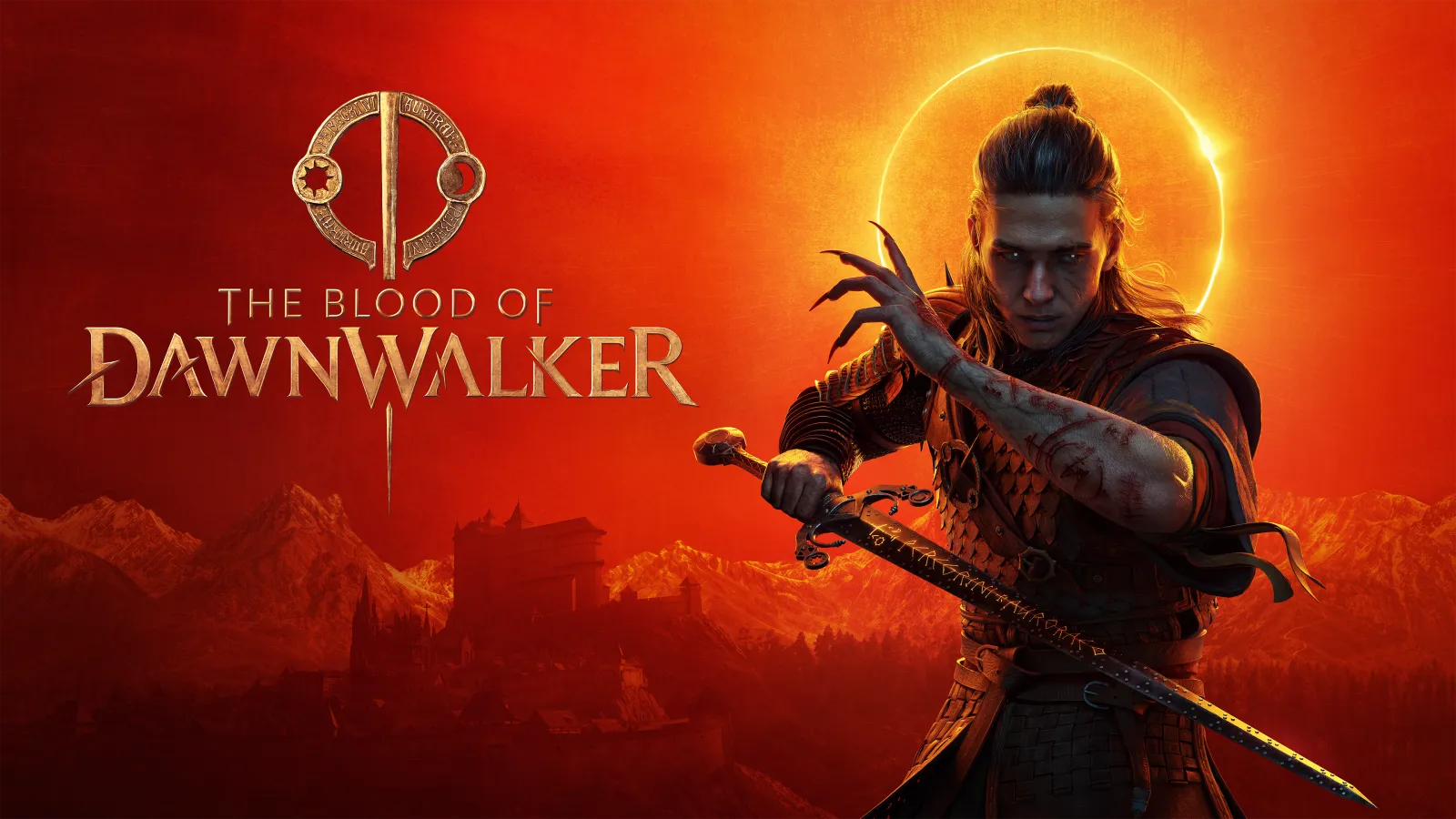
When "The Blood of Dawnwalker" first graced my screen back in 2025, it was revealed simply as 'Dawnwalker' by the Rebel Wolves team. Despite the game's development not having ties to the CD Projekt Red team, it was clear that there was SOMEONE on the team who once worked on the last "Witcher" title, "The Witcher 3: Wild Hunt." Sure enough, I was right.
After 17 years with the company, Konrad Tomaszkiewicz, the director of "The Witcher 3: Wild Hunt," moved on and opened up Rebel Wolves, announcing it officially in 2022. Now, the company has 160 employees dedicated to ensuring that their debut title, "The Blood of Dawnwalker," is a stellar addition to any dark fantasy fan's library.
Read More on Video Games
So, it was a no-brainer when the publishing team at Bandai Namco Entertainment and the PR folks over at fortyseven invited me out to Los Angeles to check out Saint Vibiana's Cathedral for a chance to get nearly six hours of game time with "The Blood of Dawnwalker." You read both of those right: it was in a cathedral, and it was six hours. Honestly, I don't think I could have thanked the developers enough for even having something like this in mind for a video game.
More News: ‘D-Topia’ and A Few Other Indies You Won’t Want to Miss in July
Experience

...
Now, onto the experience itself. Rebel Wolves has been working on this game for nearly four years, anxiously waiting for players to enjoy the experience they've painstakingly pored over. When I finally got the chance to play as protagonist Coen, I realized that even if the vibe was a bit similar to "The Witcher," it quickly proved itself to be something completely different and, in some ways, soars over.
For starters, the game takes place over the course of 30 days and thirty nights, with quests providing you with the length of time it will take to complete, allowing you to plan out how you'd like your progression to be. During the day, Coen is human, without powers or abilities to aid him in his quest. By night, he must fight the demon of being a vampire. Your village is in the palm of a vampire's hand, and every family is asked to give him their blood during the moonlight in exchange for their lives. Despite this not being a relatively new concept in video games, it was how it was implemented that truly surprised me; it seemed to me that this opening story is the only thing that stays the same for every player.
As I played, I couldn't help but look around at the players around me, wondering how much further behind I was than they were. That's when I realized that the game truly is different depending on who is playing it. I noticed characters that were alive that I had thought were dead in my playthrough, areas that I didn't even think were accessible in the prologue, and concepts that truly blew my mind from the perspective of "anything can happen."
More News: Product Review: Is The DXRACER Tidal Gaming Desk Worth The Price?
Without spoiling anything, there was a point where Coen must face off against a powerful vampire, and I had noted that the latter had a health bar above it, despite it being obvious that this wasn't a winnable battle. During a short meeting with the developers, I had joked about it being funny if someone was actually able to parry and block against the vampire and actually beat him. The two looked at one another, then back at me, and quite literally said, "That did happen once. As a result, the credits rolled. They effectively did their story's objective, just in the prologue."
That's the moment I needed to ask other questions concerning my own playthrough. Could this character have been saved, even though it seemed like they couldn't be? Could I have just walked away from the main story if I wanted to? Am I truly the narrator of my own story? Believe it or not, they answered each one with "yes." Without revealing a whole lot about anything, I was told that, when it comes to the narrative, it is very much yours as it is those who actually wrote it.
Gameplay Features

...
What would a game like this be without equally stellar gameplay features? You can choose to ignore the main story and continue on through the world as you'd like. However, those around you will be subjected to your decisions. Even those that you might have thought to be simply just a side quest can have a much deeper meaning later on if you didn't complete it in the time allowed, missed it as a whole, or made a decision that might not have been ideal for others.
For the first time in a video game that had some sort of timed element to it, I genuinely felt the tension of it. I truly felt as though I needed to prioritize certain agreements I had already made or forget them completely because something else came along. But picking up a quest and not doing it can almost be worse than not choosing to speak to that person at all. I wasn't able to play enough outside of the prologue to truly delve into this, but what I was able to experience was truly unlike anything else I've ever played.
More News: Tribeca Spotlight: Remedy Games ‘Control Resonant’ Director Mikael Kasurinen
Now, this is only one half of the gameplay, as the other relies on combat. As you might imagine from a game similar to "The Witcher," combat is pretty brutal. I don't mean to say that it's difficult, but it definitely requires a bit of learning. Parrying and attacking require both holding the correct button and pushing the movement joystick in the direction you want to defend or attack. In many ways, this made the gameplay feel far more fluid, but I did feel as though there were far too many buttons at play for something as simple as attacking.
You are also able to use your vampiric powers, which provide additional bloodshed to every battle. I didn't have a chance to experience many of these abilities, but the wheel of choices seemed vast. To earn them, you are able to level up your character and gain skill points that can be placed in both your human and vampiric selves. What I haven't really come to realize is whether there is any benefit or negative consequence to putting in more points to one side than the other
Worldscape

...
Another rather impressive feature of the game was its open world. While I wouldn't necessarily say that it is extravagantly different from most other games with an open world, I did enjoy that there are essentially two versions of the world, depending on whether you are playing during the day or at night. I also found it incredibly interesting how much of it is available from the start of the Prologue. But, of course, when I asked the devs, they quite literally said, "You could have just left the prologue area if you would rather not know about what's going on."
When pressed, I was told that the world is yours to explore from the beginning. Don't really want to go through the rigamarole of the story and just want to explore for thirty days and thirty nights. Go for it. Will the story still be there? Yes, just not the way you left it; the world still moves around you.
I also very much enjoyed that it seemed as though the idea of the supernatural really doesn't extend beyond vampirism. Some might find that to be limiting, but I absolutely enjoy that the focus is exclusively on the vampiric aspect. Not every other idea of the supernatural also tends to coincide with that of vampires. From my understanding, there is a way of traveling in which you can become a wolf, but I don't believe that the game itself has much else to do with the realm of werewolves.
It also seems as though we will get a taste of the vampiric families and types, considering the cover of "The Blood of Dawnwalker," and I am very excited to delve into that particular lore of the game. When it comes to the development of the overall world, I'm really excited to see how those different vampiric types live and behave.
All in all, this "The Blood of Dawnwalker" gameplay preview was one of the more exciting events I've been invited to in the world of gaming. The game feels as though it'll carve out its own niche, similar to the way so many other incredibly grand and in-depth games tend to be, and I'm excited to be a part of the official community on release.
"The Blood of Dawnwalker" will be launching on PC, Xbox, and PlayStation on September 3.
For clarity, Bandai Namco Entertainment and fortyseven communications provided both transportation and accommodations for this trip.
View 0 Comments
Submit Correction
View Editorial & AI Guidelines