10
Loading video...

By H. Alan Scott
Senior Editor
0
Share
Newsweek is a Trust Project member
See more of our trusted coverage when you search.Prefer Newsweek on Googleto see more of our trusted coverage when you search.
In a world where the CNN breaking news music plays so often that it feels like a trigger, more and more of us are turning to scripted television that tackles real-world issues in a more predictable, less anxiety-inducing, more Hollywood way. That certainly explains the popularity of Netflix's Emmy-winning drama The Diplomat, now entering its fourth season.
Even the show's stars seem pleasantly surprised by how much the series has grown. "It's wonderful that it's grown," Rufus Sewell told Newsweek. "It's not always the case."
Keri Russell, ever modest, isn't quite ready to call it a phenomenon. "I know that cool people come up and talk to us, and that's good," she said. "You want the cool people, the smart people, and they do come up."
Read More on Entertainment
Sewell admitted the fan base "maybe doesn't skew that young," which Russell happily confirmed. "My parents loved the show," she said. "My grandmother loved it."
For creator Debora Cahn, the response has been a relief. "When you're making something fresh and unfamiliar, it just looks lumpy and weird from your perspective," she said. "You love your lumpy baby, but it's not obvious that anybody else is going to."
Well, they did. And they still do.
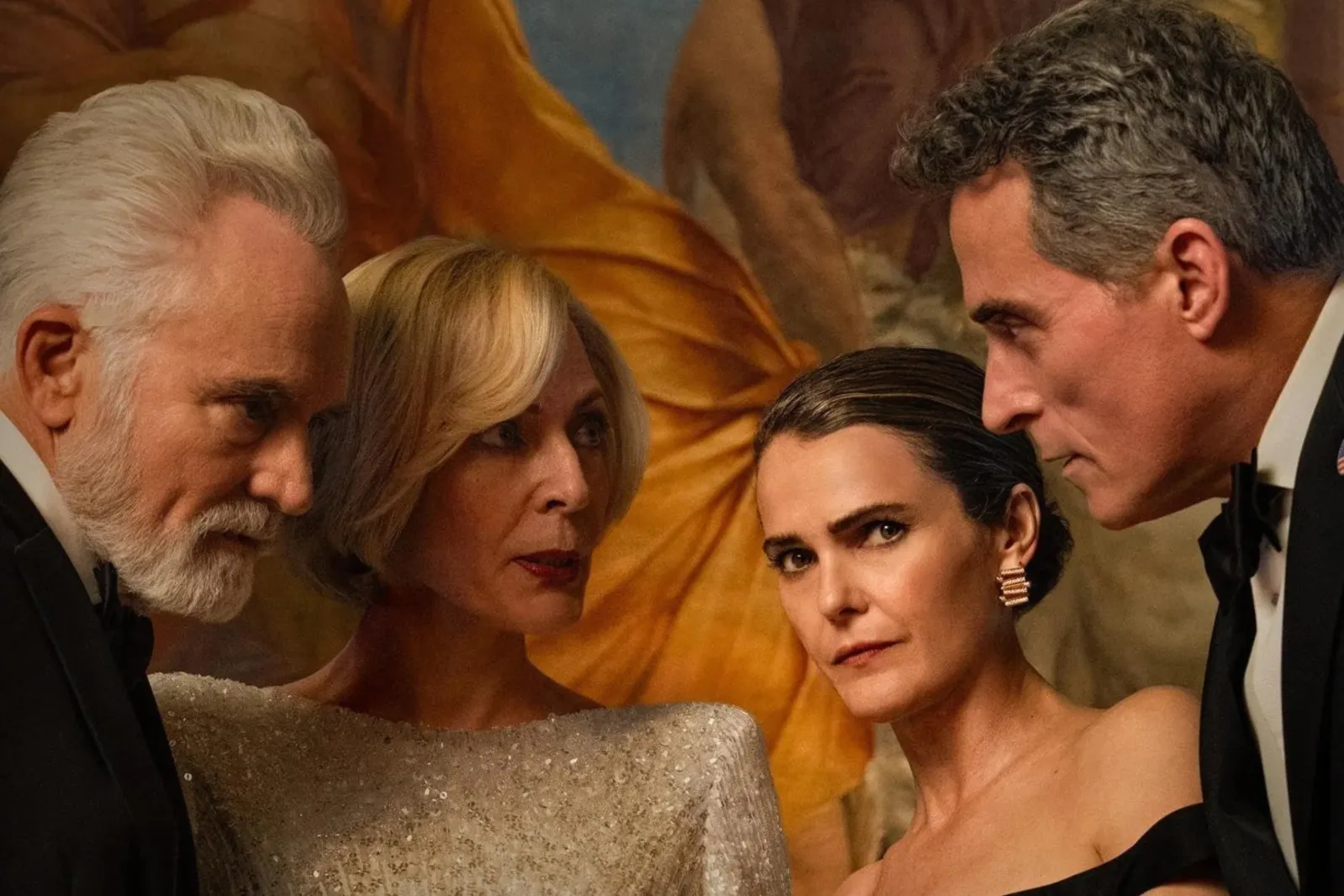
The series follows Kate Wyler (Russell), a career diplomat managing international crises while her marriage to fellow diplomat Hal Wyler (Sewell) creates plenty of its own. For the cast, the appeal is that the show sits just close enough to reality without swallowing us whole.
"It's just adjacent enough," Russell said. "It's in the world, but it's adjacent."
"We can have the catharsis without the personal danger," Sewell added.
That feeling is familiar to anyone who grew up on NBC's The West Wing, another political drama that mirrored the headlines of its day. Cahn, who wrote for The West Wing before going on to Homeland, said the real world shapes The Diplomat "a ton, all the time," even if the writers can't chase the news cycle.
"You can't predict what kind of world we're gonna live in on Thursday, nevermind two years from now," she said. "When we were writing Homeland, it was all questions about the war on terror. And it's a different set of questions. It's a different set of moral dilemmas."
So when it came time to cast some of the show's pivotal roles, Cahn was nervous about hiring Allison Janney and Bradley Whitford, two actors who became household names thanks to The West Wing.
"I was worried about it, and they know this," Cahn said. "I was worried that we were kind of trying to glide on the coattails of Aaron Sorkin and his masterwork too much, and I didn't want to do that."
That concern didn't last long.
"Somebody says, ‘Do you want to work with Allison Janney?’ It turns out before the second syllable of the name is out, you're saying ‘yes,’" she said. And once Janney signed on as President Grace Penn, the next idea practically wrote itself. "Grace Penn needs a husband. You know what would be really funny? We should call Brad," Cahn recalled. "We just couldn't not do it."
For Whitford, The Diplomat and The West Wing serve a similar purpose and speak to a similar audience.
"I make jokes about it. I call it competence porn, you know, progressive porn, this idea that flawed but well-informed people are actually trying to do the right thing," he said. "Shocking. Feels really shocking now."
He takes that idea seriously, though. "I think it's very dangerous for us to become cynical about public service," Whitford said. "I think despair is a luxury our children can't afford. So I'm lucky and proud to be a part of shows that exalt public service, because I think it's really important. Just give me some people who know what they're doing."
Considering the news fatigue so many of us feel, the cast believes audiences come to The Diplomat looking for examples of bravery and service, something they feel is missing from much of the real world.
Asked what she wishes we had more of off-screen, Russell didn't hesitate. "I was gonna say bravery, to just go straight to it," she said. "Just even one person who's brave?"
Sewell pointed to the central question of the new season. "How much do you need to be in the room and how much do you want to compromise to have access?" he said.
Whitford believes the show offers something the news simply can't anymore. "Our political coverage is basically publicity professional wrestling," he said. "It's very performative and very predictable. And one of the things on The West Wing and on this show is what are they struggling with when they're making these decisions, not when they are trying to sell them."
Cahn sees it as pulling back the curtain on people who are designed to go unnoticed. "We know that disasters are averted that aren't on the front page necessarily," she said. "This is the foreign service as a whole population of people who are working for this country who are designed to be invisible."
People are certainly taking notice of the work Cahn and the cast are doing. Janney recently won her historic eighth Emmy for her performance as President Grace Penn. That said, there is one person, however, who has yet to win an Emmy despite being nominated again and again: Keri Russell.
"I'm dancing as fast as I can, so is she," Cahn said. "It's to me completely outrageous, and I think she should have seven of them."
Russell herself has more complicated feelings about the prospect, mostly because a win means a speech. Sewell summed it up: "I want her to win, even though I know that she would like to avoid the moment."
"That's right, because I get so nervous," Russell said.
Sewell's solution? "I wish for you that you wake up and discover [you won],” he began, before Russell finished the thought: "That I won and I was asleep for it? That would be great."
As a news magazine, we'd be remiss not to stress how important it is to follow the news. That said, shows like The Diplomat offer news junkies a chance to imagine a world that feels a little grander, and a little kinder to the people trying to hold it together.
"There's good people who are f***ing up right and left, making mistakes, getting it wrong, can't agree with each other," Cahn said, "but their intention is to bend the world toward justice."
We could use a little more of that.
View 0 Comments
Submit Correction
View Editorial & AI Guidelines