...

By Lydia Patrick
Life & Trends Reporter
0
Share
Newsweek is a Trust Project member
See more of our trusted coverage when you search.Prefer Newsweek on Googleto see more of our trusted coverage when you search.
Kim Kardashian’s new legal drama, All’s Fair, has become the internet’s favorite cultural punching bag—and its newest obsession. The series made headlines for debuting with a 0 percent rating on Rotten Tomatoes (now sitting at 5 percent). But, despite the brutal reviews, audiences are tuning in at remarkable rates.
Whether it is the high camp aesthetic, star-studded cast or social-media conversation, people are fascinated by the show and it reached No. 1 on streaming platforms Hulu and Disney+ worldwide.
It is the latest paradox of modern streaming: the worse a show is deemed to be, the more people seem to want to watch it.
Read More on Entertainment

...
What 'All’s Fair' Is About
Ryan Murphy's series follows a team of female divorce attorneys who walk out of a male-dominated firm to start their own powerhouse practice.
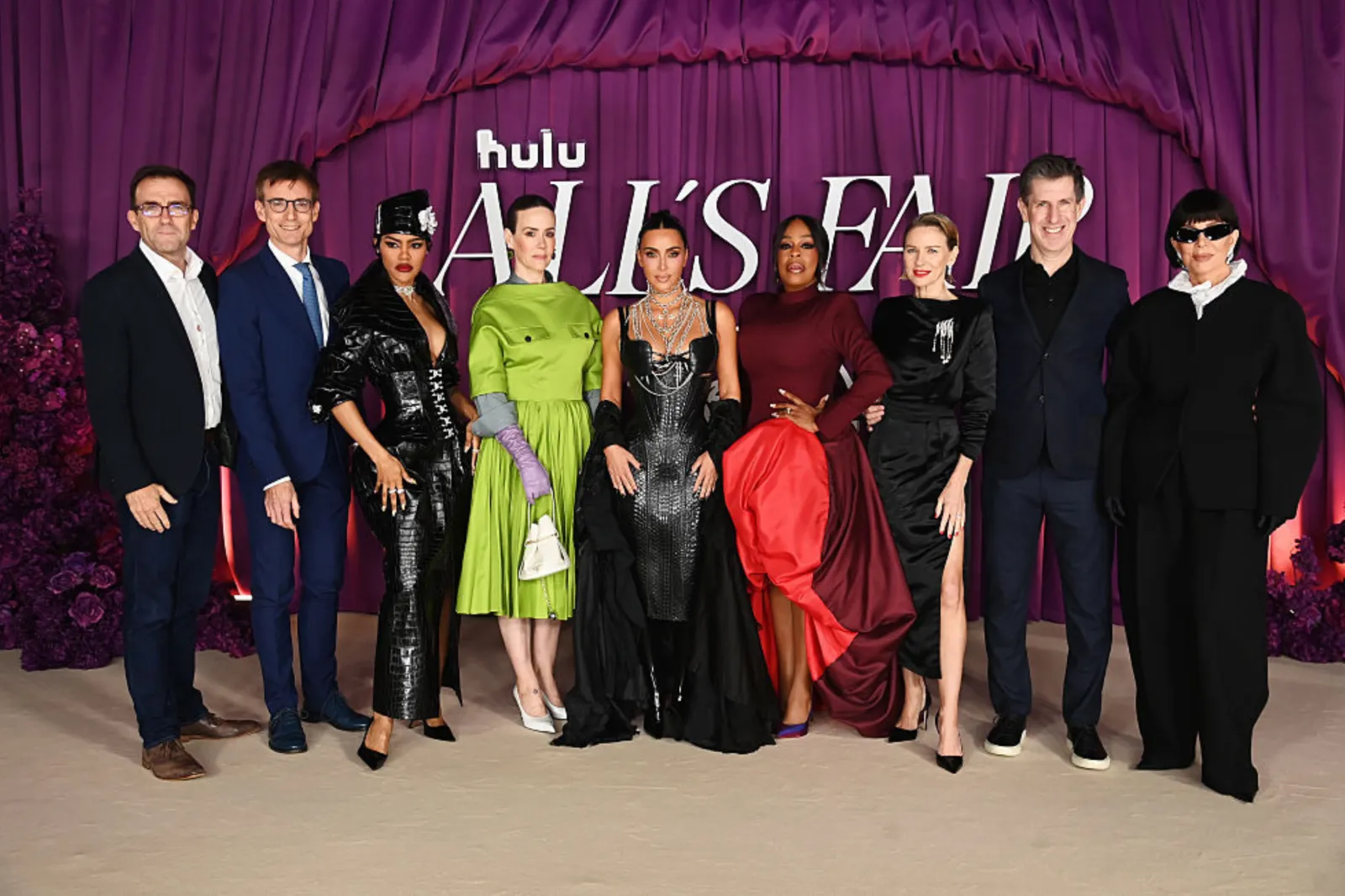
The cast only amplifies the show’s glossy appeal. Kim Kardashian stars as Allura Grant, joined by Naomi Watts as Liberty Ronson and Niecy Nash-Betts as Emerald Greene.
Teyana Taylor plays Milan, while Matthew Noszka steps in as investigator Chase Munroe. Sarah Paulson appears as Carrington "Carr" Lane, and Glenn Close rounds out the ensemble as Dina Standish.
What the Reviews Say
Critics landed hard.
The Guardian’s Lucy Mangan gave the series a rare 0-star rating, calling it "fascinatingly, incomprehensibly, existentially terrible."
Mangan hit out at a script she believed to be packed with cringeworthy lines and expressionless performances.
Mangan added that the show’s attempts at female empowerment feel outdated, its characters lack coherence, and its glossy excess only highlights how little anyone involved seems to understand what they are making. Her verdict: it is "so awful, it feels almost contemptuous"—and nowhere near "so bad, it’s good."
The Hollywood Reporter’s Angie Han labeled it "incredibly dull," arguing that the characters lack inner lives: "These characters are so thin, their storylines so flimsy and their motives so underbaked that there’s no recognizable emotion underlying any of it."
Han said the series is "glossy," but also "brain-dead," arguing that Kim Kardashian’s stiff, affectless performance perfectly matches the show’s equally lifeless writing.
The series strikes Han as something designed less to be watched than to be chopped into viral moments. She criticized its thin characters, incoherent emotions, faux-empowerment gloss and obsession with wealth, noting that even its wild costumes and over-the-top lines can’t compensate for plots and dialogue that feel hollow.
In Han's view, the show ends up as a collection of disconnected GIFs rather than a meaningful drama.
And Ben Dowell dubbed it "the worst TV drama ever" in his 0-star review for The Times.
And yet—the audience numbers keep climbing.
...
Why We Love To Hate
Despite the critical drubbing, All’s Fair is climbing streaming charts, riding a huge wave of online conversation. The worse the reviews, the more viewers seem compelled to see the "disaster" for themselves.
Social-media reactions reveal a mixture of fascination and escapism.
"I've been a bit down of late, and, I must say, ‘All's Fair’ was the perfect ridiculous escapism," wrote David Toussaint on Threads. "Yes, it's completely absurd … but boy did it work like a happy drug."
Liliana defended the series: "Yall want to hate All’s Fair so bad because yall hate Kim K ……. But it’s good!!… Shes in her acting BAG."
Others see it as low-stakes background viewing. "So far All's Fair is an enjoyable watch. but i see it more as a ‘let's watch this in the background’ show," said Shania.
The collective urge to watch something "bad" is hardly new—but All’s Fair speaks to a TikTok "brain rot" era of limited attention spans and a desire to collectively analyze and berate pop culture online.
Expert Insight: The Social Media Effect
Katherine Brodsky, a contributing editor at Skeptic Magazine, told Newsweek the success of All’s Fair has little to do with quality and everything to do with conversation.
Brodsky said: "These days, it's the shows that can spark a conversation on social media that can often translate into views. Audiences want shows that they can engage with and about online. That means that a show like All’s Fair can capture the audience's attention—regardless of quality—because it's not merely fun to watch, but engage over. It's about the water cooler conversation. And that's why what I lovingly call 'trash TV' can be so fun to watch, particularly as a social activity."
Brodsky added that camp—with its excess, absurdity and artificiality—is resurging, and Kardashian’s celebrity orbit fits neatly into that aesthetic. Parasocial ties also matter: fans who follow Kardashian or the Ryan Murphy universe are invested, regardless of critical consensus.
Ultimately, Brodsky said, All’s Fair reflects modern viewing habits where participation matters more than prestige. Audiences get to decide what is "good for them," separate from critics.
Why 'Bad' TV Still Wins
Scott Morgan, CEO of Event Horizon Studio and a Hollywood producing veteran, told Newsweek the show taps into a long-standing truth about how audiences connect to storytelling. In his view, films and series typically hook viewers voyeuristically, vicariously or viscerally—and, when a show manages even brief moments of all three, fans will stick with it and spread the word.
Morgan said: "The obsession over a badly reviewed series now revolves around one of my mottos: observation skills over adaptation speed. See it as a formula for seizing the moment, seizing the attention, and seizing the admiration for today’s young women (and men.)
"Isn’t that what fashion is about? Adapting fastest to new stimulation? Mastering it?" he said.
Morgan compared the phenomenon to shows such as Baywatch or Gossip Girl, where glossy spectacle outshone craft, shaping youth culture, despite low critical regard.
Morgan also framed Kardashian as a "zeitgeist" figure whose persona generates attention effortlessly. For fans, watching All’s Fair is less about storytelling and more about aligning with Kardashian’s cultural power.
The Psychology of Hate-Watching
Heather Hayes, clinical assistant professor of media and communications at Pace University, attributed the show’s virality to the rise of "hate-watching."
She told Newsweek: "Critically 'bad' shows still go viral and dominate streaming platforms due to a phenomenon known as "hate-watching," where viewers find joy in mocking content.
"Since Kim Kardashian has always been a polarizing figure, her haters are quick to criticize her professional endeavors beyond reality television, such as acting in a Ryan Murphy legal drama alongside Hollywood legends. They’re tuning in to confirm their doubts about Kardashian’s acting chops while simultaneously inflating their own superiority complexes."
Hayes said that the combination of Kardashian’s notoriety, TikTok’s commentary ecosystem, and viewers’ need for content to mock creates the perfect engine for a viral hit. It is the purest form of "all publicity is good publicity."
So … Is Prestige TV Over?
Not exactly, but the monoculture moment, where prestige dramas united audiences, is gone. Brodsky said that streaming has fragmented viewership, and platforms are now more invested in retaining subscribers with abundant content rather than investing heavily in one crown-jewel drama.
In this new landscape, shows like All’s Fair flourish precisely because they spark conversation, memes and online participation—the modern metrics of success.
With hate-watching, camp appreciation, parasocial fascination and social-media-fuelled irony converging, All’s Fair may be less the end of prestige TV than proof of what replaced it: entertainment driven by engagement, not excellence.
Newsweek reached out to a Disney publicist for comment via email.
View 0 Comments
Submit Correction
View Editorial & AI Guidelines