...

By Nazmul Roosevelt
0
Share
Newsweek is a Trust Project member
See more of our trusted coverage when you search.Prefer Newsweek on Googleto see more of our trusted coverage when you search.
Monster Hunter Stories has been a series for so long that many who have followed it from Capcom's debut on the Nintendo 3DS through Wings of Ruin on Switch have come of age alongside it; that natural evolution continues in Monster Hunter Stories 3: Twisted Reflection. It retains the sincere themes of Monstie–rider bonding, yet leans into a more thoughtful story, grounded stakes, and a presentation that confidently stands among the strongest turn‑based JRPGs. What began as a bright tale about befriending every creature you could find has matured into high fantasy wrestling with themes of succession, consequence, and what we owe our bonds.
Monster Hunter Stories 3: Twisted Reflection had a JRPG dream team

...
Read More on Entertainment
It is evident that this was the team’s intent. Director Kenji Oguro approached this entry aiming for a slightly older demographic compared to the first two titles; the darker themes of environmental collapse through the Crystal Encroachment pair naturally with a story centered on ecosystem restoration. Oguro also made the call to age the protagonist into a nineteen‑year‑old who already holds a leadership role within the Ranger Corps; this decision grounds the story in adulthood from the outset. He shaped the narrative pacing as well, ensuring that the sense of satisfaction comes from completing the main campaign rather than relying on a heavy spread of endgame content.
Executive producer Ryozo Tsujimoto, recently promoted to Chief Producer Officer overseeing all Capcom development divisions in 2025, further guided the game’s direction. He noted that internal playtests averaged roughly forty to fifty hours; he also championed the fully voiced protagonist, which gives the narrative more emotional clarity. His influence is felt in the game’s structure, tone, and overall accessibility.
Lead game designer Daisuke Wakahara reworked the mechanics to reflect the series’ aging audience. Battles are designed to be more challenging and more strategic, encouraging experimentation and critical thinking. The mechanical depth introduced through dual‑element Monsties aligns with the broader push toward quality‑of‑life polish, ensuring that, despite the added complexity, the moment‑to‑moment gameplay remains smooth and comfortable.
From execution to polish, this is the first great open-world game running on RE Engine
...
Twisted Reflection wants to start conversations with players willing to sit with its themes; its watercolor‑style storybook aesthetic anchors an enjoyable atmosphere for a general audience without talking down to them. The deepened RPG systems support players who want a smoother main story run without grinding. The experience is handily improved if you have history with the first two Stories titles; both prior games are easily available on modern platforms, with Monster Hunter Stories Remastered and Monster Hunter Stories 2: Wings of Ruin currently included in the PlayStation Plus Game Catalog.
Read more: Four Free PS Plus Games Available in March Starting Now - Newsweek
Capcom has steadily broadened access to the series; the remaster of the original Stories is an excellent gateway JRPG, while Wings of Ruin, which arrived on more platforms in 2025, provides an adventure set two centuries before this latest entry. Playing Wings of Ruin is advisable if you already understand the genre; the bigger payoff comes from recognizing how each game builds on the last with lore, mechanics, and themes.
At the center of Twisted Reflection’s conflict is the Crystal Encroachment, an ecological corruption affecting both the world and the people who inhabit it. Two nations, Azuria and Vermeil, maintain tense political dynamics; meanwhile, the protagonist’s arc unfolds through childhood, ranger training, and personal reflection. Flashback cutscenes appear at measured points rather than being front‑loaded; the customization of your character is lightly reflected in these moments, although you will have to use your imagination regarding how little your in‑game parents resemble you.
A notable and welcome shift is the fully voiced protagonist. Voice acting is excellent throughout; the Palicoes’ varied personalities present a meaningful departure from Navirou’s nasal comedic relief from previous entries. Giving your character a voice places you at the center of narrative conversations; the tone is earnest and trusts you to sit with moments of loss, responsibility, and the ripple effects of environmental mistakes. This sincerity makes the game recommendable for everyone rather than “just for kids,” as the first two Stories titles were often considered.
Monster Hunter Stories 3: Twisted Reflection has something for everyone

...
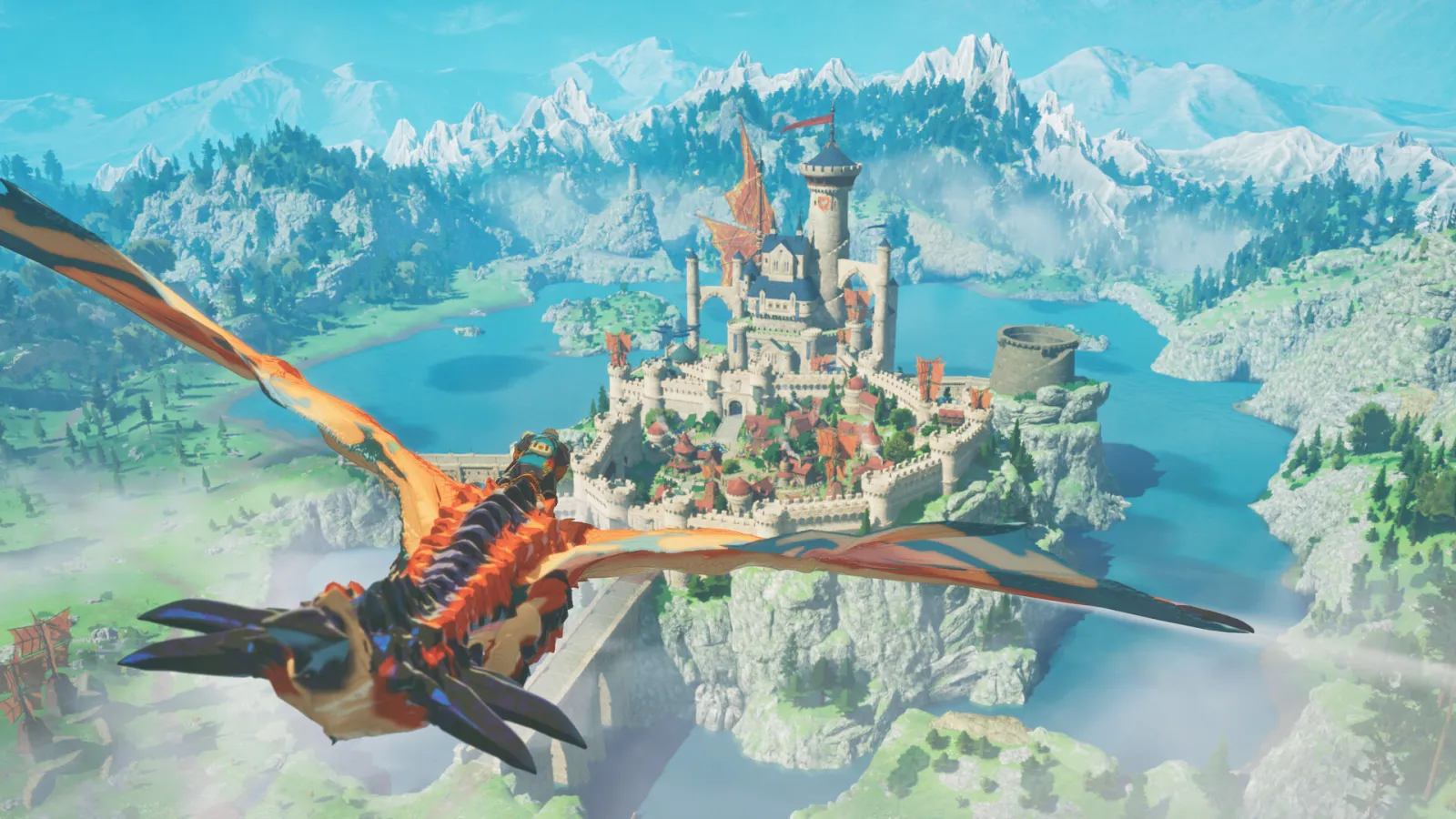
The watercolor‑inspired art direction maintains readability across villages, plains, and interiors; silhouettes remain clear against shifting horizons. Cutscenes benefit from deliberate camera work; scenes linger when needed, landing emotional beats without rushing or overcutting. On Switch 2, the image can appear softer or muddier in dense biomes; docked mode improves stability, shadows, and lighting. Because the trial version carries save data forward, players can test multiple platforms to see which performance profile suits them best.
Rendered properly, this is Capcom’s first overall great open‑world game built off the RE Engine; regions open outward with visible horizons, layered routes, rare caverns, and diverse pockets of crafting materials and Monsties. Denser zones nudge you into detours without derailing the story. Near‑field readability stays strong thanks to stylization; however, far‑off foliage and text on handheld hardware can appear busy. Sweeping zones methodically is rewarded; releasing Monsties into areas with Habitat Restoration influences, which monsters and variant types populate each region.
Combat retains the rock–paper–scissors Power–Technical–Speed system. Head‑to‑head clashes hinge on predicting enemy intent; coordinating your attack with your Monstie leads to Double Attacks that defuse incoming damage. Boss encounters feature phase logic and part targeting; swapping Monsties is essential to matching enemy weaknesses. Researching Monsties in the Monsterpedia is vital to find the right tempo; weapon types and their buffs bring situational advantages.
The Wyvernsoul Gauge is the major new mechanic in battle; this meter represents an enemy Monstie’s spirit and can be exhausted to wear down opponents before triggering a Synchro Rush. This timed button prompt introduces brief bursts of cinematic action that tighten the turn‑based cadence.
A world of diversity waiting to be discovered

...
Across the world, cultures present different philosophies toward monsters; some follow faithful tradition, while others wield creatures as symbols of military strength. Music reinforces emotional impact; animation evokes something closer to a Wit Studio production than a Saturday morning cartoon, giving characters vivid expressiveness.
Progression feeds numerous upgrade paths: armor, Monstie stats, gear, and meal buffs all provide meaningful avenues for improvement. These systems echo Monster Hunter’s expectations from its action titles. Thanks to SSD utilization, the game’s fast travel and loading times are drastically improved over previous entries.
Platforming challenges require switching between Monsties to reach specific areas; the Palamute, popularized in Monster Hunter Rise, returns as a traversal option that speeds up overworld exploration.
The narrative presents characters who shoulder responsibility with empathy and nuance; cutscenes frame nobility and political leadership with care. The differences between Azuria’s elected officials and Vermeil’s hierarchy enrich the broader mystery at the heart of the story.
Golden Caverns act as gearing milestones; exploring them when your strength curve stalls provides rare crafting materials and experience. Preparation matters; quest text usually points toward the next objective and rewards careful observation. Many side quests yield materials or eggs that fill gaps in your team; being lost is rarely wasted time.
This is a story with a lot of care put into it; it is a game about preparation; it is a loop about engaging with exploration and being rewarded for your attention and critical thinking skills. It carries the optimism of earlier Stories games, but trusts you to handle more. Try the demo, decide which platform suits your eye and bring your save to experience the watercolor art, deliberate cutscene direction, and quality of life features that all make the case that Monster Hunter Stories 3: Twisted Reflection is the best in the series.
View 0 Comments
Submit Correction
View Editorial & AI Guidelines