10
Loading video...

By H. Alan Scott
Senior Editor
0
Share
Newsweek is a Trust Project member
See more of our trusted coverage when you search.Prefer Newsweek on Googleto see more of our trusted coverage when you search.
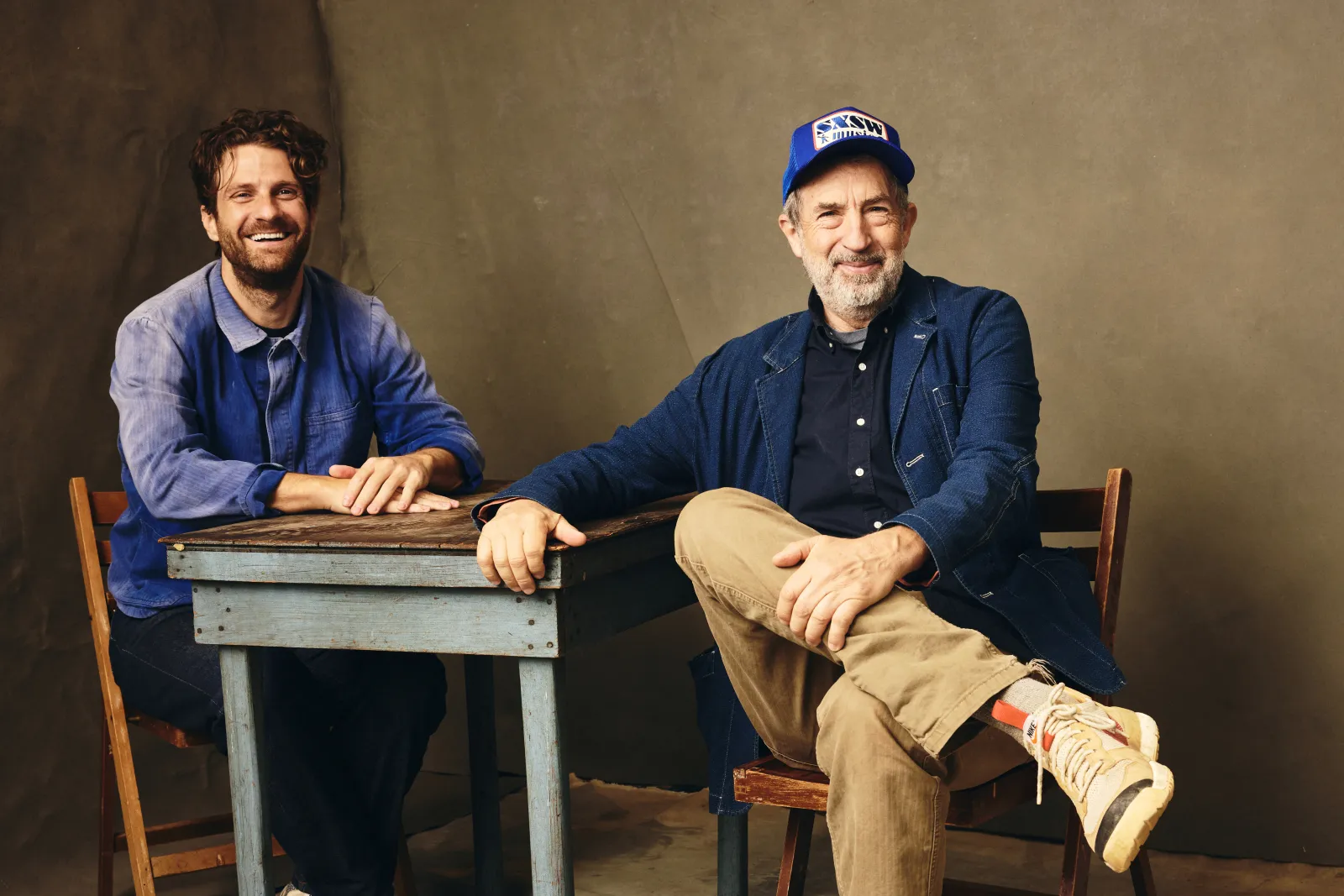
Filmmaker Eric Goode and his producing partner Jeremy McBride have been on a run these past few years, making hit documentaries about what happens when humans get a little too into certain animals. With Netflix's Tiger King and HBO's Chimp Crazy, Goode explored the personalities behind the obsessions. In both cases, his subjects ended up in prison.
With Monsters of God, airing on HBO, Goode once again turns to our relationship with another species, this time exotic reptiles and the people who smuggle them. In many ways it is his most personal series yet. Over the course of it, Goode, a turtle conservationist, comes to realize he is not only the documentarian observing. He is also part of the problem.
That realization has been decades in the making.
Read More on Entertainment
"I've been a reptile guy my whole life," Goode says. "I was closeted for many years to my constituents, if you want to call it that, in New York City."

Photograph by A24/Goode Films/HBO/HBO
Goode lived in New York for more than 40 years, where he built a career as a nightlife impresario, restaurateur and hotelier. Many tortoises came with him. He kept them in his loft through the '80s, the '90s and the 2000s, to the confusion of nearly everyone who visited.
"My partners would be freaked out that I was so interested in tortoises when they'd come to my apartment thinking I was really interested in fashion and art and music and all these other things you talk about in New York City," he says. "It's usually not about turtles."
One exchange has stuck with him for 40 years. Andy Warhol interviewed Goode back when he ran the downtown club Area.

...
"He asked me, in very Andy terms, 'Gee, what are you going to do with all the money you're making, Eric?' And I said, 'I'm going to buy tortoises that I really like.' And he said, 'Tortoises. Gee. Tortoises.' Very Andy Warhol."
The series traces the rise of reptiles in 20th century zoos and how that fascination created not only a booming demand for reptile ownership but rival international kingpins racing to cash in on a lucrative and fledgling smuggling industry. It is a big, strange, sprawling story. It was also not an easy pitch.
"I'm very grateful that HBO was willing to take on a project like this," Goode says, "because people might say, ‘Oh, I want to do a documentary series about panda bears or tigers or chimpanzees. But snakes and lizards and turtles, maybe not.’ So they were brave to take this on."
Part of what makes the work land is how it gets made. Goode does not use a computer and is not on social media. He and McBride sit at a table and talk. On Tiger King, the crew was two people.

...
"It was just me and my camera guy, period," Goode says. "I didn't know what I was doing. I'd go to some house and knock on the door and someone isn't waking up because they're a meth addict or whatever it may be. And then it's, okay, what do we do next?"
Sometimes that meant waking at four in the morning and driving 500 miles to East Texas for one interview, then driving 500 miles back the same day.
"This is not a recipe for success in the film industry, I will say that," he says. "Don't try to follow what we do, because it's deeply unorthodox."
What it does buy them is access, which Goode considers the whole ballgame. And with Monsters of God, Goode’s reputation among reptile enthusiasts was crucial. He is accredited by the same body as the San Diego Zoo, the Los Angeles Zoo and the Bronx Zoo. He has known some of the reptile guys for four decades.
"I knew the reptile people because I'm one of them," he says. "It takes one to know one. So yeah, we're uniquely qualified or unqualified to do this."
McBride, who built out a post-production process involving 175 interviews and roughly two dozen editors and collaborators, says Goode's history was not incidental to the series. It was the driving force behind everything.
"He's one of these people who had made choices that may have been less popular back then, which makes him no different from some of our characters," McBride says. "That gives it this incredible authenticity of why to tell it, and what's at stake."
At the heart of the series are the people, and as in his past work, the truly shocking material rarely involves the animals; it involves the humans trying to control them. Goode is careful not to sort them into heroes and villains, in part because he does not believe he would land cleanly on either side.
"I have a level of hypocrisy in me, and I never want to make myself look like I'm better than these people," he says. "Law enforcement isn't necessarily better than the guys who are bringing in the animals. Everyone's partially a villain and everyone's partially a good guy in this story."
The title comes from Monster of God, a book by his friend the author David Quammen.
"I think the monsters of God are really us, right?" he says. "Not so much the reptiles. We're the monsters."
...
For all that, he is emphatic that the series is not an argument against keeping reptiles. If anything, he thinks the community has cleaned itself up.
"Number one, I'm not the animal police," Goode says. "I think kids should have reptiles, because it nurtures an interest, and an interest can blossom where they could do something positive later in life from having that leopard gecko or bearded dragon."
He points out that the ball python now occupies roughly the cultural slot the gerbil once did, and that some of the most common pets in America arrived here illegally.
"Bearded dragons were smuggled in from Australia 20 years ago and now every kid in America and Europe has a pet bearded dragon," he says. "So there are a lot of unintended consequences: good, bad and ugly."
Given that his last three major projects have all centered on species other than our own, one question has to be asked: Is he ever going to run out of animals?
"There's always another interesting group of animals, whether it's butterflies or tropical fish or praying mantises or seahorses," Goode says. But, in fact, he and McBride are working on projects with no animals in them at all, including one about New York City in the '80s through the lens of nightlife.
"I do obviously have a soft spot for the natural world," he says. "I mean, we're animals."
McBride puts a finer point on it.
"The animals are sort of proxies for the human condition, and we explore a lot of that," he says. "While there might be an animal focus and a feature, it's about our relationship with them."
View 0 Comments
Submit Correction
View Editorial & AI Guidelines