
...


By Jack Royston and Jordan King
0
Share
Newsweek is a Trust Project member
See more of our trusted coverage when you search.Prefer Newsweek on Googleto see more of our trusted coverage when you search.
British government documents released Thursday reveal that Queen Elizabeth II personally backed Andrew Mountbatten-Windsor’s appointment as a U.K. trade envoy in 2000, with civil servants saying she was "very keen" he get the role.
Officials moved quickly to install the royal in the influential overseas role despite no evidence of a formal vetting or due diligence process.
The papers, published as part of a parliamentary update to the House of Commons, detail how ministers and senior civil servants advanced the appointment after the Duke of Kent signaled his intention to step down from trade promotion duties.
Read More on Celebrity News
The documents show that the late Queen Elizabeth II wanted her son—then the Duke of York—to take over, and government officials appeared eager to expand Mountbatten-Windsor's public role abroad, long before the formal proposal landed on ministers’ desks.
Duke of York a 'Natural Fit'
David Wright, chief executive of government body British Trade and Industry, wrote in a document dated February 2000 and seen by Newsweek: "The Oueen's wish is that the Duke of Kent should be succeeded in this role by the Duke of York...The Queen is very keen that the Duke of York should take on a prominent role in the promotion of national interests. No other member of The Royal Family would be available to succeed the Duke of Kent. The Duke of York's adoption of his role would seem a natural fit."
The wording appears to suggest that the palace made it clear to Wright that if the government wanted to continue to have a royal family member as trade envoy, it would have to be Mountbatten-Windsor. However, the reference to him as a "natural fit" stands in stark contrast to media reporting of the era.

...
A Disastrous Choice
An April 2001 article in The Guardian was headlined: "Prince Andrew–another royal accident waiting to happen?"
The article stated: "The appointment had the backing of the Queen, but stunned palace aides and politicians; they believe Prince Andrew's personality and lifestyle make him a disastrous choice."
"Even Prince Charles is understood to have voiced reservations about his brother's suitability," the article added. None of those concerns were relayed to the British government in the documents disclosed.
Historian Andrew Lownie, author of Mountbatten-Windsor biography Entitled, told Newsweek: "This should have been red flags all over Whitehall [the home of the U.K. civil service]."
The latest file release sheds light on the process by which Mountbatten-Windsor was appointed, but it stops around 2001, so there is little in the tranche of documents about how he did the job over the next 10 years.
One reason for that decision may well be a desire not to prejudice an ongoing police investigation into Mountbatten-Windsor's relationship with Jeffrey Epstein. However, Lownie's book quotes numerous sources that raise major concerns about Mountbatten-Windsor's conduct during that later period.
"There are thousands and thousands of pages that could be released without compromising the investigation," Lownie said, "and I've been calling for a parliamentary inquiry."
He said politicians in the foreign office and diplomats should testify, adding: "They should be on oath and explaining because Andrew didn't operate alone, he was enabled by these people."
The Epstein Links
Mountbatten-Windsor stepped down from his trade envoy status in 2011 over allegations linked to his closeness to Epstein, the late financier who pleaded guilty in 2008 to soliciting prostitution from a minor.
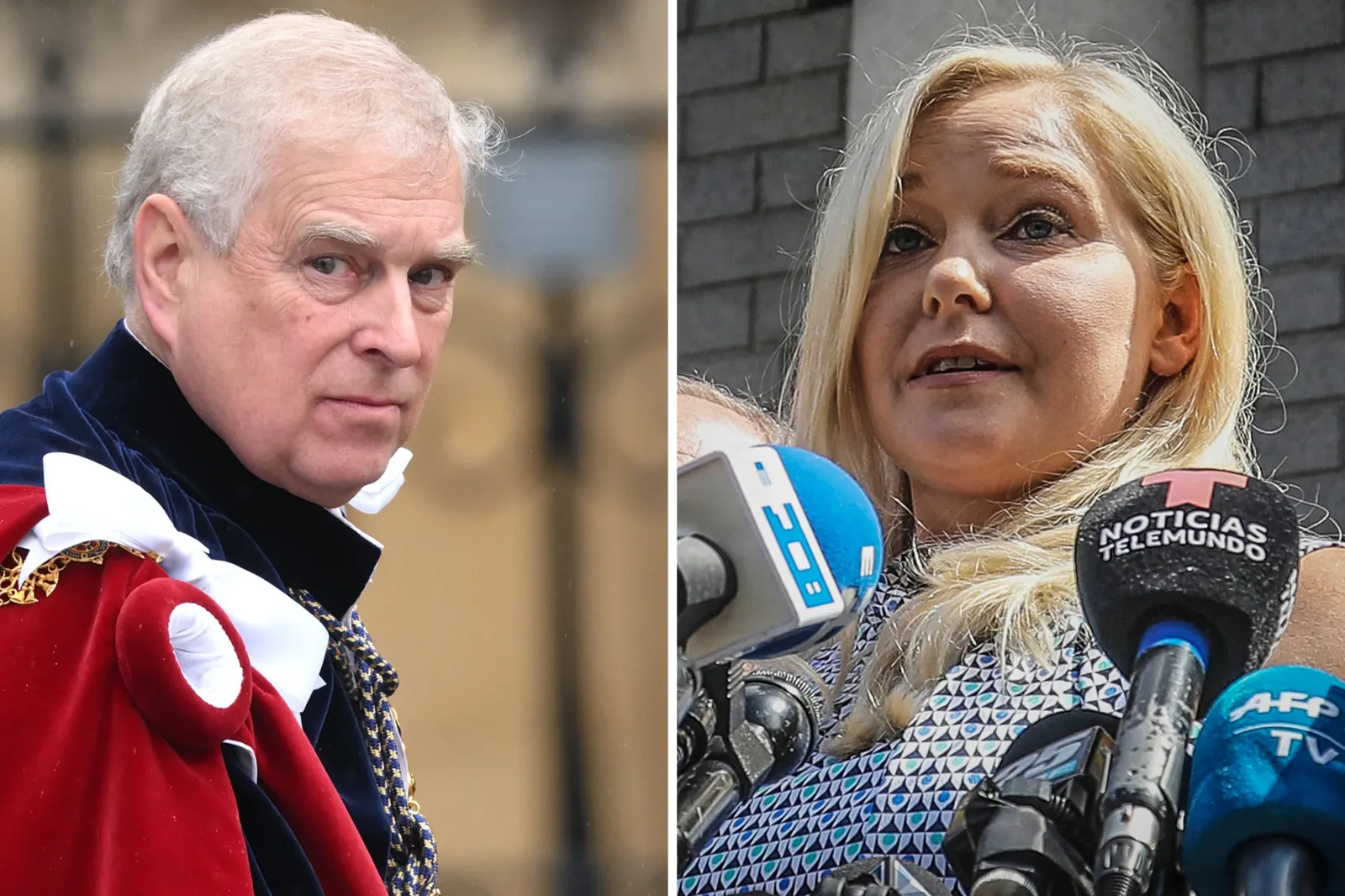
The former prince was photographed with Virginia Giuffre, who would later go on to accuse him of sexually assaulting her in 2001 when she was 17 and a sex trafficking victim of Epstein's. She said that she was forced to have sex with Mountbatten-Windsor on three occasions, and that Epstein paid her $15,000 after an encounter with the former prince in London.
In August 2021, Giuffre sued Mountbatten-Windsor in New York for "sexual assault and intentional infliction of emotional distress." The lawsuit was settled in February 2022. The former prince paid Giuffre an undisclosed amount, made a donation to her charity, denied wrongdoing, and settled without admission of liability.
...
Denials Over Andrew's Expenses
Questions were already being asked over Mountbatten-Windsor's appointment when the government moved to deny suggestions the former prince had requested £100,000 of office expenses.
“There has never been a demand for any payment for office expenses," a document dated August 2001 read. "It was made clear from the start that only expenses incurred on BTI business will be covered in HRH's role. This is by mutual agreement with Buckingham Palace.”
While the government's position appears to be that the stories were wrong, it reflects a mismatch between how the decision to give him the job was discussed publicly at the time and the official internal communications.
No evidence has emerged to show that civil servants and U.K. politicians were discussing the concerns raised publicly by the media.

...
The New Files
The newly released files raise broader questions about accountability, privilege, and the extent to which royal influence shaped government decisions behind closed doors.
For the public, the story sets up a debate about who gets scrutinized, who gets trusted automatically, and whether standards applied to ordinary public servants were ever imposed on a senior royal.
Trade minister Chris Bryant told MPs that records from February 2000 showed Sir David Wright formally proposed Mountbatten-Windsor for the role while citing "Her late Majesty’s wish" that he take over international trade promotion responsibilities.
Bryant said the position was designed to include "two or three trade promotion visits overseas per year, visits to U.K. regions and receiving prominent overseas trade visitors in the U.K."
No Due Diligence
But the minister acknowledged a striking omission in the process.
"We have found no evidence that a formal due diligence or vetting process was undertaken," Bryant said in his statement to Parliament. "There is also no evidence that this was considered."
The revelation is likely to intensify scrutiny of how Mountbatten-Windsor, once viewed as a high-profile ambassador for British business, was elevated into a sensitive government-linked role with minimal documented oversight.
According to Bryant, officials had already been discussing ways to broaden the former prince’s public responsibilities before the appointment was finalized. In January 2000, then-Foreign Secretary Robin Cook reportedly agreed that "greater use should be made" of the prince in support of British trade interests overseas.
The files suggest the government saw Mountbatten-Windsor as a valuable asset capable of opening doors for British business leaders abroad, leveraging royal prestige to strengthen diplomatic and commercial relationships.
Former Prince's Arrest and Denials
A separate police investigation has revived damaging questions about Mountbatten-Windsor’s judgment and conduct.
Thames Valley Police in England arrested the former prince in February on suspicion of misconduct in public office after reports alleged he leaked confidential government trade information to Epstein during his tenure as trade envoy.
The allegations reported to police relate to a period, in around 2010, some years after the latest documents disclosures. He was later released under investigation, and no charging decision has been announced.

...
Mountbatten-Windsor has consistently denied wrongdoing connected to Epstein.
Government officials emphasized that the newly released records relate primarily to the former prince’s original appointment and not to the substance of the ongoing police inquiry. Ministers also said precautions were taken to ensure publication of the documents would not interfere with detectives’ work.
Official Duties and Personal Interests Blurred
Still, the details contained within the files offer fresh insight into how carefully Mountbatten-Windsor’s image and public activities were managed from the beginning.
One document reveals concerns raised by Captain Neil Blair, Mountbatten-Windsor’s principal private secretary at the time, over the prince’s participation in golfing events during official overseas visits.
Kathryn Colvin, then head of the government’s Protocol Division, noted in correspondence that Blair "particularly asked that The Duke of York should not be offered golfing functions abroad."
"This was a private activity," the memo continued, "and if he took his clubs with him he would not play in any public sense."
While seemingly minor, the request has drawn renewed attention because it echoes long-running criticism that Mountbatten-Windsor blurred the line between official duties and personal interests during international trips.
Those concerns have been amplified in recent years by claims in Lownie’s book that Mountbatten-Windsor at times treated official travel as an opportunity for personal gain.
Andrew Needed ‘Induction Work’ for Trade Job
Internal documents reveal officials privately discussed the then-Duke of York’s lack of experience before he took up his role with British Trade International (BTI), a topic that frequently came up in the media after his role was announced.
In a confidential letter dated February 29, 2000, BTI Chief Executive Sir David Wright acknowledged Mountbatten-Windsor would require “some induction work” before stepping into the position.
“He might even do some ‘shadowing’ of work in our offices and our activities both in the region and overseas,” Wright wrote to government ministers.
Wright stressed it was “important” for the duke to understand BTI’s “general strategy and approach,” though he appeared keen to limit Mountbatten-Windsor’s formal responsibilities.
“I did not envisage that the Duke of York would want to be burdened with the regularity of meetings of the Board of British Trade International or the burden of paper which goes along with the Board membership,” he wrote.
Instead, Wright said officials would ensure Mountbatten-Windsor was simply “kept in touch with Board developments.”
Questions over his qualifications quickly followed.
In preparation for a March 19 interview with The Times journalist Elizabeth Judge, Mountbatten-Windsor was asked directly how he secured the position despite having “no background in international trade.”
The then-prince defended his appointment by arguing that “the Royal Family’s role in promoting the full range of British interests abroad is long established.”
He also said he had been working with BTI “from as long ago as April 2001,” months before his official induction began.
Mountbatten-Windsor said the transition had been a “steep learning curve,” but said he “relish[ed] the challenge” and hoped to “make a difference.”
Disappearance From Official Life
Mountbatten-Windsor withdrew from public royal duties following his disastrous 2019 BBC interview about Epstein, and in October was stripped of his "Prince" and "Duke of York" titles by King Charles over his links to Epstein.
However, the publication of government records—particularly those directly linking Queen Elizabeth II to his appointment—risks drawing the late monarch into renewed public debate over the handling of her son’s career.
The latest disclosures are expected to fuel calls for greater transparency surrounding royal appointments and the informal influence historically exercised by the monarchy within government.
View 0 Comments
Submit Correction
View Editorial & AI Guidelines