10
Loading video...

By Jack Royston
Chief Royal Correspondent
0
Share
Newsweek is a Trust Project member
See more of our trusted coverage when you search.Prefer Newsweek on Googleto see more of our trusted coverage when you search.
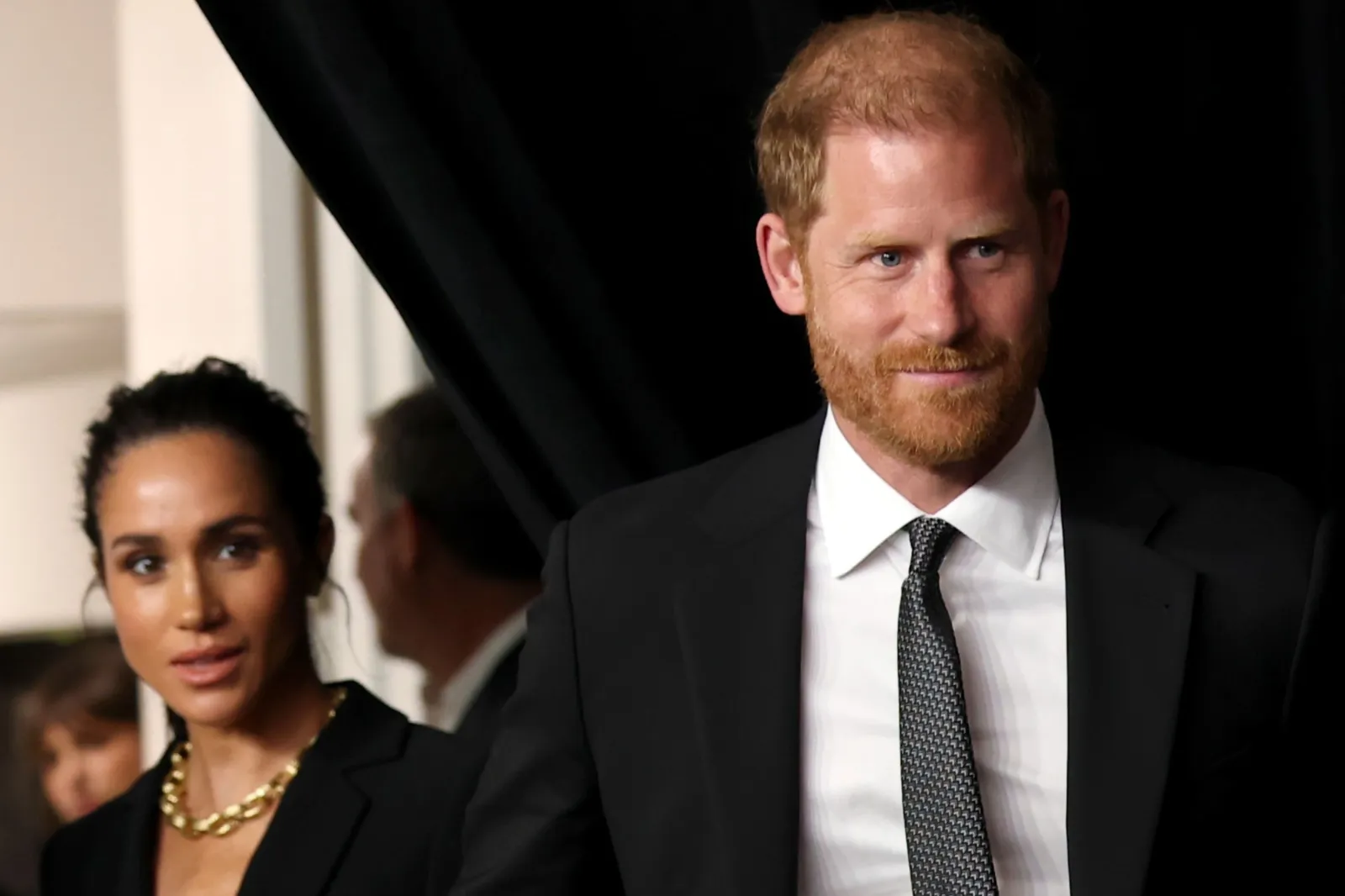
Prince Harry and Meghan Markle have accused Elon Musk of putting his company's bottom line ahead of protecting children from "nudification" apps in a statement on their website.
The Duke and Duchess of Sussex did not mention Musk by name but called out the "trillionaire leader of the tech company responsible for X’s Grok." Grok is an AI chatbot owned by xAI, whose founder and CEO is Musk.
The couple praised the Minnesota state Senate for passing a law banning apps that use AI to create fake naked or sexualized photos of people and suggested Musk had filed legal action to oppose the ban. The statement also referenced new laws in Pennsylvania, North Dakota and California.
Read More on Celebrity News
A lawsuit by xAI said Minnesota had the right to prohibit the use of AI to create sexualized images but argued the law went further with a potential impact on free speech and other rights.
...
Why It Matters
Prince Harry and Meghan have made campaigning against the harms of digital technology a major plank of their social action. Meanwhile, there has been global political tension over the extent to which AI should be regulated by government.
What Harry and Meghan Said About Elon Musk
A statement posted on the couple's Sussex.com website reads: "Big Tech has taken shocking steps to limit restrictions on or accountability for these objectively predatory A.I. product features.
"Most recently, ahead of the Minnesota law to ban "nudification" apps going into effect tomorrow, the trillionaire leader of the tech company responsible for X’s Grok, sued the state of Minnesota to stop the law from going into place."
Musk recently became a trillionaire after SpaceX went public but lost the status shortly afterward, according to data from Bloomberg.
Harry and Meghan's online statement reads: "If one wonders why someone would try to stop a ban on AI technology producing deepfakes of people and children in the nude without their consent, they need look no further than the three different groups, including a UK lawmaker, an Arkansas family, and five children from Tennessee, all filing new lawsuits against that same Grok feature, alleging it created sexual material of them, just this week."
Jess Asato, the Labour Member of Parliament for Lowestoft, in England, sued xAI over deep fake images and videos, posted without her consent, some allegedly showing her being sexually assaulted, the BBC reported.
Filings stated that "sexualised, intimate, grossly offensive, degrading, threatening, humiliating and/or discriminatory non-consensual images" were posted of Asato by Grok users.
"The company is mitigating risk to their bottom line instead of aggressively responding to the clear evidence their product features are enabling predators to prey on women and children," Harry and Meghan's statement read.
While it was not signed by the couple personally, it was posted to the news section of their website, which carries a banner stating it is "The Office of Prince Harry & Meghan, Duke & Duchess of Sussex."
Elon Musk's Lawsuit in Minnesota
Musk’s artificial intelligence company xAI filed a federal lawsuit in Minnesota in late July seeking to block a state law aimed at banning the so-called "nudification" technology.
The Minnesota statute, known as HF 1606, was signed into law by Governor Tim Walz. It prohibits apps and websites from allowing users to create AI-generated nude or sexualized images of real people without their consent.
The law also authorizes penalties of up to $500,000 per violation and creates avenues for enforcement by victims and the state attorney general.
xAI's civil complaint, seen by Newsweek, argues the law "imposes an overbroad, content-based ban on free speech and the tools of visual expression in a clumsy attempt to prohibit 'nudification.'
"xAI strictly prohibits its users from generating nude or sexualized images of people without their consent and has indeed filed suit against users who evade its extensive technological blockers to generate such images in violation of this strict prohibition."
"xAI accordingly does not contest Minnesota’s interest in prohibiting the dissemination of artificially generated nude images of real people without their consent," the complaint added.
Lawyers for the company expressed concern that AI platforms could be liable under the Minnesota law if a user successfully creates a nude image, regardless of whether the platform "prohibits users from using its tool for such a purpose, regardless of how many mitigations the provider has in place, and regardless of how diligently the provider polices such conduct using its tool."
The complaint suggested companies like xAI could be in breach of the law for images generated for their "artistic, scientific, political, satirical, educational, medical, or religious value."
xAI Applies for an Injunction
Court filings seen by Newsweek show xAI attempted to get the law paused prior to it taking affect and pending the outcome of the lawsuit but did not succeed in persuading judge, Donovan W. Frank.
Frank's order read: "The Court respectfully denies the request for a temporary restraining order before tomorrow. xAI filed the motion on July 29, 2026, nearly three months after the law was signed, and only three days before the law is set to take effect. Such a delay in bringing the action and the motion suggests that harm is not immediate."
Instead, xAI lawyers will argue the case for an injunction while a team representing Minnesota's attorney general will argue against at a hearing at the Edward J. Devitt Courtroom, in St. Paul, on August 19.
Contact Newsweek editors on this story: Matt Cannon and Tony Phillips.
View 0 Comments
Submit Correction
View Editorial & AI Guidelines