...

By Lydia Patrick
Life & Trends Reporter
0
Share
Newsweek is a Trust Project member
See more of our trusted coverage when you search.Prefer Newsweek on Googleto see more of our trusted coverage when you search.
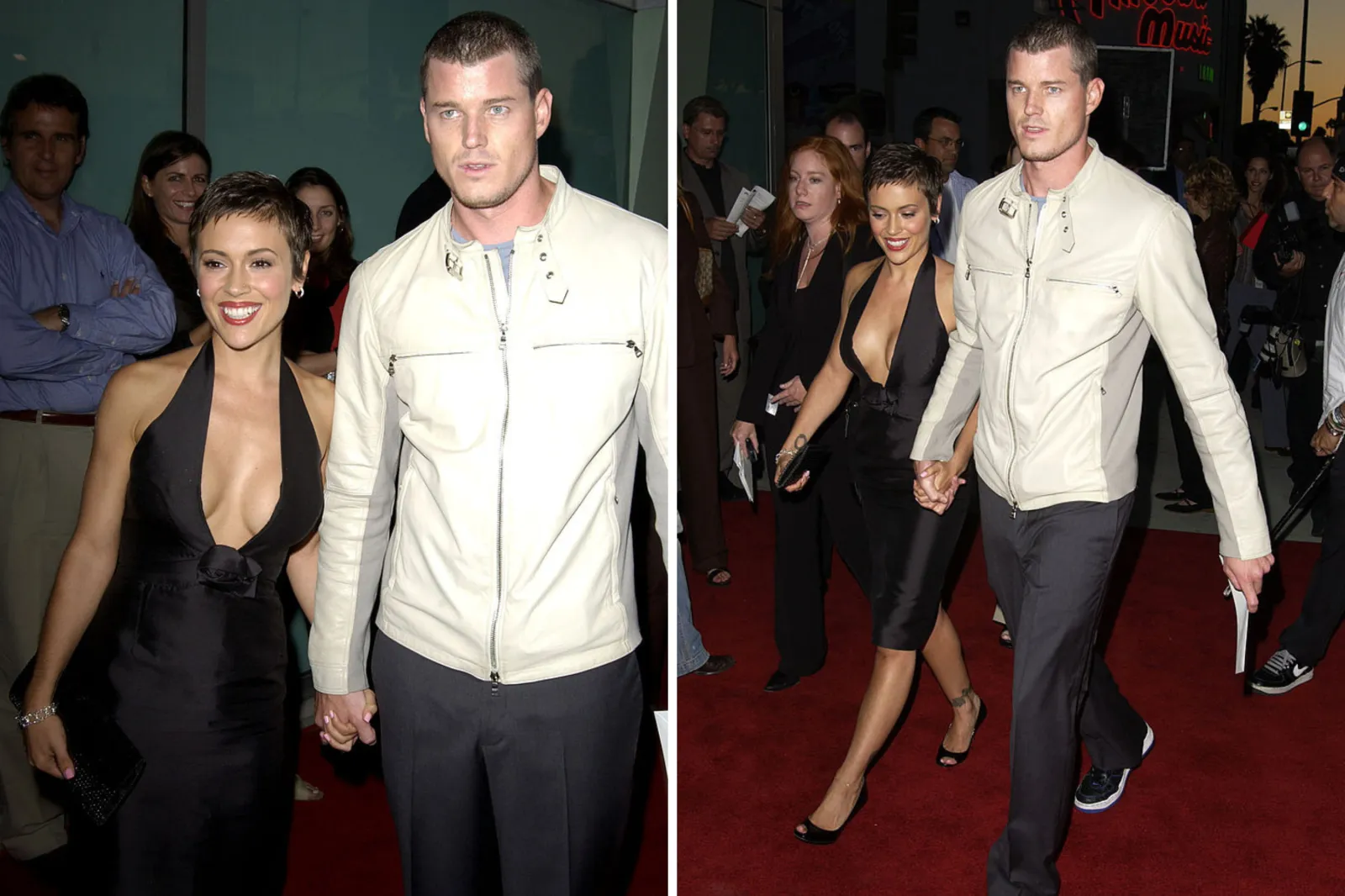
Alyssa Milano has defended the families and friends who have created fundraisers after the deaths of Eric Dane, her Charmed co-star, and James Van Der Beek.
Milano, 53, argued that public perceptions of actors’ wealth haven’t kept up with a transformed industry.
In a Substack essay titled, The “Elite” Myth and the GoFundMe Outrage, Milano pushed back on the assumption that household‑name status equals financial security.
Read More on Entertainment
“There is a mythology about actors that lingers from another era, one built on twenty-two-episode seasons, long-term network contracts, DVD sales, and syndication checks that arrived for decades. In that model, a hit show could provide steady employment for most of the year and residuals that offered real financial security between jobs. That system shaped the public’s understanding of what a 'successful' actor must earn,'" she wrote. She added: “But that system has largely disappeared,” pointing to shorter streaming seasons and diminished residuals.
Newsweek reached out to Alyssa Milano's publicists and to the Dane family's publicists for comment via email outside of their usual working hours.
...
The Eric Dane Context
Dane died on February 19, 2026, at age 53 after being diagnosed with ALS last year. He is survived by his wife, actor Rebecca Gayheart, and their teenage daughters, Billie and Georgia. Tributes from collaborators poured in as friends organized a fundraiser to support the girls “and their future needs.”
Milano argued that the backlash to such pages ignores the reality for thousands of performers who no longer benefit from the legacy TV model.
She cited SAG‑AFTRA data to underline that most members are not wealthy. SAG‑AFTRA—the U.S. union that represents roughly 170,000 performers, including actors, stunt performers, voice artists, dancers and broadcast journalists—does not provide automatic health insurance; members must qualify through union‑covered earnings or work days.
According to the SAG‑AFTRA Health Plan, the 2026 earnings threshold for the Active Plan is $28,090, with an alternative route requiring 108 Eligibility Days.
Milano also pointed to pandemic disruptions and AI‑driven uncertainty, saying many actors supplement income by selling wardrobe pieces or using Cameo, a platform where public figures sell personalized video messages to fans.
She rejected the “elite” label as a way to “other” actors when they speak about politics, arguing most come from ordinary backgrounds.
She urged readers to look upward at decision‑makers who control profits. A beloved credit on a hit show, she wrote, doesn’t guarantee long‑term wealth.
She concluded: “In the end, this is not about celebrity. It is about community. And in moments of crisis, community—however imperfect, however online—shows up. That should not be controversial. It should be a reminder.”
The fundraiser for Dane has raised $425,418 of its $500,000 goal.
"Any contribution, no matter the size, will help provide stability during this incredibly difficult time and in the future for Eric’s wonderful daughters," the page reads.
Not All Social Media Users Agree
Nikki Tucker (@ding_gorgeous), a podcast co‑host and author, refuted Milano’s framing, noting that the actor was citing SAG‑AFTRA member data that encompasses a broad swath of entertainment workers beyond red‑carpet regulars—“stunt performers, voiceover artists, recording artists, announcers, broadcast journalists, dancers, DJs, news writers/editors, program hosts, puppeteers, singers,” among others.
Tucker argued that when you consider that entire umbrella, “most members are middle class at best,” but said conflating “working actor” with “household name” leads to misplaced shock about union members’ incomes. She also pushed back on pandemic‑era hardship claims—“Newsflash: it affected everyone”—and added that most people “didn’t have a monetizable fan base as a safety net,” writing: “No one was paying for our cameos. No one was buying our autographs.”
She concluded that when the takeaway is that the public doesn’t “understand” actors’ finances, “the word ‘elite’ starts to feel less like a myth and more like a matter of perspective.”
However, Threads users pushed back on Tucker’s assessment. “I don't really understand this thread. You make it sound like she's lying, but the data you provide backs up her statement,” said Sazzie Whovitse.
Derek Russo wrote: “I’ve been a working actor (and stunt performer) for close to a decade. I live in arguably the lowest cost-of-living major hub for film/TV (Atlanta). According to the earnings metrics, I’m in the top 3 percent of actors. I get by, but not easily. And 2025 wiped out most of the financial safety net I had built up. I’m back to saying yes to jobs that my resume should say no to—but it is what it is. I also know that AI is going to take away both of my jobs in the next five-10 years, likely closer to five.”
The Van Der Beek Debate That Reignited The 'Elite' Argument
The conversation flared shortly after the death of Dawson’s Creek star James Van Der Beek, who died in early February from Stage III colorectal cancer. A GoFundMe to help his wife, Kimberly, and their six children quickly surpassed its initial target; within days, donations had topped $2 million, with totals continuing to climb.
As the fund grew, reports surfaced that the family had finalized a $4.7 million purchase of the Texas ranch they’d been leasing, about a month before his death—prompting online criticism and questions about the fundraiser.
Van Der Beek’s representative told People on February 14: “James secured down payment for the Texas ranch for the family with the help of friends through a trust so they could shift from rent to mortgage."
Van Der Beek’s friend, actor Mehcad Brooks, pushed back forcefully against detractors, writing: “I am one of the Van Der Beek’s closet friends and the headlines are fake AF [as f***] you have no idea wtf you’re talking about. You have no idea the pain they went through,” adding that “it’s ok… not to try to seek attention off of other people’s suffering.”
Meanwhile, the GoFundMe page for Van Der Beek’s family states that the costs of treatment “left the family out of funds” and asks for help to cover living expenses and the children’s education. By this week, donations stood at more than $2.7 million.
View 0 Comments
Submit Correction
View Editorial & AI Guidelines