...

By Hugh Cameron
Reporter
0
Share
Newsweek is a Trust Project member
See more of our trusted coverage when you search.Prefer Newsweek on Googleto see more of our trusted coverage when you search.
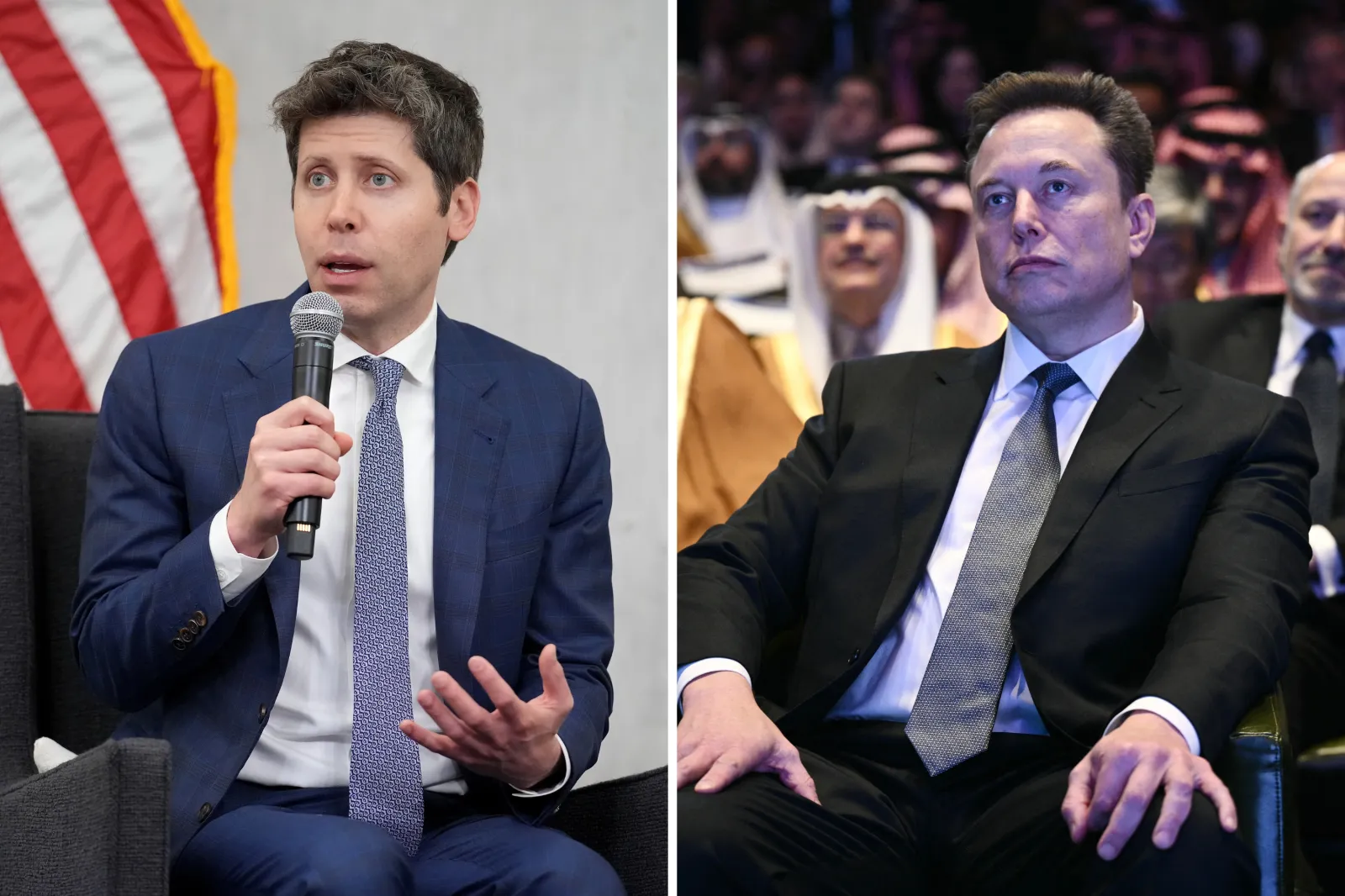
Elon Musk’s feud with OpenAI and its CEO Sam Altman has escalated, and the world’s richest man is now seeking billions in damages stemming from his early contributions to the AI startup.
In a court filing on Friday, Musk's attorneys argued that the Tesla and SpaceX CEO is owed the "wrongful gains" derived by OpenAI and Microsoft from his early contributions to the AI startup, and that these could together amount to $134.5 billion.
OpenAI has already responded to Musk’s latest salvo, accusing the billionaire of "cherry-picks" when using excerpts from the diary of president and co-founder Greg Brockman in evidence, and of mounting a campaign of "harassment" against the company.
Read More on News
Steven F. Molo, Musk's lead trial lawyer, told Newsweek: "Without Elon Musk, there'd be no Open AI. He provided the bulk of the seed funding, lent his reputation, and taught them all he knows about scaling a business. A preeminent expert quantified the value of that."
Newsweek reached out to OpenAI and Microsoft via email for comment.
...
Why It Matters
The legal battle between two of the world’s biggest tech figures dates back years and has come to be seen as a litmus test of how accountability and ownership is litigated in the rapidly evolving AI sector.
In addition to billions of dollars in potential damages, the outcome of the case could have far-reaching implications for future governance of emerging technology firms.
What To Know
Musk was an influential co-founder of OpenAI in 2015 and provided early financial backing to what was then—and Musk believes should still be—a nonprofit focused on the responsible development of AI.
In his lawsuit, Musk alleged that OpenAI abandoned this original purpose, that he had contributed funding as well as his "prestige and reputation" in the understanding this purpose would be maintained, and that OpenAI’s leadership had since his departure transformed the company into a "get-rich-quick scheme, selling out the nonprofit for personal gain."
Musk also maintains that OpenAI now primarily serves the interests of Microsoft, which holds a roughly 30 percent stake in the company.
His lawyers said Musk’s contributions made between $65.5 billion and $109.4 billion for OpenAI and between $13.3 billion and $25.1 billion for Microsoft—resulting in as much as $134.5 billion in damages now being sought.
In their recommendations, Musk’s lawyers drew on the opinions of C. Paul Wazzan, an economist specializing in litigation issues, who said Musk could be entitled to up to $135 billion based on an early donation of $38 million to OpenAI as well as his "nonmonetary contributions to the organization in its early year."
But representatives of Microsoft and OpenAI argued in a filing that Wazzan’s opinions are not based on "sufficient facts or data," and the latter on Friday accused Musk of a long-running "harassment" campaign intended to harm its progress while promoting his own AI company, xAI.
In a blog post, it alleged that Musk sought "full control" of OpenAI "since he’d been burned by not having it in the past."
The company said Musk was also "grossly misrepresenting the written record to further his harassment," and that he never believed OpenAI would have to remain solely a nonprofit.
"He agreed that OpenAI needed both a non-profit and a for-profit entity—the exact structure OpenAI has today, and that Elon is now suing OpenAI over," it wrote, citing transcripts of a 2017 call in which Musk said the company could continue as a non-profit "in some form"—such as a B- or C-Corp.
What People Are Saying
Musk's lead counsel Marc Toberoff told Newsweek: "Mr. Musk has always preferred that OpenAI be and remain a true non-profit dedicated to its charitable mission. But OpenAI is effectively a for-profit start-up. If Defendants insist on pursuing that course, Mr. Musk as OpenAI's co-founder, original financier and recruiter-in-chief is due his fair share. Defendants cannot have it both ways. Without Elon Musk there would be no OpenAI."
OpenAI’s blog post read: "We and Elon agreed in 2017 that a for-profit structure would be the next phase for OpenAI; negotiations ended when we refused to give him full control; we rejected his offer to merge OpenAI into Tesla; we tried to find another path to achieve the mission together; and then he quit OpenAI, encouraging us to find our own path to raising billions of dollars, without which he gave us a 0% chance of success."
What Happens Next
Last week, a federal judge rejected Microsoft and OpenAI’s bid to avoid a jury trial in the case, which is now set for late April and will take place in California, according to Reuters.
Update 1/21/26, 9:11 a.m. ET: This article was updated with comments from Musk's representatives.
View 0 Comments
Submit Correction
View Editorial & AI Guidelines