...

By Marie Boran
Technology Reporter
0
Share
Newsweek is a Trust Project member
See more of our trusted coverage when you search.Prefer Newsweek on Googleto see more of our trusted coverage when you search.
In a heated exchange that has escalated tensions between the private space company and its regulators, SpaceX is pushing back against the Federal Aviation Administration (FAA) over proposed civil penalties totaling $633,009.
The dispute centers on alleged license violations by SpaceX concerning safety measures during two launches in 2023. The company's CEO Elon Musk has accused the federal agency of misplaced priorities and bureaucratic overreach.
The FAA's Allegations Against SpaceX
On Tuesday, the FAA announced its proposed penalties against SpaceX for "allegedly failing to follow its license requirements during two launches in 2023." The agency cited two specific incidents.
Read More on Tech
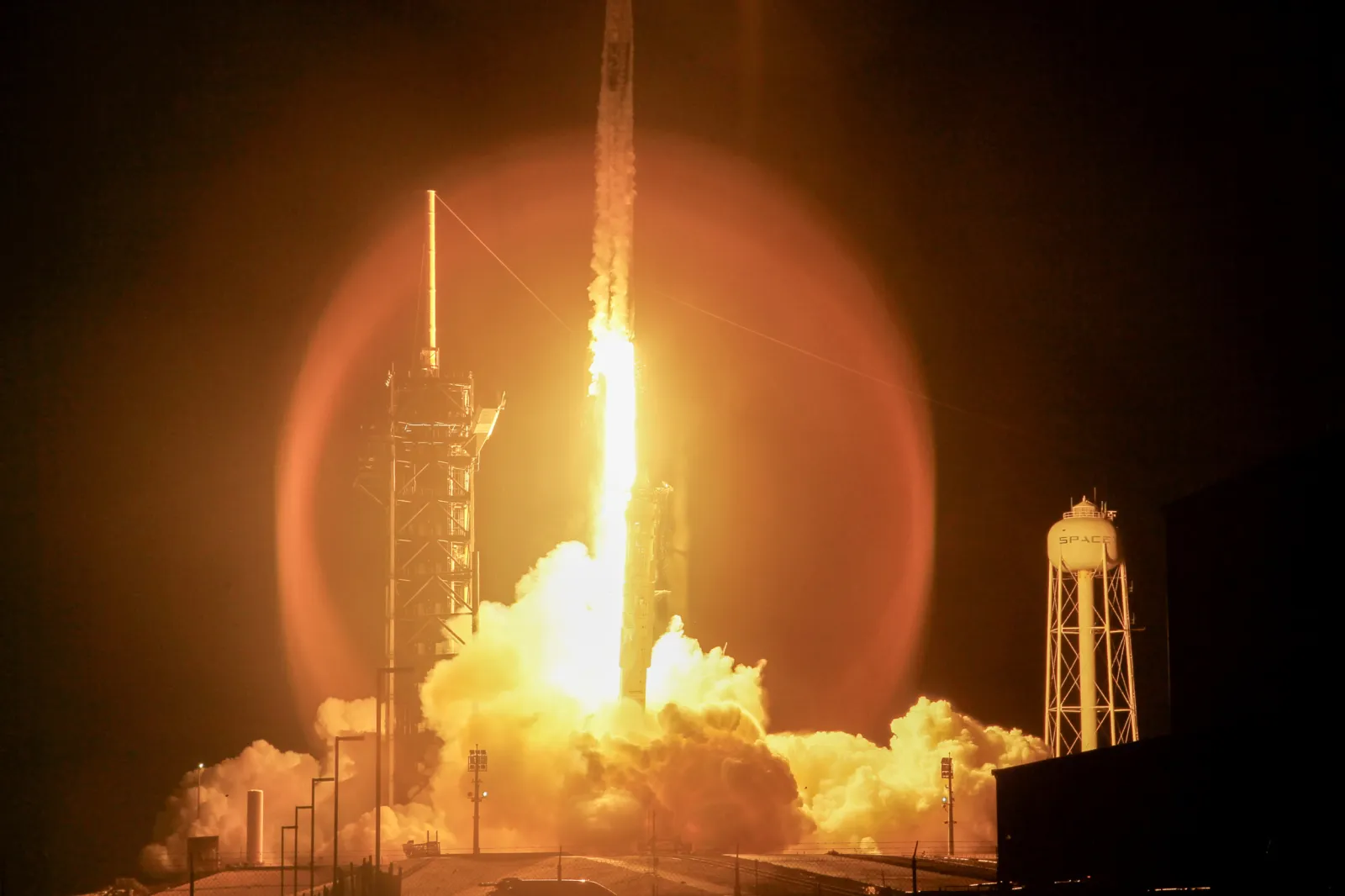
A June 2023 launch from Cape Canaveral Space Force Station, where SpaceX allegedly used an unapproved launch control room and skipped a required readiness poll, and a July 2023 launch from Kennedy Space Center, where the company purportedly used an unapproved rocket propellant farm.
"Safety drives everything we do at the FAA, including a legal responsibility for the safety oversight of companies with commercial space transportation licenses," said FAA Chief Counsel Marc Nichols.
"Failure of a company to comply with the safety requirements will result in consequences," added Nichols, in an official statement on the FAA website.
Newsweek reached out to SpaceX for comment via email. The FAA declined to comment.
SpaceX's Rebuttal to the FAA
In a letter to Congress dated September 18, SpaceX disputed the FAA's assertions. David Harris, vice president of legal at SpaceX, wrote: "SpaceX forcefully rejects the FAA's assertion that it violated any regulations."
The company argued that it had provided sufficient notice for the "relatively minor license updates, which had no bearing on public safety."
...
SpaceX detailed its attempts to communicate with the FAA about the changes, suggesting that the agency's slow response times were the root of the issue. The company stated that in one instance, it took the FAA 110 days to approve a communications plan update.
Defending SpaceX's rocket propellant farm, SpaceX said that the new, allegedly unapproved, configuration was because the farm was "moved to enhance the public safety of SpaceX's operations."
Musk's Hits Back at FAA on X, Targets Boeing
Musk, known for his outspoken nature, took to his social media platform in his criticism of the FAA. On Tuesday, he posted: "The FAA space division is harassing SpaceX about nonsense that doesn't affect safety while giving a free pass to Boeing even after NASA concluded that their spacecraft was not safe enough to bring back the astronauts. There need to be resignations from the FAA leadership."
Following SpaceX's letter to Congress, Musk escalated his rhetoric on Thursday, declaring, "Enough is enough." He accused the FAA of "attacking @SpaceX for petty matters that have nothing to do with safety, while neglecting real safety issues at Boeing."
"NASA deemed the Boeing capsule unsafe for astronaut return, turning, out of necessity, to SpaceX, yet instead of fining Boeing for putting astronauts at risk, the FAA is fining SpaceX for trivia," Musk wrote.
Musk was referring to the September 7 return of Boeing's Starliner reentry vehicle, which is not licensed by the FAA. It is operating under the authority of NASA. It came back to Earth on autopilot leaving two astronauts behind on the International Space Station. NASA deemed the return too risky, choosing to wait until February 2025 to bring the astronauts, Butch Wilmore and Sunita Williams, back on a SpaceX flight.
What Does This Mean for the Commercial Space Industry?
SpaceX, which last week made history by facilitating the first ever private spacewalk undertaken by billionaire businessman Jared Isaacman, has argued that the FAA's "inability to keep pace with the commercial space industry" is hindering progress.
In its letter, the spacecraft and satellite comms company stated: "These distractions continue to directly threaten national priorities and undercut American industry's ability to innovate."
SpaceX wrote: "For nearly two years, SpaceX and many in industry, legal practice, and academia have raised the alarm on the Federal Aviation Administration's implementation of its commercial space launch and reentry regulatory mandate."
The company alleged the federal agency had systemic issues: "It has been clear for some time that AST [FAA's Office of Commercial Space Transportation] lacks the resources to timely review licensing materials, mistakenly focuses its limited resources on areas unrelated to its public safety regulatory scope and has been unsuccessful in modernizing and streamlining its regulations."
SpaceX has 30 days to respond to the FAA's enforcement letters.
Update 9/21/24, 09:35 a.m. ET: This article was updated with a response from the FAA and a clarification that the Boeing's Starliner reentry vehicle is not licensed by the FAA and is operating under the authority of NASA.
View 0 Comments
Submit Correction
View Editorial & AI Guidelines