10
Loading video...

By Anna Commander
News Editor
0
Share
Newsweek is a Trust Project member
See more of our trusted coverage when you search.Prefer Newsweek on Googleto see more of our trusted coverage when you search.
A new hurricane forecast is lowering expectations for overall activity in the Atlantic as the peak of the season approaches, but forecasters warn that the threat to the U.S. is far from over. AccuWeather now expects eight to 11 named storms, three to four hurricanes and one to two major ones during the 2026 Atlantic hurricane season, down from its earlier forecast in March of 11 to 16 named storms and in July of 8 to 14 named storms.
Despite the downgrade, the forecast continues to call for three to five direct U.S. impacts.
How El Niño Impacts Hurricane Season
The change comes as a rapidly strengthening El Niño becomes an increasingly dominant factor in the forecast. El Niño develops in the Pacific but can influence weather patterns across the Atlantic, where it typically increases wind shear—disruptive winds that can make it harder for tropical systems to form and strengthen. AccuWeather says there is now a growing chance that this could become one of the strongest El Niño events on record, giving forecasters greater confidence in lowering the overall storm count.
Read More on News
“The reason for this assessment is the increasing chances of a record-strong Super El Niño developing,” AccuWeather Lead Hurricane Expert Alex DaSilva said in the release.
Still, the lower storm forecast does not mean the U.S. is out of the woods. AccuWeather identifies the northern and eastern Gulf Coast and the Carolinas as areas facing a higher-than-historical-average risk of direct impacts, while the northeastern Caribbean also remains at elevated risk.
“While those atmospheric conditions can reduce the overall number of tropical storms and hurricanes, they do not eliminate the threat to the United States,” DaSilva said. “Exceptionally warm waters near part of the U.S. coastline can provide fuel for tropical systems that develop close to land, raising concerns about rapid intensification and leaving people and businesses with less time to prepare.”
WFLA-TV Chief Meteorologist and Climate Specialist Jeff Berardelli told Newsweek on Wednesday, "Yes it's El Nino. And everyone is underestimating the impact it will have. This El Nino is unprecedented. And thus we should expect unprecedented impacts."
Berardelli added in part, "I expect tropical system numbers to be below most forecasts and it will likely [be] one of the slowest seasons we have seen in years if not decades. We will still have storms. Peak season is still ahead of us in late August through September. But storms will struggle to develop and struggle to intensity due to near record wind shear in parts of the Atlantic, due to El Nino. I don't expect the wind shear to weaken very much."
Map of States Most at Risk of Significant Tropical Impacts
When Did Atlantic Hurricane Season Begin?
The Atlantic hurricane season begins June 1 and ends November 30.
The Atlantic is already running behind several historical benchmarks. As of August 19, three tropical storms have formed this year—Arthur, Bertha and Cristobal—while the average date for the first Atlantic hurricane is August 11 and the average date for the fourth named storm is August 15, AccuWeather says.
The peak of the season comes around September 10, meaning the most active part of the season is still ahead, the forecaster notes.
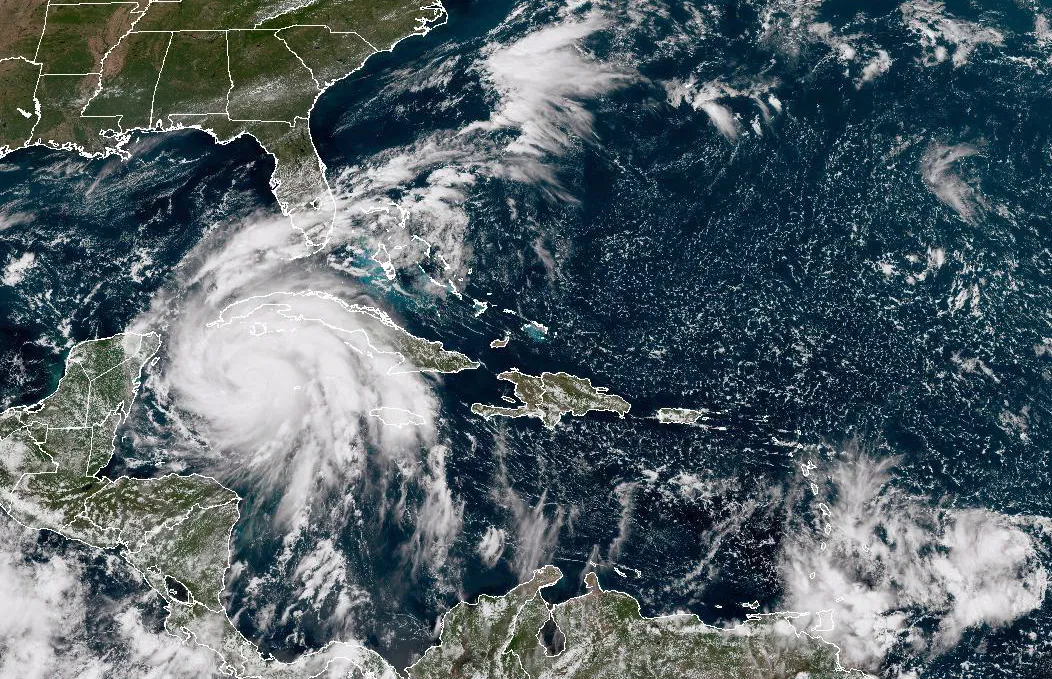
The forecast is a reminder that a quiet season does not necessarily mean a low-risk season. DaSilva points to the 1992 season, when only seven named storms formed but Hurricane Andrew became a catastrophic Category 5 storm that devastated South Florida.
With tropical development possible well into the fall, forecasters are urging residents along the Gulf and Atlantic coasts to remain prepared—even as the overall outlook becomes less active.
"There will still be short windows when shear weakens that will allow for some spin ups. So we still need to prepare. But El Nino will dominate the Atlantic. Meanwhile Hawaii is bracing for another possible impact in 4-5 days… that's El Nino. It juices up the Pacific and inhibits the Atlantic," Berardelli said.
Impacts on Hawaii This Season
Hawaii is still reeling from the impacts of Hurricane Lala, which brought destructive winds and widespread flooding to the islands despite weakening before moving past the state.
More than 40 inches of rain fell in parts of Hawaii, while the storm damaged homes, roads and bridges and knocked out power. Two people have now died in what officials believe were storm-related incidents, the Associated Press reports.
Now, forecasters are watching another tropical system developing southeast of Hawaii. The National Hurricane Center (NHC) says it could become a tropical depression soon. Officials are warning residents to closely monitor the system, particularly as communities are still cleaning up from Lala and restoring damaged infrastructure.
...
View 0 Comments
Submit Correction
View Editorial & AI Guidelines