10
Loading video...

By Anna Skinner
Associate News Editor
0
Share
Newsweek is a Trust Project member
See more of our trusted coverage when you search.Prefer Newsweek on Googleto see more of our trusted coverage when you search.
A rapidly strengthening El Niño is raising hopes that drought-stricken parts of the Western United States could see relief in the months ahead, as forecasters increasingly warn the climate pattern may rank among the strongest on record. While its full effects remain uncertain, experts say a potentially historic or super El Niño could reshape weather patterns across the Pacific and North America as the year progresses.
For now, many of the West's summer weather patterns are unlikely to be dramatically altered by El Niño alone. Experts note that the phenomenon's most consistent and widespread impacts typically emerge during the late fall and winter months, when it can influence storm tracks, rainfall and snowpack across parts of the Western U.S. However, the climate pattern's influence could extend well beyond this winter, with experts saying El Niño may affect everything from drought conditions and Colorado River supplies to mountain snowpack across the Intermountain West and even the intensity of next year's wildfire season, bringing a mix of potential benefits and risks depending on the region.

...
Read More on Weather
Experts Predict a Super El Niño This Year—Here's What That Means
While the National Oceanic and Atmospheric Administration (NOAA) does not officially use the term "super El Niño," instead classifying the most potent storms as "very strong," some meteorologists and climate researchers use the informal label to describe exceptionally powerful episodes. These events occur when sea surface temperatures in the central and eastern tropical Pacific rise well above average, strengthening El Niño's influence on global weather patterns.
Forecasters expect El Niño to continue intensifying through the fall and winter, with some projections suggesting it could rank among the more powerful events observed in recent decades. Only a handful of very strong El Niño episodes have occurred since modern records began, including those in 1982-83, 1997-98 and 2015-16. Although no two events are identical, stronger El Niños generally have a greater ability to alter storm tracks, temperature patterns and precipitation across large parts of the world.
When Will Weather From El Niño Start?
Although El Niño develops over the tropical Pacific, its influence on U.S. weather is usually most noticeable during the fall and winter months. Meteorologists expect its effects to gradually become more apparent as the jet stream adjusts and storm patterns begin to shift later this year, with the strongest impacts often seen from December to February. That said, El Niño does not dictate day-to-day weather and cannot guarantee specific outcomes for any one location. Instead, it changes the odds in favor of certain patterns.
What Does a Super El Niño Mean for Western US States?
For parts of the Western United States, a strong or super El Niño can tilt the odds toward a wetter and snowier winter, particularly across California and parts of the Southwest. Additional storm systems fueled by a more southerly storm track can bring much-needed precipitation to drought-stricken regions and help rebuild mountain snowpack that serves as a critical water source during the warmer months.
Colorado, Utah Snow Drought: Will This Winter Be Better?
The prospect of a strong El Niño has fueled hopes for a snowier winter across Colorado and Utah after a disappointing season that brought poor snow levels across parts of Colorado and Utah—leaving some ski areas grappling with below-average conditions while also reducing runoff into rivers and reservoirs—which contributed to lingering dryness that has carried into the summer months.
With El Niño strengthening, AccuWeather Long-Range Forecaster Paul Pastelok told Newsweek “the chances are really good” that the region will see more snow this winter. However, the forecast is not guaranteed. During the 2015-16 El Niño event, Pastelok said, the jet stream shifted, bringing snow and beneficial winter storms farther north than expected.
“We can’t have that happen this year, or it’ll be really bad next year,” he said.
The exact forecast this year is still uncertain and depends on sea surface temperatures in the Pacific and how far north those warmer temperatures spread, which will determine how the jet stream performs.
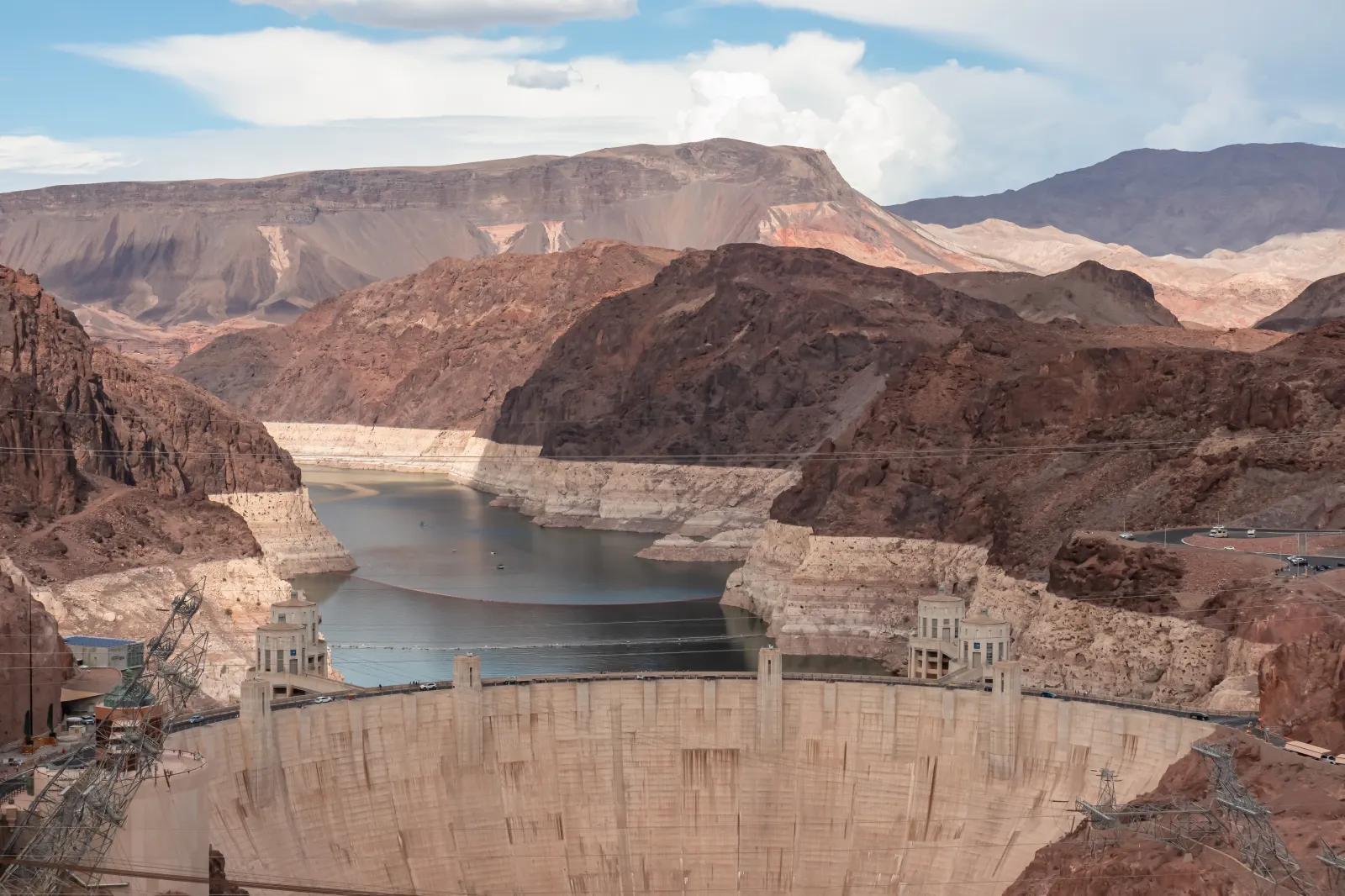
Colorado River Impacts: Lake Mead and Lake Powell Water Levels
Pastelok said he believes El Niño will benefit water levels in the Colorado River and Lake Mead, and a strong one could trigger a "significant jump" for the latter.
If El Niño doesn't weaken quickly, next year's monsoon season and another wet winter in 2027-28 would further improve the water levels, he also told Newsweek.
However, drought conditions in the Colorado River Basin are the product of decades of overuse, overallocation and persistent aridification, not simply a lack of precipitation, meaning one wet year is unlikely to fully reverse the region's long-term water challenges, Daniel Swain, climate scientist with the California Institute for Water Resources, told Newsweek.
...
“We are never going to see a year where this magically goes away," he said. "We could have the wettest year on record in the basin, and we would still have a major water deficit in the long run.”
Despite the concerning outlook, there are decent chances, especially in the Lower Basin states, of a wet winter this year, Swain said, with near- to above-average precipitation possible because of super El Niño. The climate pattern will probably “strengthen the winter-time storm track in places like Arizona, New Mexico, southern Utah, and maybe southern Colorado,” he said, meaning more rain and high-elevation snow in those states.
However, Swain warned that a “split” could occur with El Niño impacts between Lower and Upper Colorado River Basin states, in which conditions are drier than normal farther north and wetter farther south.
“Where that split sets up will dictate if we have a year with some relief at least, or not much relief to speak of," he said.
The health of the Colorado River Basin depends largely on snow, which melts gradually to release moisture into the Colorado River, then flows to major reservoirs like Lakes Mead and Powell.
Wildfires in the Western US
Swain is most confident in the super El Niño's ability to saturate the Southwest, such as Southern California, southern Arizona, and southern New Mexico this winter, which will be “good in some respects,” but could actually make wildfire season next year worse for those areas.
There are two patterns dependent on elevation and ecosystem type that result in high-risk wildfire conditions across the interior West, Swain said. The first is that in drier years at higher elevations, the forest is more flammable.
The second pattern is common across lower-elevation areas of the West, particularly in arid and semi-arid regions that typically receive limited moisture. It occurs when an unusually wet period spurs abundant vegetation growth, only to be followed by a hot, dry season that rapidly dries out those fuels. Swain refers to this as "wet-to-dry whiplash," a transition that can leave landscapes primed for wildfire activity. Swain warned that in spring and summer 2027—after a particularly wet year in Southern California and the Southwest because of El Niño—these types of fires might become an issue.
“Most likely, following a potentially historic El Nino this winter will be a strong La Nina event next summer, which would probably increase the likelihood of extreme summer heat and dryness in the Southwest, which would lead to a more active wildfire season but in different places than we’re seeing this year,” Swain said.
The Pacific Northwest, which is seeing its worst fire season on record, could have yet another bad season next year, Swain warned. The developing strong El Niño would also prolong the current fire season in the Pacific Northwest, as it increases the likelihood of a dry fall in the region. Drier conditions are also typical during El Niño across the Pacific Northwest in the winter, so the area will probably see a continuation of its drought in the spring.
Contact Newsweek editors on this story: Samantha Beech and Edward T. Cummins.
View 0 Comments
Submit Correction
View Editorial & AI Guidelines