
...

By Mandy Taheri
Reporter
0
Share
Newsweek is a Trust Project member
See more of our trusted coverage when you search.Prefer Newsweek on Googleto see more of our trusted coverage when you search.
A hospital director in eastern Democratic Republic of the Congo (DRC) said more than a dozen people with suspected Ebola cases fled after angry residents set fire to a treatment tent. The attack came a day after a similar incident erupted when Congolese authorities refused to release the body of an Ebola victim.
“We strongly condemn this act, as it caused panic among the staff and also resulted in the escape of 18 suspected cases into the community,” Dr. Richard Lokudi, director of the Mongbwalu hospital whose tent was burned Friday night, told the Associated Press.
The tent, which was provided by Médecins Sans Frontières (MSF), "was empty at the time, and no one was injured," a spokesperson for the humanitarian organization told Newsweek.
Read More on News
The World Health Organization (WHO) has classified the outbreak's risk level within the DRC as "very high." The current outbreak involves the Bundibugyo virus, a rare strain of Ebola for which there are currently no approved vaccines or targeted treatments. Global health officials warn that the escape of these individuals significantly increases the risk of community transmission as they work to contain the rising infection and mortality rates.
What to Know About the Medical Tents Set Ablaze
On Friday evening, a group of residents in Mongbwalu—the epicenter of the Ebola outbreak in Ituri province—set fire to a medical tent. While no injuries were reported from the blaze, the hospital director confirmed that 18 individuals with suspected cases of Ebola fled the facility during the incident and remain unaccounted for.
"MSF has recently begun activities in Mongbwalu, supporting the Congolese Ministry of Health and local communities in responding to the Ebola disease outbreak," the MSF spokesperson said. "Understandably, there are still many uncertainties and fears among the community in this rapidly evolving context."
The statement continued: "This incident highlights just how critical sustained community engagement and trust‑building are - essential components of any Ebola response."
Despite the setback, MSF stated it remains committed to establishing a 60-bed Ebola treatment center and continuing its patient care, community outreach, and essential health services.
...
Civil Unrest Over Burial Protocols
The attack in Mongbwalu follows a similar incident on Thursday in the town of Rwampara, where a treatment center was burned down. The unrest erupted after local authorities prevented family members from retrieving the body of a man suspected to have died from the virus.
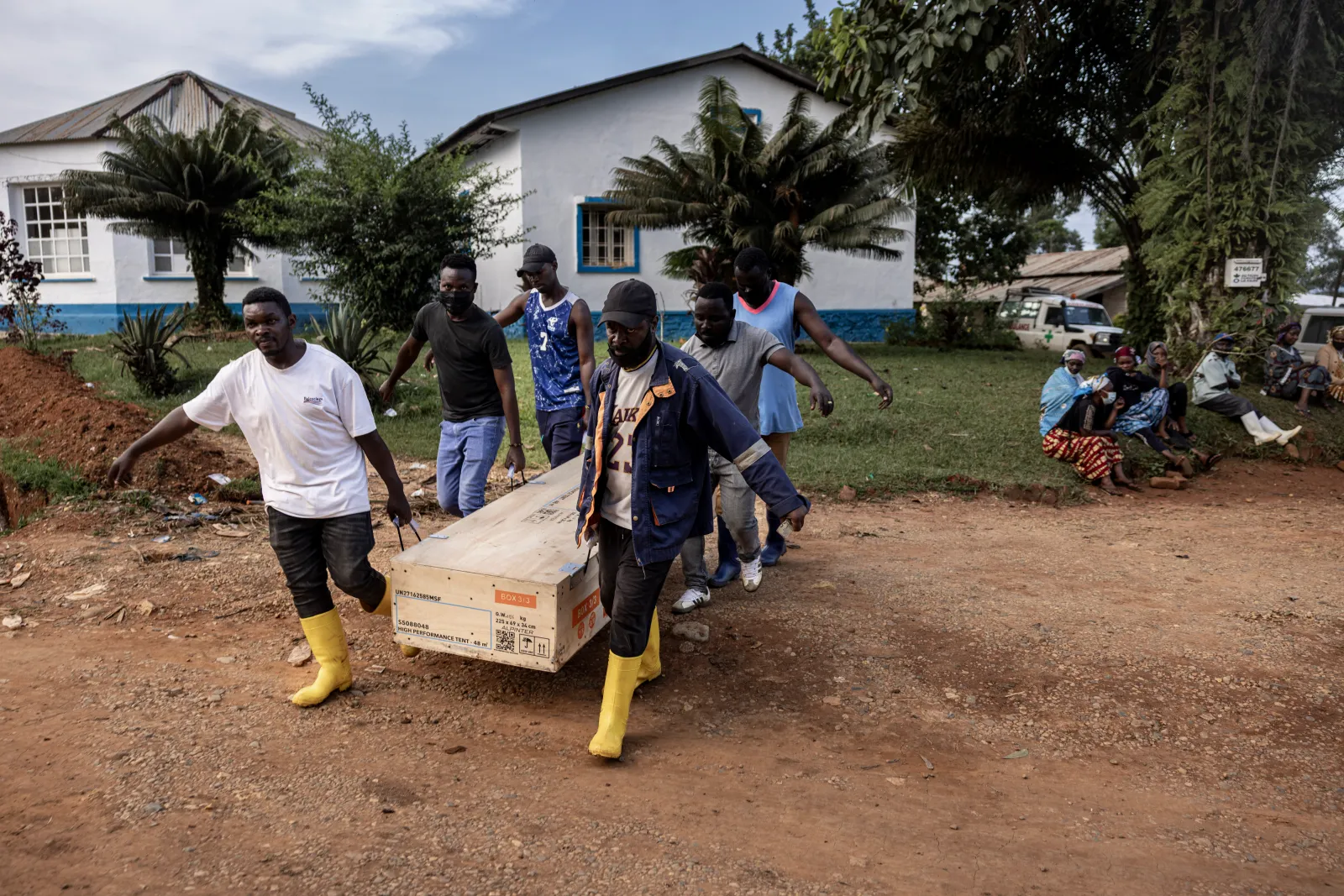
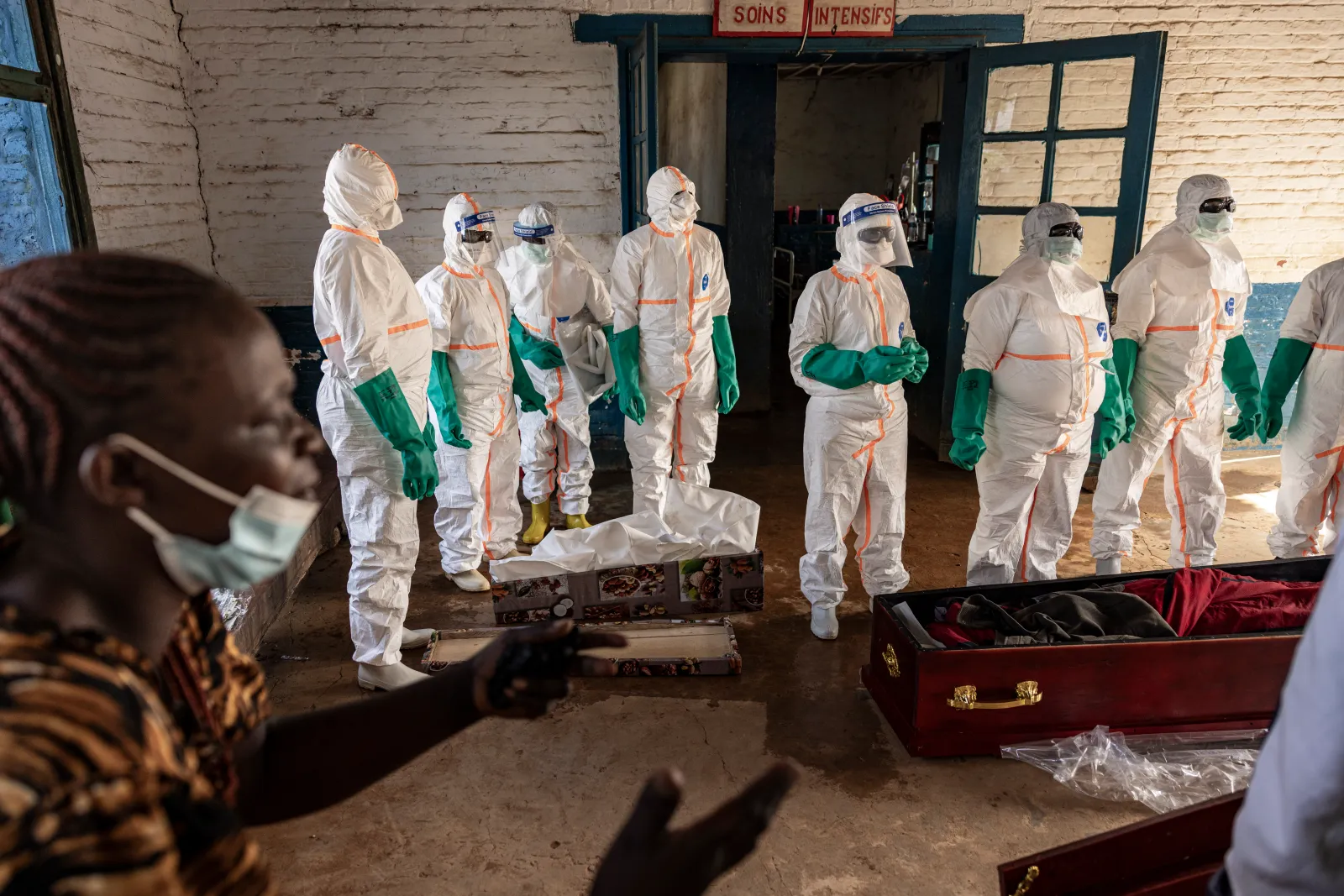
Health officials have warned against burials conducted without proper precautions and protective equipment, noting that Ebola patients can remain contagious after death and that funerals, which often draw large crowds, can become major sources of transmission. The Red Cross has been overseeing many of the public burials, with officials covered in full body protective gear as they lower the infected into burial sites.
According to Reuters, security forces in Rwampara deployed tear gas and fired warning shots to disperse the crowd, after which demonstrators set fire to two eight-bed medical tents. The medical charity ALIMA, which operated the facility, reported that a deceased patient awaiting burial was consumed by the flames.
In that instance, soldiers used tear gas and fired warning shots into the crowd, with protestors then setting fire to two tents with eight beds, according to Reuters. A body that was set to be buried on Thursday also burnt with the tents, according to the medical charity ALIMA, that was running the center.
Scale of the Outbreak
On Friday, WHO Director-General Tedros Adhanom Ghebreyesus said there are 82 laboratory-confirmed cases and seven deaths in the DRC, while cautioning the scope of the outbreak is likely "much larger."
The AP reported there are at least 750 suspected Ebola cases and 177 suspected deaths, with figures expected to rise as surveillance expands. The DRC health ministry reported 160 suspected deaths among 670 suspected Ebola cases as of Thursday.
...
When Did the Ebola Outbreak Start?
The current outbreak in the DRC began late last month when local health officials identified a cluster of unexplained deaths in Ituri province exhibiting symptoms consistent with viral hemorrhagic fever.
The suspected index case—a nurse practicing in Bunia—died on April 24. Retrospective epidemiological investigations suggest the virus had been circulating undetected for several weeks prior to laboratory confirmation.
The DRC Ministry of Health and the WHO formally declared the outbreak in early May after diagnostic testing identified the Bundibugyo species of the virus. By mid-May, the rapid spread prompted regional alerts in neighboring Uganda and South Sudan, as well as triggering the CDC's enhanced screening protocols at U.S. airports.
First discovered in 1976 near the Ebola River in the DRC, the virus has caused more than 40 documented outbreaks over the last five decades, according to data from the National Institutes of Health (NIH).
...
How Deadly Is Ebola?
- Ebola remains one of the world's most lethal viral pathogens, exhibiting case-fatality rates that fluctuate based on the specific viral strain, local healthcare infrastructure, and how quickly cases are identified. Historical data from global health agencies show that outbreak mortality rates typically range between 25 percent and 90 percent.
- The Bundibugyo virus historically yields a 30 percent to 50 percent mortality rate. However, survival outcomes decline sharply when patients experience delays in accessing specialized medical care.
- The current outbreak is exhibiting an elevated severity profile, with the Pan American Health Organization (PAHO) estimating the present mortality rate between 55 percent and 60 percent.
- Ebola causes severe illness by overwhelming the immune system and damaging blood vessels, leading to organ failure, shock, and internal bleeding. Early supportive care—IV fluids, oxygen, and treatment of complications—can significantly improve one's survival, but many affected communities face barriers to rapid medical access.
View 0 Comments
Submit Correction
View Editorial & AI Guidelines