10
Loading video...

By Soo Kim
Reporter
0
Share
Newsweek is a Trust Project member
See more of our trusted coverage when you search.Prefer Newsweek on Googleto see more of our trusted coverage when you search.
Ever wish you could play back your dreams before your eyes when you wake up in the morning?
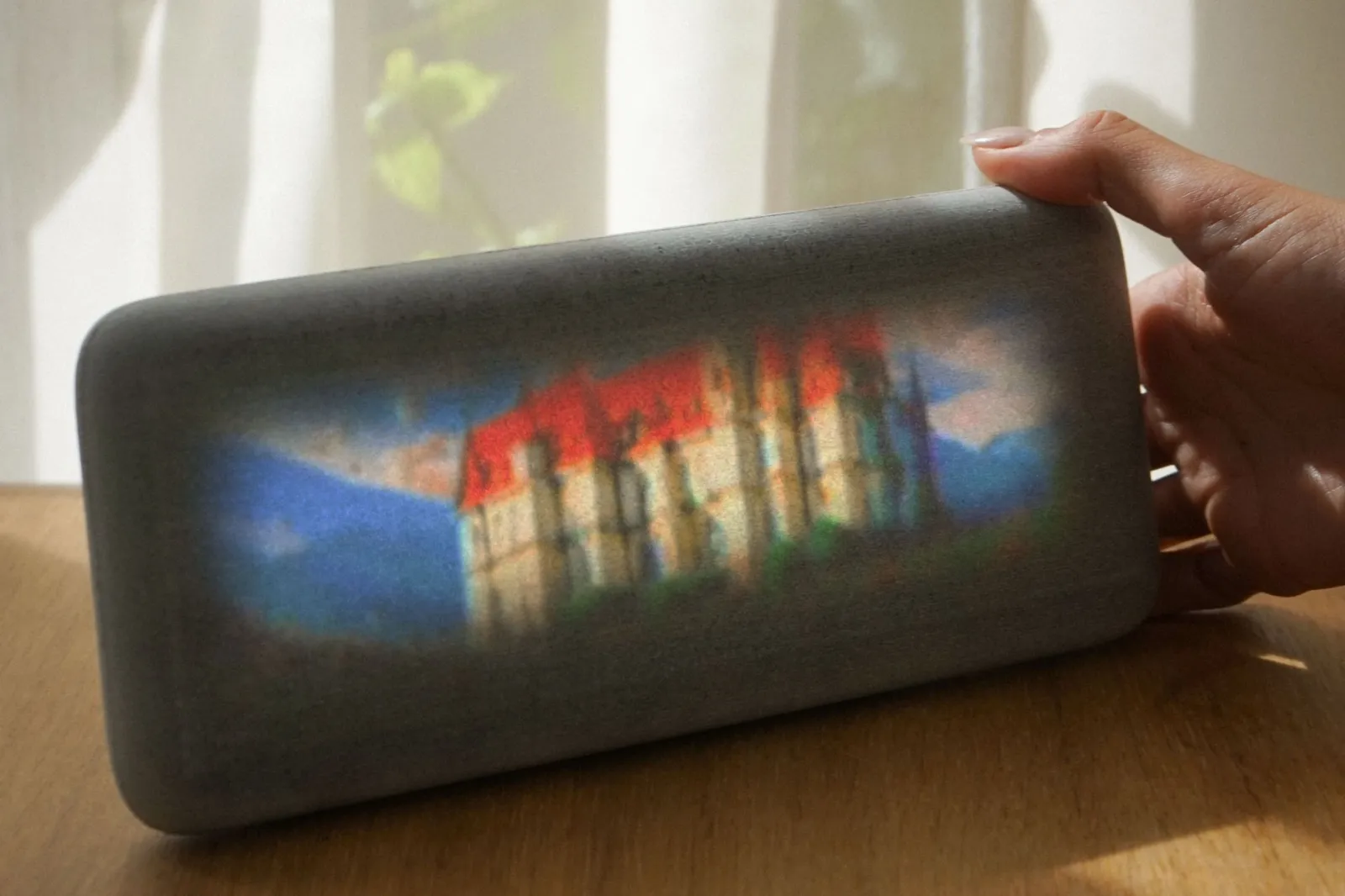
One design studio has introduced a "magical bedside device"—known as the Dream Recorder—that you can build yourself to translate your dreams into a visual art form.
The Dream Recorder is "a portal to your subconscious" that captures your elusive dreams and "plays them back as vivid, cinematic reels," according to its website.
Read More on Life
Bas van de Poel is the co-founder of Modem, the Dutch design studio behind the Dream Recorder device. Modem has worked with clients including OpenAI and Google Deepmind. The studio has also done research papers with institutions such as the Harvard Graduate School of Design, the Massachusetts Institute of Technology (MIT) and UC Berkeley in California.
Asked what inspired the creation of the Dream Recorder, van de Poel told Newsweek: "Dreaming is one of the rare experiences shared by all people. Everyone dreams, which makes it powerful territory to explore. The fascination has always been there."
However, "what's changed is the technology," van de Poel said. "For the first time, we have tools capable of giving shape to the subconscious, turning the invisible into something we can see, and maybe even begin to understand."
...
Understanding your dreams could be useful due to the effect that they could potentially have on your subsequent daytime behavior and performance, said an August 2024 study in Consciousness and Cognition.
The study added: "Since waking life has a noticeable effect on the content of dreams, some researchers have supposed that this dream content may have some reciprocal effect on subsequent waking life, in parallel to or as part of memory consolidation."
However, "it must be remembered that the true function of dreams is still unknown, and there is not enough evidence to confirm with confidence what function dreams may serve, if they indeed serve any function at all," the study added.
The co-founder of Modem said that, while there are sleep trackers and plenty of apps that allow you to type out your dreams, "those tools stop at documentation." Van de Poel added that the Dream Recorder is different because "it doesn't just log your dreams; it translates them."
To use the device, you just need to press the record button on it and describe your dream aloud in your preferred language, which is then transformed into a short-form reel, rendered in a preselected visual style.

...
The device "transcribes your words and passes them through a video AI model, translating your dream into ultra-low-definition, impressionistic dreamscapes," van de Poel said. Your rendered dream is played back on the device's screen.
The recorder is "built on existing video-generation models and can be updated to support any service that provides API access," the Modem co-founder added. "This is paired with on-device post-processing using FFmpeg [software], which gives the generated dreams a nostalgic, analogue feel."
Designed with a DIY spirit, the co-founder said: "The entire device is fully open source, including the code, hardware documentation, and the 3D-printable glow-in-the-dark shell. Download everything from GitHub and gather the off-the-shelf components, and assemble it yourself. No soldering is required."
The device has space to store seven dreams at a time, essentially seven slots for a week of dreaming. "It's not designed for endless accumulation, but for reflecting on the meanings of your dreams as they echo into waking life," van de Poel said.
"We chose a bedside device form factor because it's intuitive and familiar, offering a more intentional way to begin the day," he added. "As soon as you wake up, you simply touch the device, speak your dream aloud, and watch it take shape as a dreamscape. No distractions, no feeds; just a quiet moment to reflect and reconnect with your subconscious."
Do you have a technology-related story to share? Let us know via life@newsweek.com and your story could be featured on Newsweek.
View 0 Comments
Submit Correction
View Editorial & AI Guidelines