...

By Aristos Georgiou
Science and Health Reporter
0
Share
Newsweek is a Trust Project member
See more of our trusted coverage when you search.Prefer Newsweek on Googleto see more of our trusted coverage when you search.
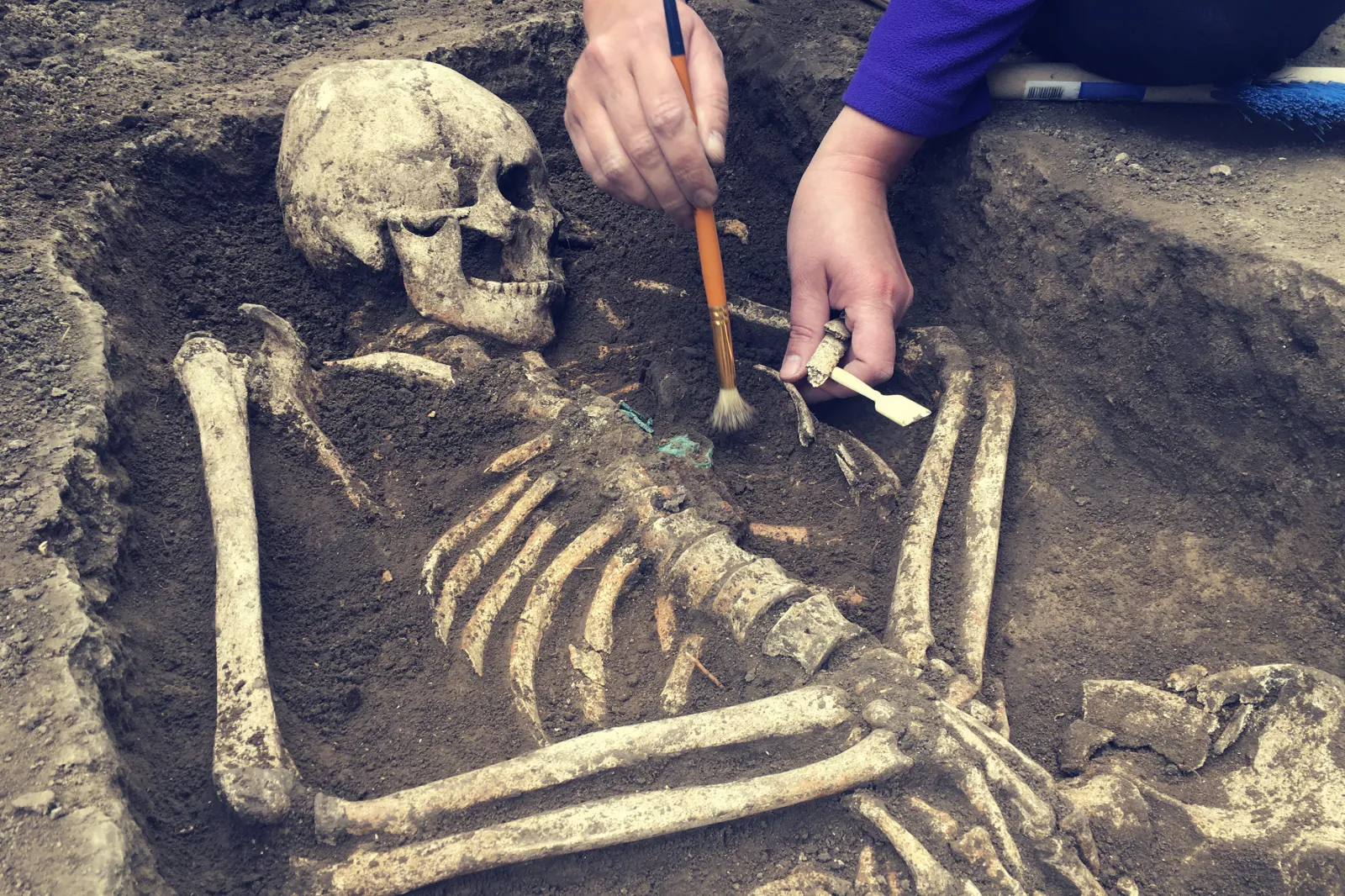
Dozens of skeletons dated to the medieval period and antiquity have been uncovered in the basement of a home in France.
The assemblage of human remains was identified during an excavation conducted by preventive archaeology firm Archeodunum during the winter of 2023-2024.
This excavation was prompted by the accidental discovery of a skeleton while the homeowner was renovating the basement. The house is located in Corbeil-Essonnes, a southern suburb of Paris.
Read More
COVID May Increase Risk of Kidney Disease3 min read

Radon-Induced Child Cancer Widespread Across US, Even at Low Levels5 min read

Ancient DNA Reveals Surprising Twist in Lynx Survival Story4 min read

The excavation uncovered 38 graves spread out across the four rooms of the cellar. The graves, which are arranged in parallel rows, appear to be part of a cemetery that was in use from the 3rd century, toward the end of antiquity, until the 10th century, during the medieval period.
"It is not common to find human remains under a house because usually the construction work destroys them, but this can happen sometimes when circumstances are favorable," Clément Viau, an archaeoanthropologist with Archeodunum, told Newsweek.
The presence of an early medieval cemetery in the area has long been known. Since the 19th century, several plaster sarcophagi, which are typical of this period, have been discovered.
Scholars in the 19th century assumed that such burials were linked to the Notre-Dame-des-Champs chapel, which was supposedly built in the 7th century on the site of a pagan temple. However, no trace of these constructions has been found to date, and the graves of the area have never been subject to rigorous scientific study until now, according to Archeodunum.
Now, evidence suggests that the cemetery is older than 19th-century scholars assumed, with the earliest burials dating back to the end of antiquity—long before the supposed construction of the chapel.
"The discovery of these skeletons confirms the existence of an old cemetery in this district of Corbeil-Essonnes, which was suspected by ancient discoveries. Studies are still ongoing, but preliminary results allow us to better date the use of this cemetery, which extends over seven centuries, between the end of Roman antiquity and the first half of the Middle Ages—this is quite unusual," Viau said.
"This discovery also provides more information on the extent of the cemetery, the burial practices and the ways of life of past populations."
...
During the late Roman Empire, the deceased in this region tended to be buried lying down, on their backs, in a wooden casing placed in a deep grave. But in the early medieval period, which started around A.D. 500, funeral practices evolved.
In this era, the deceased tended to be buried in plaster sarcophagi, a practice that was widespread in what is now Île-de-France, a region surrounding Paris.
During the recent excavation, archaeologists uncovered ten sarcophagi arranged side-by-side in a "fan" shape, each containing a single deceased individual.
The human remains discovered in the basement will now be analyzed in the laboratory to shed light on the individuals' sex, their age at death and their living conditions. The context of the burials, including the positioning of the bones, will also be analyzed to provide insights into the burials.
Do you have a tip on a science story that Newsweek should be covering? Do you have a question about archaeology? Let us know via science@newsweek.com.
Update 11/15/24, 5:46 a.m. ET: This article was updated with comment from Clément Viau.
View 0 Comments
Submit Correction
View Editorial & AI Guidelines