10
Loading video...

By William Lambers
Author
0
Share
Newsweek is a Trust Project member
See more of our trusted coverage when you search.Prefer Newsweek on Googleto see more of our trusted coverage when you search.
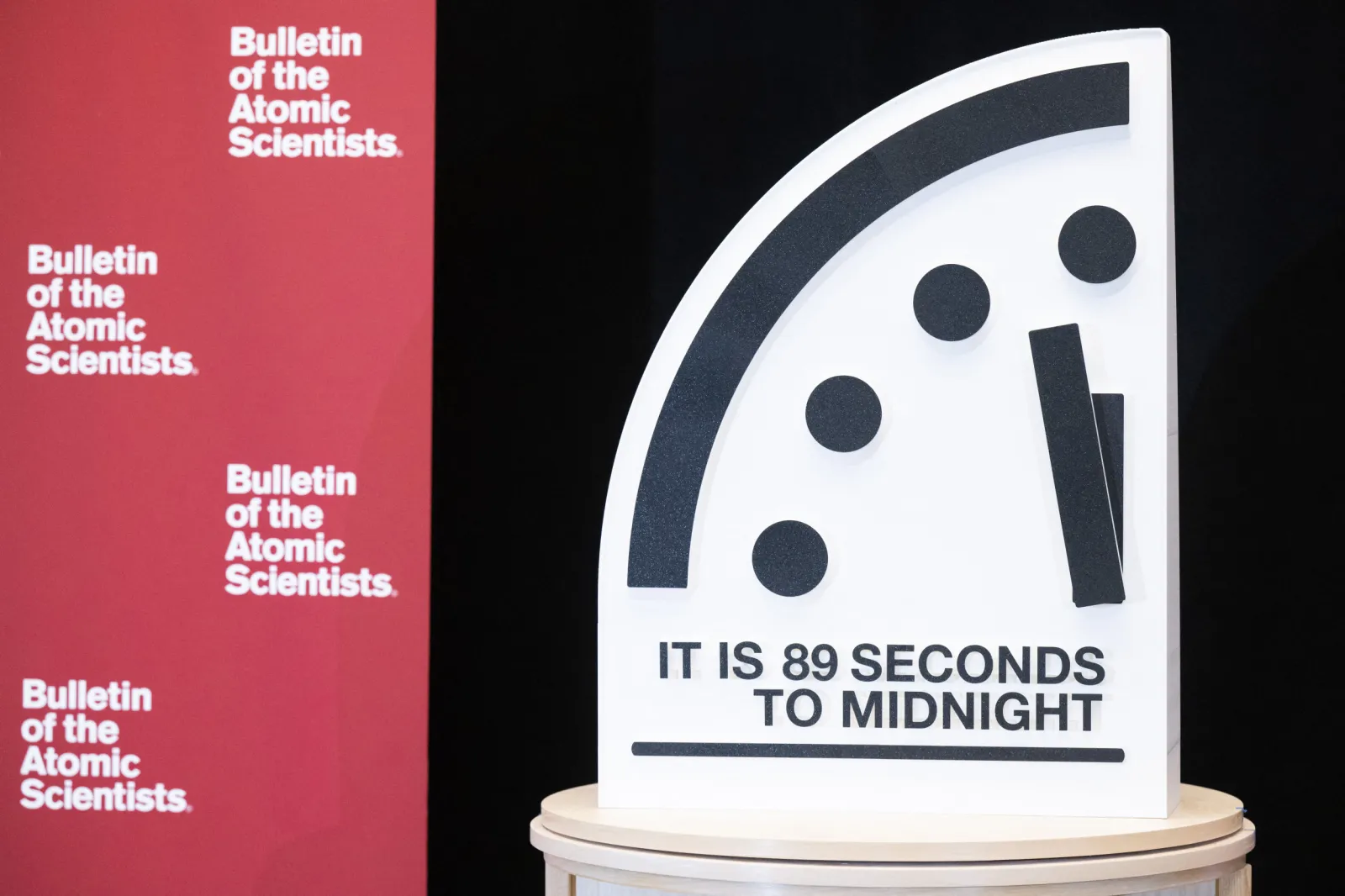
The Doomsday Clock is now set closer to midnight than ever before, recognizing the increasing danger of global nuclear war. The Bulletin of the Atomic Scientists recently announced the clock had been moved to 89 seconds to midnight, a warning that there could indeed be a tragic "Day After."
It was a Sunday night in 1983, when a movie aired on TV called The Day After, which depicted a U.S. and Russian nuclear war and the immediate aftermath. Since it was a school night, I only got to see some of the movie which may have been just as well because it was very horrifying. It was a vivid reminder that we do live under the daily threat of the ultimate catastrophe, seeing the life we know wiped out by nukes.
Newsweek ran a cover story on the movie titled, TV's Nuclear Nightmare. One thing the movie did was to spur the search for solutions, which was really the only way to cope with the fear. We wanted our leaders to prioritize nuclear arms control and disarmament. This led to summit meetings between then-President Ronald Reagan and the Soviet Union's General Secretary Mikhail Gorbachev and some treaties thereafter between the U.S. and Russia. The two leaders even talked about eliminating all nuclear weapons.
Read More on Opinion
...
But any momentum we may have once had on nuclear arms control is long gone. Russia, the U.S., and China still have large nuclear arsenals.
"The countries that possess nuclear weapons are increasing the size and role of their arsenals, investing hundreds of billions of dollars in weapons that can destroy civilization. The nuclear arms control process is collapsing, and high-level contacts among nuclear powers are totally inadequate given the danger at hand," the Bulletin of the Atomic Scientists recently warned.
A nuclear arms race with Russia and China looms, and is especially dangerous amid tensions over the war in Ukraine. The New START Treaty between the U.S. and Russia, which limits strategic nuclear weapons, will expire in 2026. Without a replacement treaty there will be nothing holding back a nuclear arms buildup.
We have not seen a major nuclear arms reduction treaty since former President Barack Obama achieved New START with Russia in 2010. The Biden-Harris administration renewed the treaty with Russia but now the new expiration date is coming.
According to the Arms Control Association there are over 12,000 nuclear weapons worldwide with the U.S. and Russia possessing about 90 percent. The U.S. and Russia need to make progress on disarming nukes. China, India, Pakistan, North Korea, Israel, Great Britain, and France also have nukes. We also must prevent Iran from developing nukes and that means reviving the agreement that President Donald Trump terminated during his first administration.
Think of all the precious resources wasted by the nuclear nations. According to the International Campaign to Abolish Nuclear Weapons, "The nine nuclear-armed nations spend many tens of billions of dollars each year maintaining and modernizing their nuclear arsenals: in 2023 they squandered $91.4 billion on their nuclear weapons a total of $2,898 per second."
Why not reduce arsenals from thousands into the hundreds, and divert savings toward fighting hunger and poverty? Replacing the New START Treaty with Russia could even be an integral part of a peace plan ending the war in Ukraine.
President Dwight Eisenhower believed disarmament was so important that he suspended U.S. nuclear weapons testing for the final years of his administration (1958-61). Ike believed ending nuclear weapons testing was a pathway to disarmament.
Eisenhower said that not achieving nuclear disarmament, including a test ban, "would have to be classed as the greatest disappointment of any administration — of any decade — of any time and of any party."
His successor, President John F. Kennedy, likewise thought the same and the efforts of both presidents led to the Limited Nuclear Test Ban Treaty with the Soviet Union. The 1963 treaty banned nuclear tests in the atmosphere, underwater, and outer space. This treaty was especially a relief in the aftermath of the 1962 Cuban Missile Crisis, which brought the U.S. and Soviet Union to the brink of nuclear war.
The United States Senate has still not ratified the 1996 Comprehensive Nuclear Test Ban Treaty which would ban all nuke test explosions, including underground blasts. This treaty, if it could take effect, would encourage disarmament talks among all the nuclear states by closing the door on nuclear testing forever.
In fact, a 2024 YouGov survey revealed that 67 percent of Americans show support for nuclear disarmament. Clearly nuke disarmament would win at the ballot box. Activist groups like Back from the Brink are encouraging people to mobilize in support of nuclear disarmament policies. We need to keep working toward eliminating nukes, our only hope to avoid a Day After.
William Lambers is an author who partnered with the U.N. World Food Program (WFP) on the book Ending World Hunger*. His writings have been published by* The Washington Post*,* History News Network*, Cleveland's* The Plain Dealer, and many other news outlets. Lambers recently volunteered to write the Hunger Heroes section of WFP's online learning game Freerice.
The views expressed in this article are the writer's own.
View 0 Comments
Submit Correction
View Editorial & AI Guidelines