...

By Martha McHardy
US News Reporter
0
Share
Newsweek is a Trust Project member
See more of our trusted coverage when you search.Prefer Newsweek on Googleto see more of our trusted coverage when you search.
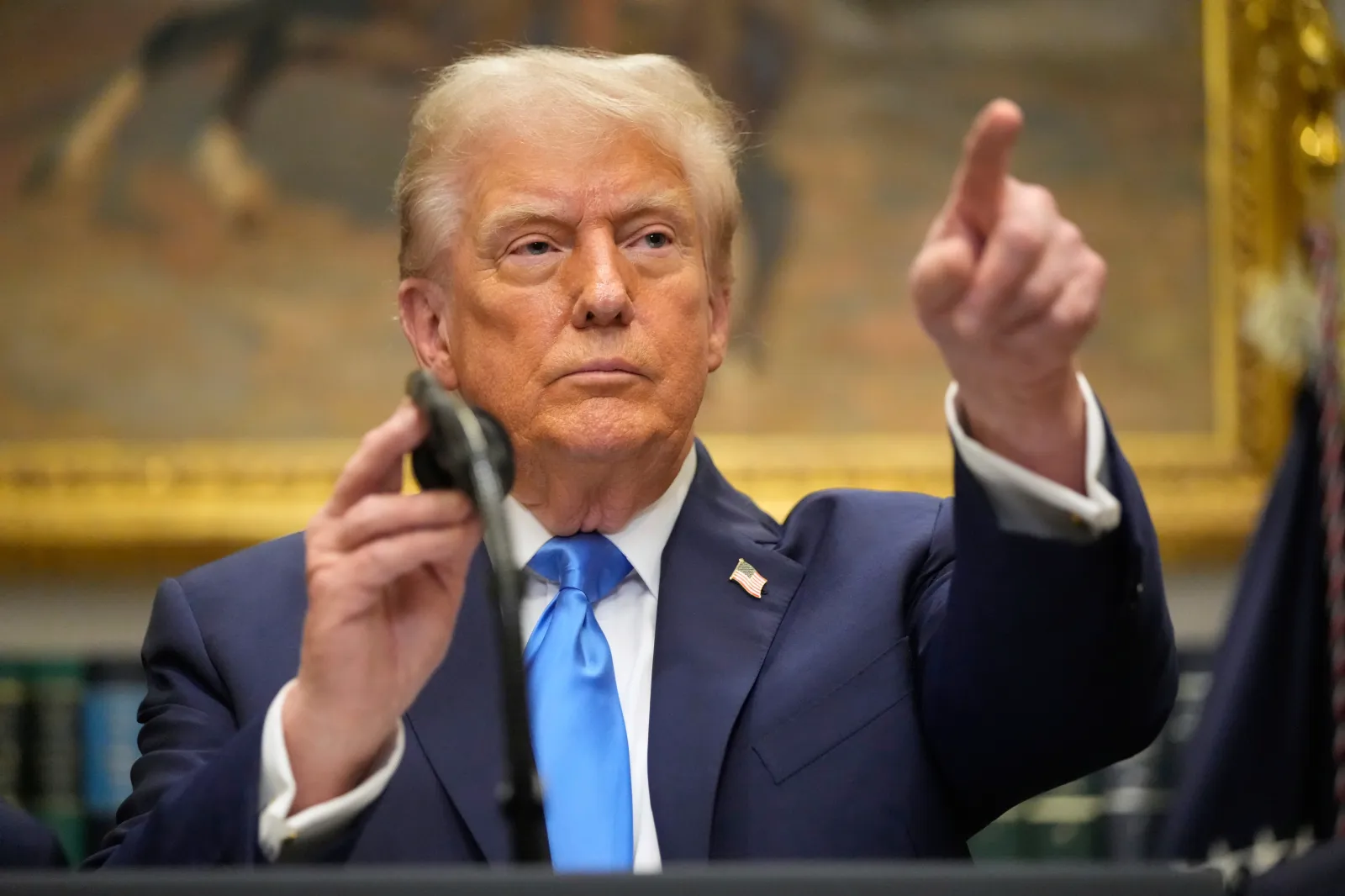
President Donald Trump is facing backlash from medical experts after suggesting a link between the use of Tylenol during pregnancy and autism, a claim widely discredited by scientific research.
During a White House briefing on Monday, Trump suggested that acetaminophen, sold under the brand name Tylenol, may be linked to higher autism rates in the United States, a connection experts have studied but say remains unproven.
“Taking Tylenol is not good,” Trump said. “I’ll say it. It’s not good.”
He went on to say that women should avoid acetaminophen "during the entire pregnancy," claiming, without providing evidence, that it is "very dangerous to the woman's health."
Read More on News
Why It Matters
Trump's statements perpetuate long-debunked myths about autism, while potentially discouraging pregnant women from using acetaminophen, which has been the most commonly recommended pain reliever during pregnancy for decades.
The claims could influence public health decisions and reinforce harmful misconceptions about autism spectrum disorder that researchers have worked to dispel.
Autism affects 1 in 31 U.S. children today, according to the Centers for Disease Control and Prevention (CDC).
What To Know
...
Trump said the Food and Drug Administration (FDA) would begin notifying doctors that the use of acetaminophen "can be associated" with an increased risk of autism, but the president did not provide any medical evidence for the new recommendation. He also urged parents not to give the drug to newborns.
Trump also pointed to leucovorin, a drug typically prescribed to counteract the side effects of certain cancer therapies, as a possible treatment for autism. Small, early trials have suggested improvements in speech among some children, though researchers caution that much larger studies are needed. Still, the administration said the FDA would take steps to formally recognize the drug’s potential role in autism care and direct states to track and study its use.
Trump's remarks have provoked backlash from medical professionals. The National Autistic Taskforce criticized Trump’s recent claim that Tylenol use in pregnancy is linked to autism, telling Newsweek: “We are dismayed to hear that President Donald Trump has claimed that there is a link between Tylenol...and autism, and that he is suggesting that pregnant people should refrain from taking the medicine.”
The group warned that his remarks “appear to ignore research...that tells us that pain and high fever in pregnant people can be a health risk to parent and child.” It urged politicians to “focus instead on supporting autistic people and valuing our lives and contribution to society.”
Liz Halstead, an associate professor in Psychology at University College London, echoed those concerns, telling Newsweek: “While some studies have shown an association, when we look at larger scale studies we do not see this association consistently,” adding that “genetics may be greater risk factors.” She stressed that “the recommendation is still that Tylenol is safe to use in pregnancy...the science does not support these claims.”
Colin Killick, executive director of the Autistic Self Advocacy Network, told The Washington Post that officials are “playing loose with facts” to suggest a link between Tylenol and autism without conducting responsible science.
Epidemiologist Dr. Eric Fing pointed to “the largest and best study in the world in 2.5 million kids,” which found no increased autism risk from maternal acetaminophen use. He noted that an initial 5 percent risk disappeared once sibling controls were factored in.
Dr. Nick Mark, an intensivist, warned that spreading a “bogus” association could push pregnant women toward NSAIDs, which are linked to serious fetal harm.
Dr. Steven Fleischman, president of the American College of Obstetricians and Gynecologists, criticized the announcement, warning it is “not backed by the full body of scientific evidence” and oversimplifies the complex causes of neurological disorders in children. He called it “highly unsettling” that federal health agencies would issue such guidance without reliable data.
Meanwhile, Mia Ives-Rublee, senior director at the Center for American Progress, condemned the announcement, saying Secretary of Health and Human Services Robert F. Kennedy Jr. has a “long history of promoting false or unsubstantiated health claims.” She argued the new claims rely on “distorted ‘science’ and false claims” that have been repeatedly debunked by doctors, scientists and disability advocates.
During the White House address, Trump urged parents not to give Tylenol to newborns, acknowledging that he was going “further than medical advisers and scientists would support.” He admitted that the research was not strong enough to support his claims, blaming past government funding decisions.
“This is based on what I feel,” he said.
Trump also said: “There’s a rumor—and I don’t know if it’s so or not—that Cuba, they don’t have Tylenol because they don’t have the money for Tylenol. And they have virtually no autism. OK?”
He called his remarks “a very strong recommendation,” conceding that it was “maybe stronger from me than from the group because they’re waiting for certain studies.”
The FDA took a more cautious approach, noting that no causal link has been established, but, “in the spirit of patient safety and prudent medicine,” it advised clinicians to consider minimizing acetaminophen use during pregnancy for routine low-grade fevers.
Kenvue, the maker of Tylenol, pushed back, saying: “The facts are that over a decade of rigorous research, endorsed by leading medical professionals and global health regulators, confirms there is no credible evidence linking acetaminophen to autism.”
Research on the issue remains mixed. A 2024 JAMA study tracking Swedish siblings found no evidence of a connection, while a comprehensive review published this August found a link but cautioned against concluding the drug causes autism. Instead, the authors recommended a “precautionary” approach to its use.
What People Are Saying
Epidemiologist Dr. Eric Fing wrote on X: "RFK Jr and Trump are wrong—the largest & best study in the world in 2.5 MILLION KIDS—found no increased autism risk with acetaminophen (aka paracetamol, Tylenol) use by the mother during pregnancy. A crude unadjusted analysis found only a preliminary 5% risk, but once you adjust for family by matching using sibling controls (who didn’t get autism), the even tiny 5% risk vaporizes to 0%."
Intensivist Dr. Nick Mark wrote on X: "The danger of announcing a *bogus* association between Tylenol & autism is that more women will take NSAIDs during pregnancy, which is *actually* associated with fetal harm. Unfortunately we may see an increase in oligohydramnios, premature closure of the ductus arteriosus, etc."
Mia Ives-Rublee, senior director for the Disability Justice Initiative at the Center for American Progress, said in a statement obtained by Newsweek: "[Health and Human Services Secretary] RFK Jr. has a long history of promoting false or unsubstantiated health claims and harmful theories about autism that have been debunked by doctors, scientists, and advocates who have experienced or studied it for years. Today's announcement attributes autism to the use of Tylenol during pregnancy based on distorted 'science' and false claims."
Dr. Steven Fleischman, president of the American College of Obstetricians and Gynecologists, said in a statement: “Today’s announcement by HHS is not backed by the full body of scientific evidence and dangerously simplifies the many and complex causes of neurologic challenges in children.
“It is highly unsettling that our federal health agencies are willing to make an announcement that will affect the health and well-being of millions of people without the backing of reliable data.”
Colin Killick, executive director of the Autistic Self Advocacy Network, told The Washington Post: “It’s wild. They are playing loose with facts to show the appearance of a connection rather than doing responsible science.”
The Autistic Self Advocacy Network said in a statement posted on X: "Today, the President held a press conference with Robert F. Kennedy Jr. and other members of the Department of Health and Human Services (HHS) leadership. During the press conference, speakers shared harmful, false information about autism, acetaminophen, and vaccines. An HHS that does not provide accurate information to the President and make safe, science-informed decisions puts us all at grave risk."
What Happens Next
Kennedy said that he is launching an effort to identify all causes of autism, involving the National Institutes of Health, the FDA, the CDC and the Centers for Medicare and Medicaid Services.
Update 9/23/25, 12:21 p.m. ET: This article has been updated with comments from the National Autistic Taskforce and Liz Halstead.
View 0 Comments
Submit Correction
View Editorial & AI Guidelines