10
Loading video...



By Dan Gooding, Andrew Stanton, and Khaleda Rahman
0
Share
Newsweek is a Trust Project member
See more of our trusted coverage when you search.Prefer Newsweek on Googleto see more of our trusted coverage when you search.
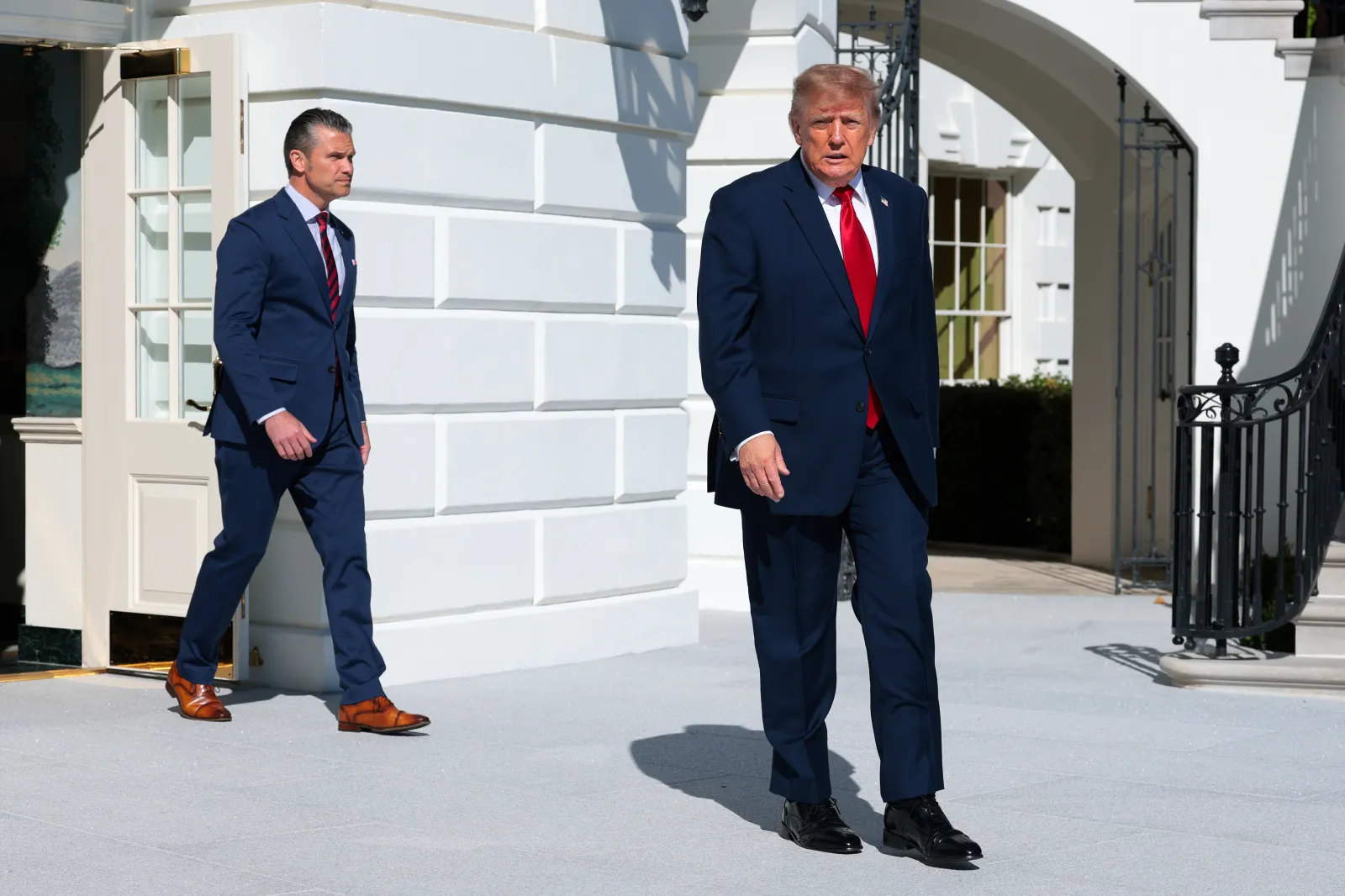
The Pentagon said Defense Secretary Pete Hegseth and President Donald Trump are "completely aligned" after Trump rejected plans to livestream the execution of Fort Hood shooter Nidal Malik Hasan, breaking from an earlier statement made by Hegseth.
Chief Pentagon Spokesman Sean Parnell told Newsweek, “President Trump and Secretary Hegseth spoke about the decision to not livestream Hasan's execution ahead of the Truth Social announcement. The Secretary supports the President's decision, and they are completely aligned.”
In a post on Truth Social, Trump said that while Hasan was "a very bad and evil man" who would still die by firing squad, his death would not be streamed, despite the president feeling it "might have been a strong deterrent."
Read More on U.S.
The president said, "many very good and well meaning people would rather not watch him die, through streaming, or through any other visual device. He will die, as scheduled, by firing squad, but this event will not be streamed."
"That said, the execution may be viewed in person by the immediate families of the victims, if they so choose. They deserve to witness JUSTICE!"
Kristopher Craig, an Army veteran whose 22-year-old brother, Army Private First Class Michael Pearson, was among those killed in the shooting, told Newsweek that he was glad the president "listened to reason and reconsidered his decision."
Craig had urged Trump reconsider in a letter in which he told the president and Hegseth he did not want his brother's memory “tied to the public broadcast of another human being's death."
After the reversal, Craig said he was relieved by the outcome but that the entire controversy was "avoidable."
"None of us should have had to go through this in the first place. The idea of broadcasting an execution was deeply disturbing and caused unnecessary pain and distress to people who have already endured enough," he said. "This entire controversy was avoidable, and the distress it caused cannot simply be undone. But today, I'm grateful that we have been spared having to witness something that would have only added to that pain. For that, I am genuinely thankful."
Hasan shot and killed 13 people and wounded more than 30 others in a 2009 shooting rampage at Fort Hood, Texas.
The Fort Hood attack came at the height of the global War on Terrorism, and investigators concluded that Hasan was motivated by Islamic extremist beliefs. They cite his pre-attack email exchanges with Anwar al-Awlaki, the al-Qaeda-linked cleric who later praised the massacre, as well as Hasan's own statements. During his court-martial, Hasan said he had acted in defense of the Taliban, described himself as having "switched sides".
Hegseth said in an interview on October 8 that he planned to show Hasan's death publicly, marking the first such public execution in the U.S. for decades. Trump and Vice President JD Vance pushed back in the days that followed, and former military leaders also raised concerns.
...
Hegseth Plan Faced Bipartisan Backlash
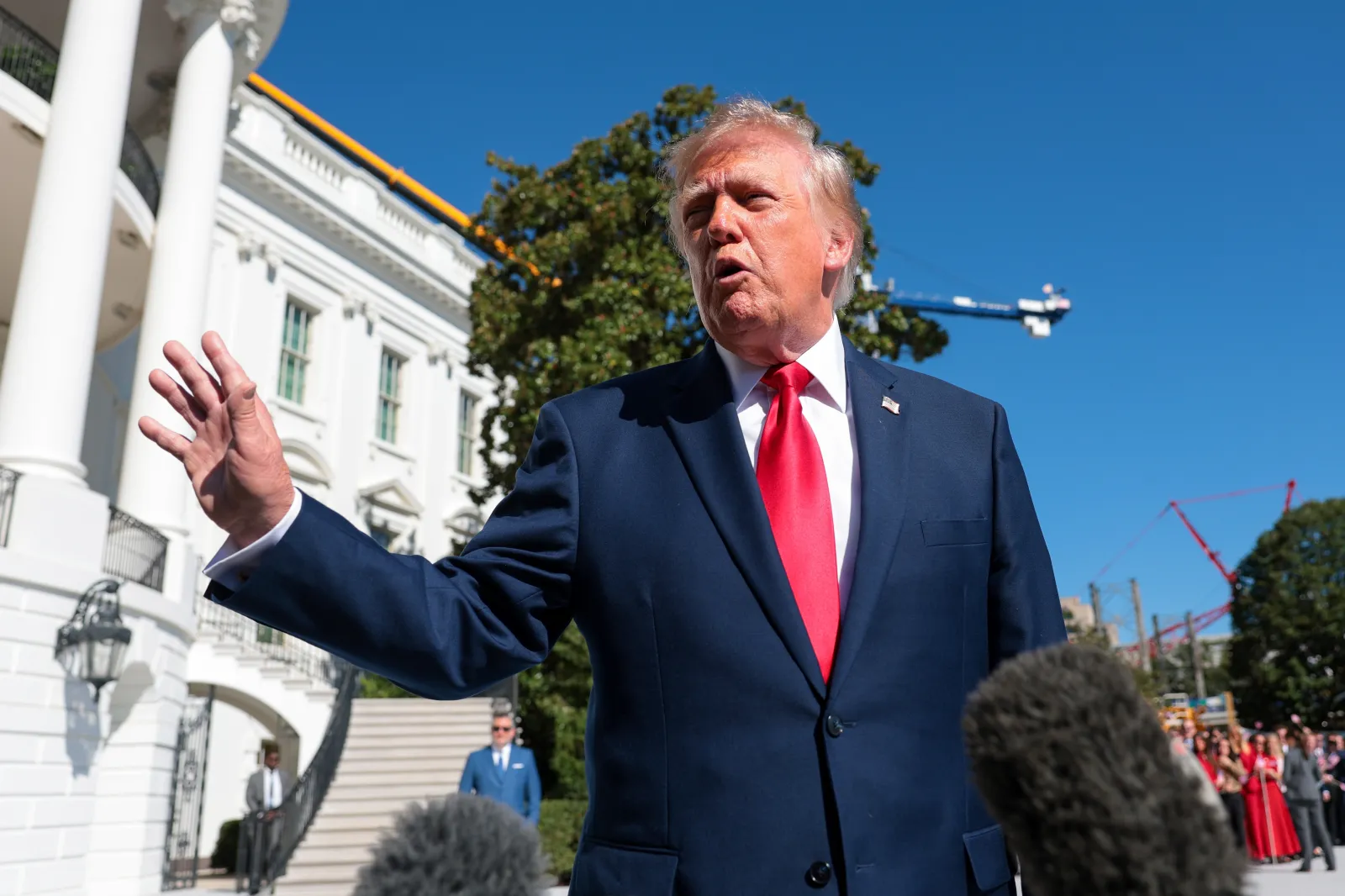
Numerous Republicans have broken with the Trump administration on the now-scrapped plan to livestream the execution.
Vance expressed skepticism about the possibility and said he would not be watching.
"I don't know that that’s actually going to happen," the vice president told reporters last Friday. "So whatever the controversy is about the method of the execution, I hope that people don't forget that this is a guy who brutally murdered a lot of innocent people."
Senator Thom Tillis, a North Carolina Republican, wrote in a post on X that while he believes the death penalty is appropriate for Hasan, it is “beyond disgusting” to livestream it.
“Public executions are what oppressive dictatorships like Iran and Afghanistan do. It should not be happening in America,” he wrote.
Senator John Kennedy, a Louisiana Republican, said on Friday that he would not televise or publicize the execution.
“If it were me, I wouldn’t televise it or publicize it or whatever they’re doing,” he said while campaigning in Michigan for GOP Senate candidate Mike Rogers, NBC News reported. “I just think it makes—it makes our society coarser, and I wouldn’t do it. But there are arguments, you know, on both sides.”
Related Story
List of Republicans Breaking With Trump on Nidal Hasan Execution Livestream
MAGA Red Line Crossed, Poll Found
A new poll from ABC News, The Washington Post and Ipsos found broad opposition to livestreaming the execution. Only 18 percent of Americans support the idea, according to the poll. That number was 8 percent among Democrats and 14 percent among independents.
Even most Republicans said the livestream would be a step too far, with 34 percent saying it should be livestreamed and 64 percent saying it should not. A majority of MAGA Republicans (55 percent) said the execution should not be livestreamed, suggesting unease about the proposal among the voting bloc most loyal to the president.
Who Is Nidal Malik Hasan?
Hasan served as a military psychiatrist before carrying out the 2009 mass shooting at Fort Hood, one of the deadliest attacks ever on a U.S. military installation.
Trump approved the execution by firing squad earlier in October. Hasan is expected to be executed on December 3, 2026.
Hasan was born and raised in Virginia to parents who emigrated from a town near Jerusalem to the United States. He joined the U.S. Army after high school and attended medical school through a military scholarship program. He worked at Walter Reed Army Medical Center, where he treated service members returning from combat in Iraq and Afghanistan.

...
Former colleagues and relatives said Hasan became troubled by the wars and the possibility of being deployed overseas.
On November 5, 2009, he entered a processing center at Fort Hood. Witnesses said he shouted "Allahu Akbar," Arabic for "God is great," before opening fire with a laser-sighted handgun. Thirteen people were killed, and more than 30 others were injured.
He was shot by civilian police. He survived but was left partially paralyzed. He has spent years incarcerated at the U.S. Disciplinary Barracks at Fort Leavenworth, Kansas.
Hasan has acknowledged being the shooter and described himself as a soldier who “switched sides.” He was convicted and sentenced to death in 2013.
How Do Firing Squad Executions Work?
The firing squad was last used in the United States in early 2025 in South Carolina after inmates chose it over other methods such as lethal injection or electrocution. It was the first time a firing squad was used in 15 years.
These executions typically involve a prisoner being bound to a chair with a hood over their head, according to the Death Penalty Information Center. A doctor finds the prisoner’s heart with a stethoscope and pins a target over it. Several shooters, one of whom is given a blank round, then fire at the prisoner, according to the organization.
When Was the Last Public Execution?
The 1936 hanging of Rainey Bethea in Kentucky is generally recognized as the last public execution in the United States. A report in a local newspaper, The Owensboro Inquirer, estimated that a crowd of up to 20,000 gathered to watch the 22-year-old man’s execution. Bethea, a Black man, was executed after reportedly confessing to the rape and murder of a 70-year-old white woman, but he was never charged with murder, Newsweek previously reported.
Contact Newsweek editors on this story: Jason Lemon and Sam Wilson.
Update 10/16/26, 8:51 a.m. ET: Kristopher Craig's reaction was added.
View 0 Comments
Submit Correction
View Editorial & AI Guidelines