...

By Brendan Cole
Senior Reporter
0
Share
Newsweek is a Trust Project member
See more of our trusted coverage when you search.Prefer Newsweek on Googleto see more of our trusted coverage when you search.
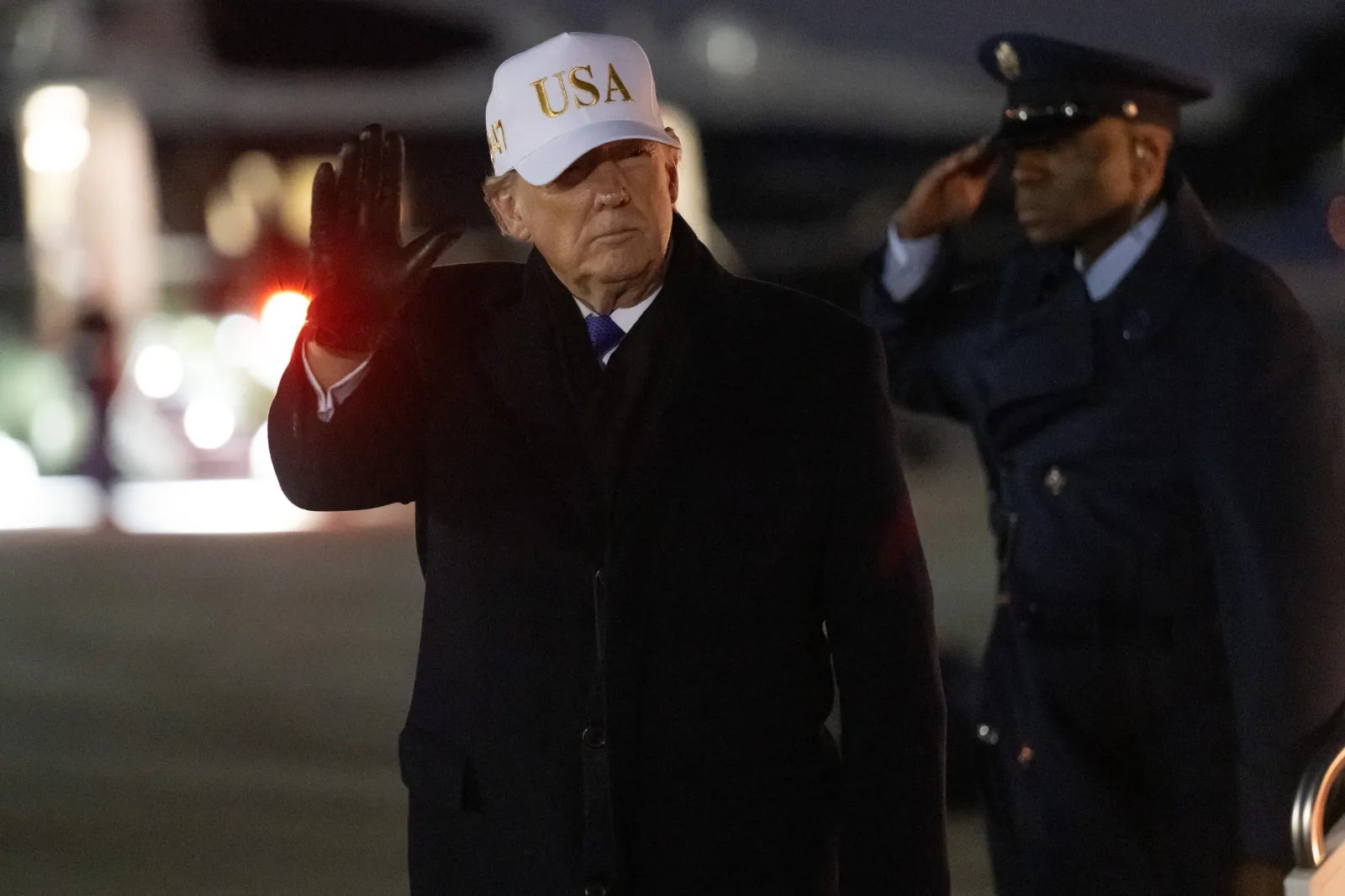
President Donald Trump has teased the prospect of a regional conflict if there were no deal over the Islamic Republic’s nuclear program.
Trump made the remarks to reporters when asked about the warning by Supreme Leader Ayatollah Ali Khamenei that if the U.S. launches an attack, it would likely escalate into a broader regional war.
"We don’t make a deal, then we’ll find out whether or not he was right," Trump said Sunday.
Read More on News
Newsweek has contacted the Iranian Foreign Ministry for comment.
...
Why It Matters
Tensions between Tehran and Washington are high after Trump threatened American intervention following Tehran’s violent crackdown on protests that posed the biggest threat to the ruling regime for years.
The demonstrations eased, but the war of words between Trump and Tehran has not. Khameini has echoed sentiments from his officials that Iran would strike back if the president launched attacks, drawing on the U.S. "armada" he has boasted of.
What To Know
Iran's supreme leader warned Sunday that a U.S. attack would spark a "regional war" in the Middle East. This follows warnings from Iranian officials over the last few days about the readiness of Iran’s military to strike back if it were hit.
When asked about Khamenei's comments, Trump said "of course he would say that," before referring to the deployment of the "biggest, most powerful ships in the world."
Behnam Ben Taleblu, senior director of the Iran Program at the Foundation for Defense of Democracies (FDD), told Newsweek that the messaging of Iran’s regime is that it will treat any strike, whether limited or not, as a major strike and respond accordingly.
He said one possibility for Tehran is that the regime "plays dead," absorbs a U.S. strike and limps along, which might prevent the U.S. attacking in a bigger way.
The strategy of absorption could lull the U.S. into a false sense of security that certain military officials or certain political officials had been killed, but they'll stand down, Taleblu said.
Another option is really striking back hard, but in that scenario, "there's a likelihood they might actually draw blood" which could bring in the U.S. and/or Israel is a bigger way than envisioned, he added.
Iran’s foreign ministry spokesman Esmail Baghaei played down concerns about a possible war with the United States on Monday, telling reporters "do not worry at all."
However, Iran’s Revolutionary Guard (IRGC) aerospace commanders told lawmakers on Monday that Iran’s "war room" is active and forces were ready to enter any conflict, according to Iranian media.
Retired Vice Admiral Robert Murrett, professor of practice at Syracuse University's Maxwell School of Citizenship and Public Affairs, told Newsweek that the shift of the USS Abraham Lincoln battle group to the CENTCOM area of responsibility (AOR) near Iran is of some note, although there is already significant combat power in the region at this time.
"Defining our mission objectives will be key for any use of force again Iran, that is, one which can credibly lead to meeting a strategic end state," Murrett said.
What People Are Saying
Ayatollah Ali Khamenei said Sunday the U.S. "should know that if they start a war this time, it will be a regional war."
President Donald Trump: "We don’t make a deal, then we’ll find out whether or not he was right."
U.S. Republican Senator Tom Cotton on X: "The Ayatollahs are well-aware of our military’s capabilities and would be wise to take President Trump’s words seriously."
Behnam Ben Taleblu, senior director of the Iran Program at the Foundation for Defense of Democracies (FDD) to Newsweek: "The Iranians have three sets of options born of different political assumptions. One, they can play dead and survive. Two, they try to meet adversaries where they are. And three, that regardless of the nature of the adversary's strike, they ‘go big’…in a bid at stalling escalation."
What Happens Next
Iran’s army will hold a military exercise on Tuesday and Wednesday in the western border county of Qasr-e Shirin and the U.S. Central Command has announced its own drills in the region, Iranian media reported.
Tehran has said it is open to walks with the U.S. but Iran will not negotiate over its nuclear activities or missile capabilities, Alaeddin Boroujerdi, a member of parliament’s national security and foreign policy commission, said Monday.
View 0 Comments
Submit Correction
View Editorial & AI Guidelines