...


By Dan Gooding and Gabe Whisnant
0
Share
Newsweek is a Trust Project member
See more of our trusted coverage when you search.Prefer Newsweek on Googleto see more of our trusted coverage when you search.
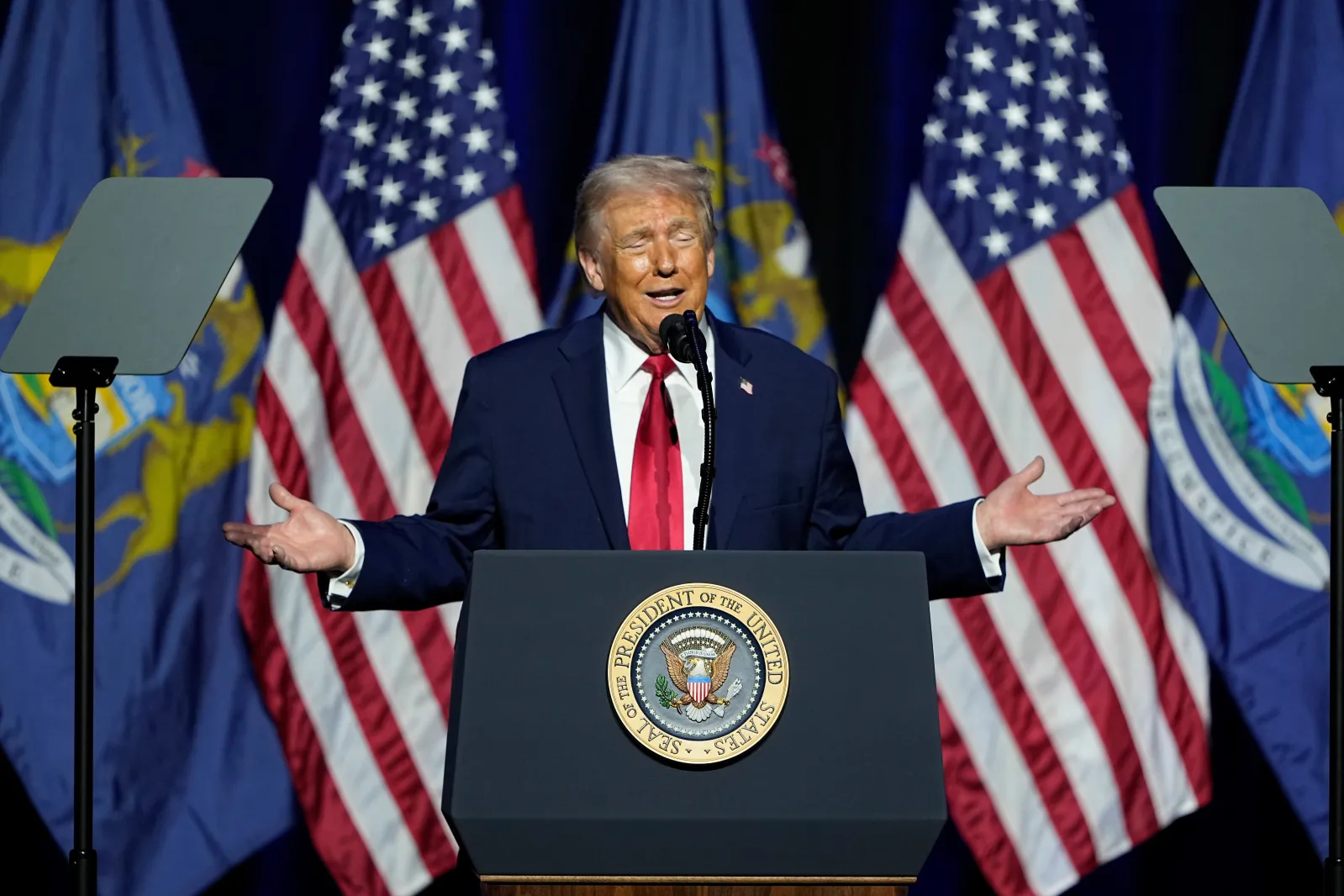
President Donald Trump outlined new immigration and fraud‑prevention plans during a speech Tuesday at the Detroit Economic Club, including 90‑day notices directing states like California to return people who entered the country illegally.
He said his administration would stop making payments to sanctuary cities beginning February 1 and argued the United States “can’t afford to take in millions of people” and cover their public services.
"Starting February 1, we're not making any payments to Sanctuary Cities or states having Sanctuary Cities because they do everything possible to protect criminals at the expense of American Citizens, and it breeds fraud and crime," the president said.
Read More on Politics
Trump also announced plans to suspend nearly 8,000 Small Business Administration loans in Minnesota that he said were tied to “suspected scammers,” noting that the Department of Justice has charged almost 100 people there. He added that a new DOJ “legal strike force” would target fraud and that his administration would seek to revoke citizenship from naturalized immigrants convicted of defrauding Americans.
Why It Matters
Trump has opposed sanctuary policies for years, arguing that state and local law enforcement should cooperate with federal immigration enforcement. Despite court rulings that it is the federal government's job to enforce immigration laws, the current administration has ramped up agreements with police and sheriff's departments willing to assist in arresting and detaining alleged illegal immigrants, while leaders in sanctuary cities and states, like New York, Chicago, and Los Angeles, have been firm in their belief that they need to protect undocumented immigrants who have not committed any crimes.
What To Know
The president's claim that he would withdraw federal funding for sanctuary jurisdictions because immigrants in these areas were being protected by sanctuary policies, while putting additional pressure on schools, hospitals, and other benefits.
Previous attempts to withdraw federal funding based on sanctuary policies, including FEMA grants and terrorism prevention programs, have faced legal challenges. In some cases, the Trump administration has been forced to reinstate or repay those funds.
What Is a Sanctuary City?
The definition of a sanctuary city or state varies, with no official set policy across all of them. Jurisdictions have also adopted policies at different times, some forty years ago, others in the past decade.
Overall, sanctuary policies prevent local agencies, such as police and sheriff's departments, as well as social and health services, from cooperating with federal immigration enforcement.
For example, New York City Police Department officers would not accompany ICE agents on operations, and the city's public schools would not be able to freely share data with the Department of Homeland Security.
In most cases, police departments will work with ICE and other federal agencies on serious crimes, handing over suspects or those convicted of crimes to federal agents once their time with local law enforcement is over.
Sanctuary policies were introduced so that all residents, regardless of their immigration status, would feel safe using local government services, including going to the police to report a crime. Trump and many on the right view these policies as prohibitive.
...
Is Minneapolis a Sanctuary City?
One such sanctuary jurisdiction is Minneapolis, which is currently the focus of DHS's immigration enforcement efforts.
Leaders, primarily Democrats, have defended the policies, arguing that they are needed to keep their communities safe. Again, the Trump administration has argued that these rules have protected serious and violent criminals.
Mayor Jacob Frey, a Democrat, said in April 2025 that the city had limited law enforcement resources, which are better used fighting crime, rather than taking up officers' time arresting immigrants.
Earlier Tuesday, Trump promised that "the day of reckoning and retribution is coming" when promising that ICE was not finished in Minnesota.
What People Are Saying
New York City Mayor Zohran Mamdani, on X: "Our values and our laws are not bargaining chips. We will always defend New Yorkers, even in the face of federal threats to withhold funding."
Minnesota Democratic Governor Tim Walz, on X: "Trump admits that this is nothing but political retribution. Minnesota voted against him three times and now he’s punishing us – putting lives at risk and wasting enormous resources in the process."
Chicago Mayor Brandon Johnson, a Democrat, in a press release on a new lawsuit: “My administration will forcefully protect our residents’ rights and hold anyone accountable who abuses their power. Nobody is above the law. This lawsuit is about ensuring there is accountability for the lawless actions of the Trump administration and justice for the Chicagoans who have been wronged.”
What Happens Next
As with other attempts to withhold or withdraw federal funding, the Trump administration will likely face legal challenges from the states and cities it is targeting. Democrats leading sanctuary jurisdictions have promised to continue to protect the rights of all within their communities, regardless of immigration status.
Update 1/13/26, 4:56 p.m. ET: This article was updated with additional information.
Update 1/13/26, 5:50 p.m. ET: This article was updated with additional information.
The news cycle is loud. Algorithms push us to extremes. In the middle—where facts, ideas and progress live—there's a void. At Newsweek, we fill it with fearless, fair and fiercely independent journalism.
Common ground isn't just possible—it's essential. Our readers reflect America's diversity, united by a desire for thoughtful, unbiased news. Independent ratings confirm our approach: NewsGuard gives us 100/100 for reliability, and AllSides places us firmly in the political center.
In a polarized era, the center is dismissed as bland. Ours is different: The Courageous Center—it's not "both sides," it's sharp, challenging and alive with ideas. We follow facts, not factions. If that sounds like the kind of journalism you want to see thrive, we need you.
When you become a Newsweek Member, you support a mission to keep the center strong and vibrant. Members enjoy:
Help keep the center courageous. Join today.


View 0 Comments
Submit Correction
View Editorial & AI Guidelines