Newsweek/Getty

By Newsweek Editors
0
Share
Newsweek is a Trust Project member
See more of our trusted coverage when you search.Prefer Newsweek on Googleto see more of our trusted coverage when you search.
President Trump pardoned former Honduran President Juan Orlando Hernández, who was serving 45 years after being convicted of moving 400 tons of cocaine to the United States—what DOJ prosecutors had called "one of the largest and most violent drug trafficking conspiracies in the world." The pardon came days before Honduras's presidential election, where Trump threatened to cut off U.S aid to the Central American country unless the conservative National Party candidate, Nasry Asfura, prevailed against centrist Salvador Nasralla of the Liberal Party. As of Wednesday morning, the race remained too close to call, with the latest tally showing Nasralla with less than a 0.2 percent lead after Asfura had been leading by 515 votes.
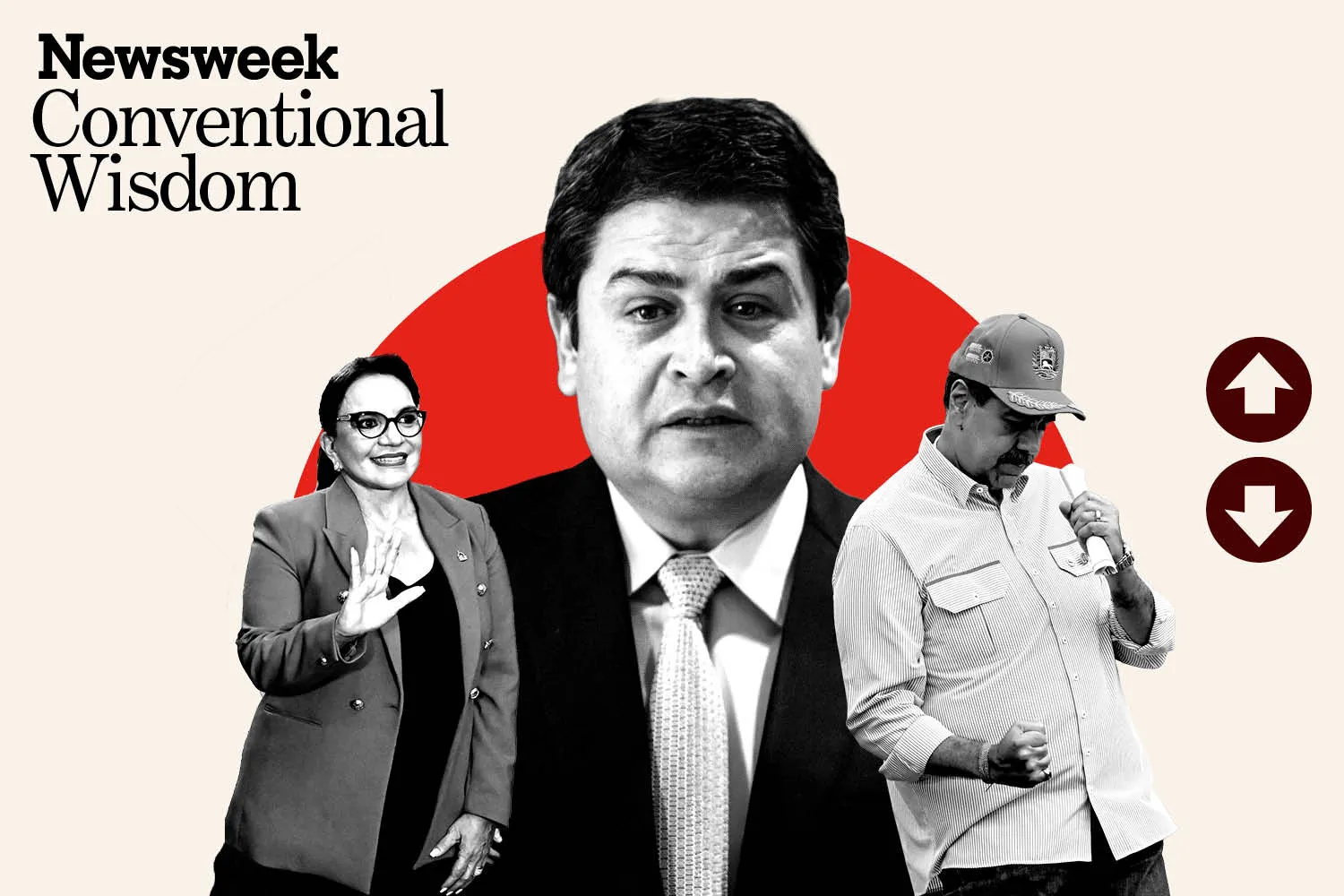
Juan Orlando Hernández ⬆
Wrote a four-page letter from prison to "Your Excellency" President Trump likening his criminal conviction to the prosecutions Trump faced following attempts to overturn the 2020 election. Hours later, Trump pardoned him. Flattery can get you anywhere—except back to Honduras, where the attorney general has said he is “obligated to seek justice and put an end to impunity.”
Read More on Opinion
Xiomara Castro ⬇
Hernández's letter portrayed the current Honduran president and her leftist LIBRE party as persecutors who weaponized U.S. justice against him. Her actual failings? Steering a flailing economy, presiding over Central America's highest homicide rate, and tolerating corruption in her own ranks Her party’s candidate, once the front-runner, trails in a distant third at 19 percent.
Taiwan ⬆
In exchange for promises from China of new infrastructure and shrimp imports, Castro severed ties with Taipei in 2023 after 82 years. Two years later: no dam, no free trade deal, and shrimp exports cratered 67 percent, costing 14,000 jobs. Now both leading candidates pledge to restore Taiwan ties. It’s the biggest diplomatic reversal for China in Latin America in decades.
Nicolás Maduro ⬅➡
Hernández and Trump bonded over opposing Venezuela's dictator—the letter specifically highlighted the former's anti-Maduro credentials. Now Trump pardons a man convicted of moving 400 tons of cocaine to the U.S. while threatening to invade Venezuela and blowing up boats full of cocaine. Maduro would be forgiven for not being able to tell the difference between the grounds for a pardon and the grounds for an invasion.
Bill Cassidy ⬆
The Louisiana Republican senator asked the obvious question after Trump announced the pardon: "Why would we pardon this guy and then go after Maduro for running drugs into the United States?" Cassidy gets credit for saying what everyone was thinking.
Emil Bove ⬇
As a top federal prosecutor in New York's Southern District, he oversaw the case that sent Hernández to prison. As Trump’s acting deputy attorney general, he told prosecutors to "just sink” Venezuelan boats suspected of smuggling cocaine. Then became a Trump-appointed federal appeals judge. Career advancement has never been so awkward.
Originally a staple of Newsweek's print edition, Conventional Wisdom used arrows to track whose stock was rising or falling in the political circus. We're reviving it in the digital age because the problem it lampooned—hyperbole and partisan certainty masquerading as insight—has only intensified.
CW assigns arrows—up, down, or sideways—to the figures and forces shaping current events. The arrows don't predict the future or claim special insight. They capture the prevailing winds of the moment, uncluttered by tribal howling. In an era when partisan media reinforces rather than questions assumptions, CW operates from the center—skeptical of left and right alike, committed to puncturing inflated reputations and recognizing overlooked truths.
View 0 Comments
Submit Correction
View Editorial & AI Guidelines