Getty Images

By Andrew Stanton
Reporter
0
Share
Newsweek is a Trust Project member
See more of our trusted coverage when you search.Prefer Newsweek on Googleto see more of our trusted coverage when you search.
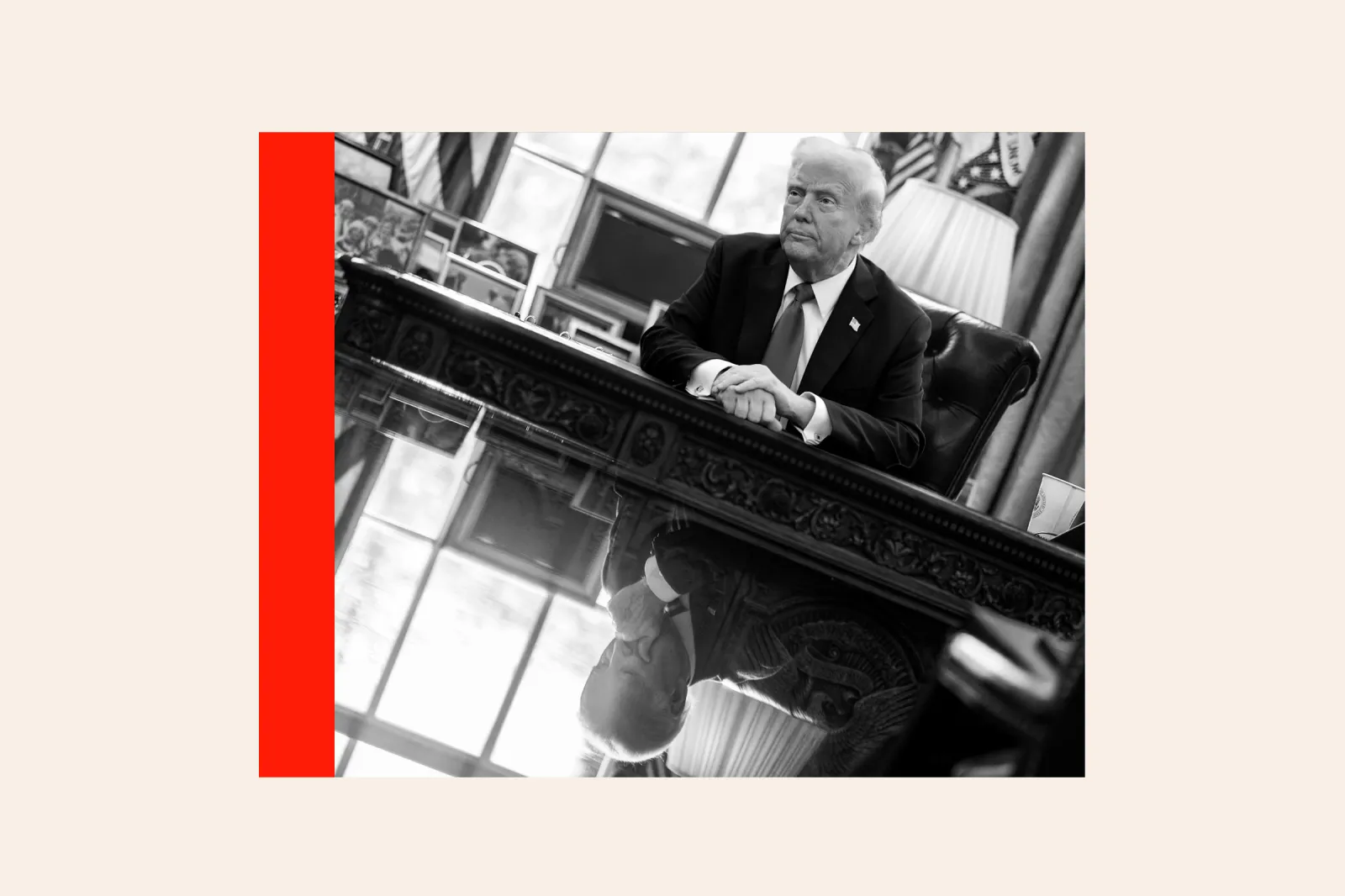
President Donald Trump is making the same mistake as his predecessor, former President Joe Biden, on the economy, experts say.
White House spokesperson Kush Desai told Newsweek there is “no comparison” between their economic messages.
Why It Matters
Americans remain deeply concerned about the state of the economy, recent polling shows. A new poll from The Economist and YouGov showed that inflation is the top issue for a plurality of voters. Economic issues are likely to loom over the 2026 midterms, when Democrats are hoping to win back control of Congress. Trump and Republicans are likely to spend the next year trying to quell those concerns, but if their message does not resonate with voters, they could pay a price in November.
Read More on Politics
Donald Trump Defends Economy in Address to the Nation
Trump delivered a message to the country on Wednesday, defending his record on the economy while blaming Biden for economic woes. He said he “inherited” a mess and has been working to fix it.
“Tonight, after 11 months, our border is secure, inflation has stopped, wages are up, prices are down, our nation is strong, America is respected, and our country is back, stronger than ever before,” Trump said. “We’re poised for an economic boom, the likes of which the world has never seen.”
He said inflation was "the worst in 48 years" when he took office, but argued that his policies are boosting workers' pay and securing companies' investments in the United States. Tariffs have been central to those achievements, Trump said.
"One year ago, our country was dead. We were absolutely dead. Our country was ready to fail. Totally fail. Now, we’re the hottest country anywhere in the world," Trump said.
Americans View Economy Differently, Polls Say
That’s not how Americans view the state of the economy, according to recent polls.
The YouGov poll found that 52 percent of Americans believe the economy is getting worse, while only 20 percent believe it’s getting better. Only four percent said the economy is “great.” Twenty-one percent said it is good, while 36 percent each said the state of the economy is “fair” or “poor.”
That poll surveyed 1,632 adults from December 12-15, 2025 and had a margin of error of plus or minus 3.2 percentage points.
Getty Images
A Quinnipiac University poll found that 34 percent of Americans view the economy as excellent or good, while 65 percent view it as not so good or poor. That poll surveyed 1,035 registered voters from December 11-15, 2025 and had a margin of error of plus or minus 3.9 percentage points.
Candace Turitto, program director of applied political analytics at the University of Maryland, told Newsweek there are some good metrics for the economy—strong consumer spending, GDP and the stock market—and some bad metrics, like inflation, high prices, and the "threat of rising unemployment.”
“It's understandable then that opinions on the economy's health diverge,” she said. “Biden and now Trump have both tried to focus discourse on the perceived positives and away from those perceived negatives, but that clashes against this feeling that so many Americans have of a wobbly and expensive economic environment.”
Both presidents’ goals were to “reframe those bad feelings as temporary or misunderstood” and call attention to better metrics, she said.
Trump Making Same Mistake as Biden, Experts Say
Trump’s message on the economy has drawn comparisons to that of former Biden. Both presidents maintained that the economy was performing better, even as voters expressed that they were not seeing meaningful financial gains. The economy and inflation, which soared as the world dealt with the aftermath of the COVID-19 pandemic, took a toll on Biden’s approval ratings during his presidency. Nearly a year after Trump’s return to office, Americans continue dealing with affordability concerns.
Anne Danehy, professor at Boston University's College of Communications, told Newsweek there are parallels between the economic messages of Biden and Trump.
“It’s kind of like trying to hide how things are,” she said. “Voters are a lot more astute than they give them credit, and they do listen to what’s being said by politicians. When you’re not honest with them, you’re not showing leadership by saying ‘I understand what you’re dealing with.’”
Voters want to see a more “empathetic” and “validating” message on the economy from Trump. If he does not deliver that, he runs the risk of appearing “tone-deaf” to some voters, she said.
“One of the reasons that he won is people feel like they understood them. Now they’re probably like, ‘What? Huh? Not for me?’” she said.
Costas Panagopoulos, a professor of political science at Northeastern University, told Newsweek there are similarities in how both Trump and Biden have focused on some positive indicators, but that others more directly affecting people “aren’t so rosy.”
“In that sense, the message of positive economic news does not ring true for many Americans exposed to it,” he said. “They’re unable to reconcile that messaging with the realities in their own lives.”
When facing tough economic headwinds, presidents should be telling the country the truth—pointing out signs of progress, but acknowledging areas where that progress is slower, he said. While Americans don’t expect things to get better overnight, this message may increase worries that there is no plan to address their concerns.
Turitto said that it can be “tricky to thread the needle” between enacting policies to improve the policy and convincing voters to be patient because it is work, noting that economic policies cannot really be evaluated until after they’re implemented.
“So, finding the right words to say to acknowledge the very real pressure consumers feel, while also instilling hope, is hard. You're essentially trying to soothe everyone while there's still chaos abounding, which can easily lend itself to confused messaging,” she said.
Biden's economic message was a key issue affecting his popularity, Danehy said. While people talk about Biden's age concerns as the top issue in his reelection bid, they had already begun to see him as ineffective before his messaging on the economy, she said.
Economic Message Could Be Costly in Midterms
Trump’s economic message could harm Republicans in the midterms, experts said.
“It is striking that he is making the exact mistake that Biden did by emphasizing that prices and the economy are improving in ways that people can sense, when in fact that are not feeling and sensing it. He also tells people to watch that it will be getting even better. If it doesn't in a visible and way that affects people’s experiences, his standing and that of Republicans running in 2026 will be hurt,” Robert Y. Shapiro, professor of political science at Columbia University, told Newsweek.
Polls already give Democrats an advantage. Historically, the party in the White House does suffer losses in the midterms. In 2018, during Trump's first term, Democrats gained 40 seats in the House of Representatives. In 2022, during Biden's term, Republicans picked up a more modest 10 seats.
The YouGov and The Economist poll gave Democrats a four-point lead over Republicans on the generic ballot (37 percent to 33 percent) ahead of the midterms.
What People Are Saying
White House spokesperson Kush Desai told Newsweek: “There is no comparison here. Joe Biden presided over a generational inflation and affordability crisis that was entirely of his own making. And while Biden downplayed and ignored this reality, President Trump has been focused on turning the page on the Biden economic disaster since Day One – with inflation cooled and real wages up, the Administration continues to focus on delivering more economic relief for the American people.”
Katherine Cramer, a professor of political science at the University of Wisconsin-Madison, told Newsweek: “Part of President Trump's power has been his ability to make many people in the United States feel seen and heard. Telling them that the economy is doing fine, when their every day reality tells them otherwise, runs the risk of weakening that power. Particularly for people who aren't super interested in politics—that is, most people—every day indicators of affordability like gas and grocery prices have a big effect on how well people think the economy is doing.”
Robert Y. Shapiro, a professor of political science at Columbia University, told Newsweek: “[Trump] should say that while inflation today showed the lowest increase in a while, it will take a bit more time, and now the Federal Reserve should have grounds for cutting interest rates further, which can improve other aspects of the economy further. He needs to do it in a more subdued way than his bullying style.”
Former House Speaker Newt Gingrich, a Georgia Republican, said on Fox News: “I believe President Trump showed tonight that he's prepared to focus, to be disciplined, to communicate. if I were a Democrat, tonight would leave me very unnerved.”
What Happens Next
Democrats have already rolled out an affordability-centered message for the midterms, hoping to convince voters that Trump’s policies have done little to address key campaign promises. Trump, meanwhile, is likely to continue defending his economic policies, such as tariffs, to voters.
View 0 Comments
Submit Correction
View Editorial & AI Guidelines