...

By Newsweek Editors
0
Share
Newsweek is a Trust Project member
See more of our trusted coverage when you search.Prefer Newsweek on Googleto see more of our trusted coverage when you search.
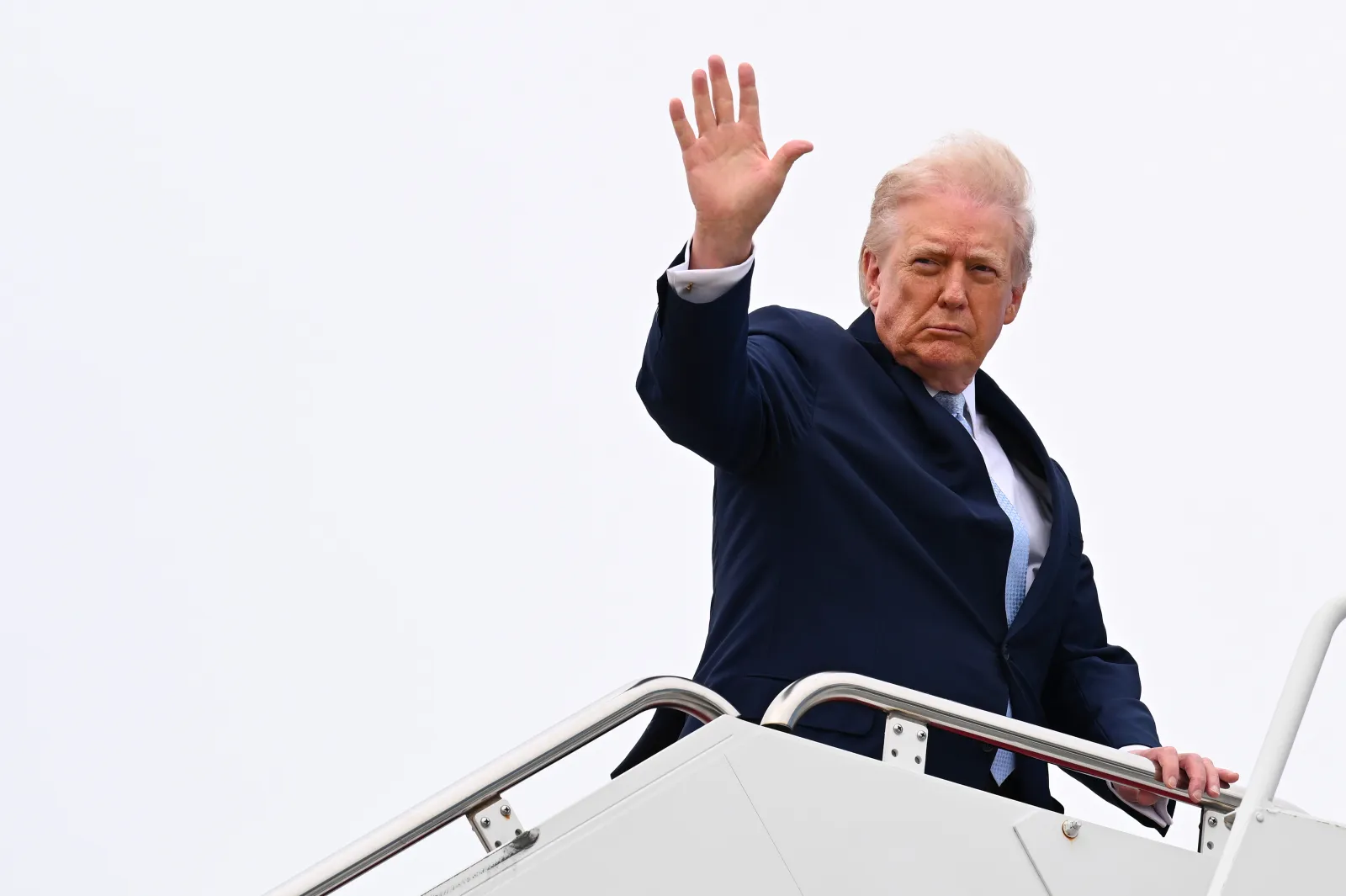
President Donald Trump has delayed for five days threatened strikes on Iranian energy targets, saying the pause would allow time for what he described as productive background talks.
Trump had originally threatened strikes on Iranian energy infrastructure unless the Strait of Hormuz was reopened within 48 hours.
It looks to his critics like a temporary TACO (the now infamous acronym for "Trump Always Chickens Out"); the Iranians have denied that discussions are taking place.
Read More on Analysis
But the move also buys Trump some crucial time in a spiraling conflict.
Whether it's TACO or tactical, here's what Trump stands to gain:
Respite for Oil and Gas Markets
Surging oil prices have become one of the most acute political vulnerabilities for Trump at home.
The near-closure of the Strait of Hormuz, a chokepoint through which roughly a fifth of the world’s oil normally flows, sent crude prices sharply higher, feeding directly into gasoline prices and inflation expectations in the U.S.
Energy prices are where foreign wars become domestic political pain, and the timing is terrible for Trump, with the midterms looming in November and his Republicans on course to lose one, or both, of their congressional majorities.
Polling has already shown that Americans increasingly associate the Iran war with higher gas prices and broader economic anxiety.
Trump's MAGA base is also fractured by the war, with questions about how this fits into the "America First" ideology underpinning his presidency as the cost of living rises for people back home.
Voter frustration about high inflation delivered Trump the White House. Now it could thwart his final two years if the cost of living spikes and Americans punish Republicans in the midterms.
After Trump announced the pause in a Truth Social post early Monday, markets reacted immediately.
Oil prices fell sharply, U.S. Treasury yields retreated, and equities rallied as traders priced out the most extreme escalation scenarios involving attacks on power plants, refineries, or export terminals.
The relief may prove temporary. Keeping the Strait of Hormuz reliably open for tanker traffic remains an unresolved problem as long as the war continues, and Iran retains asymmetric tools to disrupt shipping even without formally closing the waterway.
Still, even a brief pullback in prices takes heat out of the political conversation in Washington and buys Trump breathing room with voters who are beginning to feel the conflict in their wallets.
Reinforce Without Triggering Escalation
The five-day pause also functions as operational breathing room.
The U.S. has already assembled its largest Middle East force posture in decades, but deployments continue to evolve.
In recent days, the Pentagon has moved additional naval and amphibious assets toward the region, including the USS Tripoli and thousands of Marines.
This expands Trump’s menu of military options in Iran, and his pause for talks may help to stave off an immediate escalation that could disrupt any plans in place.
Allies are also reinforcing their own defenses in the Middle East at the moment.
Gulf states, Israel, and European partners have increased air-defense readiness and maritime patrols to protect critical infrastructure from Iranian missiles and drones, with more assets on route.
It is an acknowledgment that any U.S. strike on energy targets would almost certainly invite retaliatory attacks across the region.
Striking Iranian energy infrastructure is uniquely escalatory because it invites symmetrical retaliation.
Tehran has repeatedly warned that if its power plants or export facilities are hit, energy and water systems across the Gulf would become legitimate targets.
By pausing now, Trump avoids triggering that cycle while additional equipment, personnel, and defensive systems move into place.
The effect is to deter a resource‑sapping escalation at the very moment when U.S. and allied forces are still positioning themselves for a longer confrontation if diplomacy fails.
Restraint Trap for Iran
The pause also attempts to flip the burden of escalation onto Tehran.
Trump publicly framed the delay as a response to "productive" conversations, even as Iran denied that any direct talks were happening.
That contradiction creates an optics problem for Tehran.
If violence spikes during the declared diplomacy window—especially attacks that affect shipping or civilian infrastructure—Washington can argue that Iran deliberately sabotaged a chance to de‑escalate.
This is classic coercive messaging. By advertising restraint on the most economically sensitive target set, Trump positions the United States as the actor offering an off‑ramp, while Iran risks being seen as the spoiler if the conflict widens.
The framing also matters internationally. Markets, allies, and swing voters tend to reward the appearance of de‑escalation, even when military operations continue elsewhere.
Trump’s pause allows him to claim he is actively managing escalation rather than being dragged into it, an important distinction as congressional critics question the administration’s strategy and endgame.
Even Tehran’s denial can be folded into that narrative, reinforcing Washington’s argument that the U.S. is open to diplomacy while Iran refuses to engage.
Genuine Off-Ramp
If Trump is serious about diplomacy, the pause provides something he badly needs: A plausible off‑ramp from a war that is increasingly difficult to control.
Congress has repeatedly tried and failed to restrict Trump’s Iran war powers, but the votes have kept constitutional and political pressure alive, especially as casualties mount and costs rise.
Polling shows many Americans want the conflict to end quickly and doubt the administration has clearly explained how victory is defined.
Time may favor Iran's regime, which, if it survives, is able to absorb prolonged economic and military pain more easily than a U.S. president facing rising prices and an unpopular war with elections a few months away.
The pause gives Trump a chance to test whether indirect diplomacy via regional intermediaries can produce major outcomes.
He has already suggested both the U.S. and Iran could jointly control the Strait of Hormuz and that there will be serious changes to the regime, as well as a decisive end to any military nuclear program.
Crucially, this current pause requires no public or immediate concession.
Trump can maintain a posture of maximum pressure—strikes postponed, not canceled—while sampling a negotiated exit that could stabilize markets and blunt domestic opposition.
Trump Gains What He Needs
Whatever ultimately motivated it, Trump’s temporary "TACO" functions as a useful multi‑purpose lever.
It calms markets, improves force posture, and reframes the next five days as an Iranian test of restraint. It also keeps open a face‑saving exit ramp at a moment when the war’s domestic costs—economic, political, and constitutional—are sharpening.
The risk is that the pause becomes little more than an intermission before a larger escalation, validating Tehran’s claim that Washington is merely buying time.
But for now, Trump gains what he most needs: Time, options, and the optics of control.
Hey gang, Carlo Versano here. I hope you enjoyed this article. As Newsweek's Director of Politics and Culture and editor of the 1600 newsletter, I'm keen to hear what you think. Now, Newsweek is offering a new service to allow you to communicate directly with me in the form of a text message chat. You can sign up and get a direct line to me, as well as the reporters who work for me. You can shape our coverage.
As a Newsweek member, we're offering this service to you for free. You can sign up below, or read more about how it works here. Let's talk!
View 0 Comments
Submit Correction
View Editorial & AI Guidelines