...

By Newsweek Editors
0
Share
Newsweek is a Trust Project member
See more of our trusted coverage when you search.Prefer Newsweek on Googleto see more of our trusted coverage when you search.
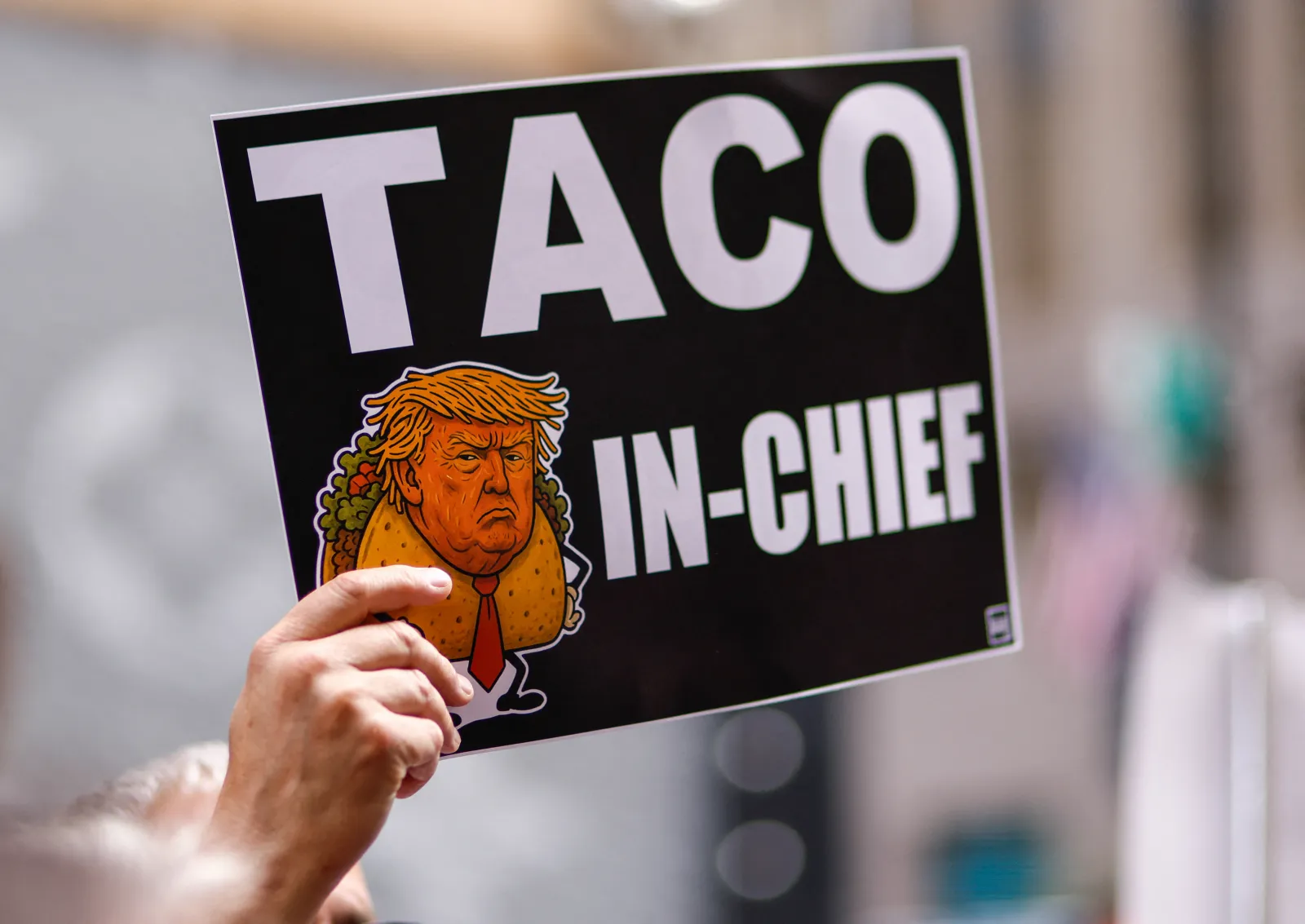
The pattern keeps repeating. Over the weekend, President Donald Trump threatened 10–25 percent tariffs on eight European allies to force movement on Greenland. By Wednesday, after a Davos meeting with NATO Secretary General Mark Rutte, he declared a vague "framework" and scrapped the tariffs. European lawmakers had just frozen a U.S. trade deal; markets duly rallied on what finance pages now call the "TACO trade"—“Trump Always Chickens Out." The time from threat ("F*** Around and Find Out") to retreat was roughly four days. And over Trump's two terms, that time appears to be getting shorter.
Either his threats are becoming more efficient as a negotiating tool, or something else is happening.
Common Knowledge
The right's defense of the approach is blunt: tariff brinkmanship is leverage that averts worse outcomes. Treasury Secretary Scott Bessent has framed the tactic as deterrence—"use the economic might of the U.S. to avoid a hot war"—and warned Europe it would be "very unwise" to retaliate. Supporters call that credible menace. However, skeptics on the right call it self-defeating. The Wall Street Journal editorial board labeled the episode "the Greenland War of 2026," arguing Trump is teaching allies to become "China’s friends." National Review’s headline put it more wearily: "Greenland: Digging an Even Deeper Hole."
Read More on News
The left sees performance followed by climbdown. The European Parliament paused ratification of a trans-Atlantic trade deal and floated its new Anti-Coercion Instrument before Trump stood down. London’s business pages nicknamed the relief rally "Taco Thursday."
Uncommon Knowledge
If FAFO is the posture, and TACO the outcome, the threat half-life is shortening.
Greenland (2026): Trump floated tariffs on eight European countries over the weekend; after Wednesday's meeting with Rutte, he announced a "framework of a future deal" and withdrew the tariffs. Europe had just frozen a trade deal and brandished the Anti-Coercion Instrument.
Colombia (2025): On January 26, Trump said he was imposing 25 percent tariffs (with threats up to 50 percent) after Bogotá refused two deportation flights. Hours later, the White House said Colombia had agreed to accept military deportation flights and tariffs would be postponed.
EU (summer 2025): A widely trailed 50 percent tariff on EU goods slated for June 1 was pushed to July 9 after a call with Commission President Ursula von der Leyen.
"Liberation Day" global tariffs (April 2025): After unveiling a 10 percent baseline tariff and country-specific hikes, Trump announced a 90-day pause on most of the new country rates one week later.
Mexico migration tariffs (2019): A blanket tariff threat announced May 30 was suspended June 7 after a late-night deal on enforcement.
China tariffs (2019): Tariffs threatened in August were averted by a "Phase One" deal in December, two days before the deadline.
What’s different now is speed. In 2019, the retreats tended to take weeks or months. In 2025–26, some reversals—Colombia and Greenland—arrived in hours to days. The market shorthand, "TACO," migrated from an FT column into mainstream coverage. When asked about it on camera last spring, Trump called it a "nasty question" and insisted: "It’s called negotiation."
What's changed? One thing is leverage. Brussels now has a legal "trade bazooka"—the Anti-Coercion Instrument—built to answer economic coercion with restrictions on goods, investment and public procurement by qualified-majority vote. Pausing a U.S. trade deal the instant Greenland tariffs were floated showed the EU will brandish it.
None of this says the threats are imaginary, or even that they don't work. Bessent has been explicit about the strategic theory—deterrence to "avoid a hot war," and warnings that EU retaliation would be "very unwise." The record shows many headline tariffs either never take effect or are softened quickly. Some would argue it shows Trump's negotiating style is working, others would say the opposite. Markets don't care.
If you’re enjoying Uncommon Knowledge, please share. If you have suggestions for future editions or feedback, email subscriber.feedback@newsweek.com. We want to hear your voice.
View 0 Comments
Submit Correction
View Editorial & AI Guidelines