
...

By Gabe Whisnant
News Editor
0
Share
Newsweek is a Trust Project member
See more of our trusted coverage when you search.Prefer Newsweek on Googleto see more of our trusted coverage when you search.
President Donald Trump left the Supreme Court on Wednesday after spending just over an hour in the courtroom. His departure came as justices heard arguments over the constitutionality of his order seeking to end birthright citizenship for children born in the U.S. to parents who are in the country illegally or temporarily.
Trump appeared to attend only the government’s portion of the arguments and departed shortly after Solicitor General John Sauer concluded his presentation, before the plaintiff began making her case.
He is the first sitting president to attend oral arguments at the nation’s highest court. Trump was joined by Attorney General Pam Bondi and Commerce Secretary Howard Lutnick. CNN Supreme Court analyst Joan Biskupic observed that Trump appeared to "scope out the place" as he took his seat.
Read More on Politics
Not long after leaving the court, Trump posted on Truth Social, “We are the only Country in the World STUPID enough to allow ‘Birthright’ Citizenship! President DONALD J. TRUMP.”
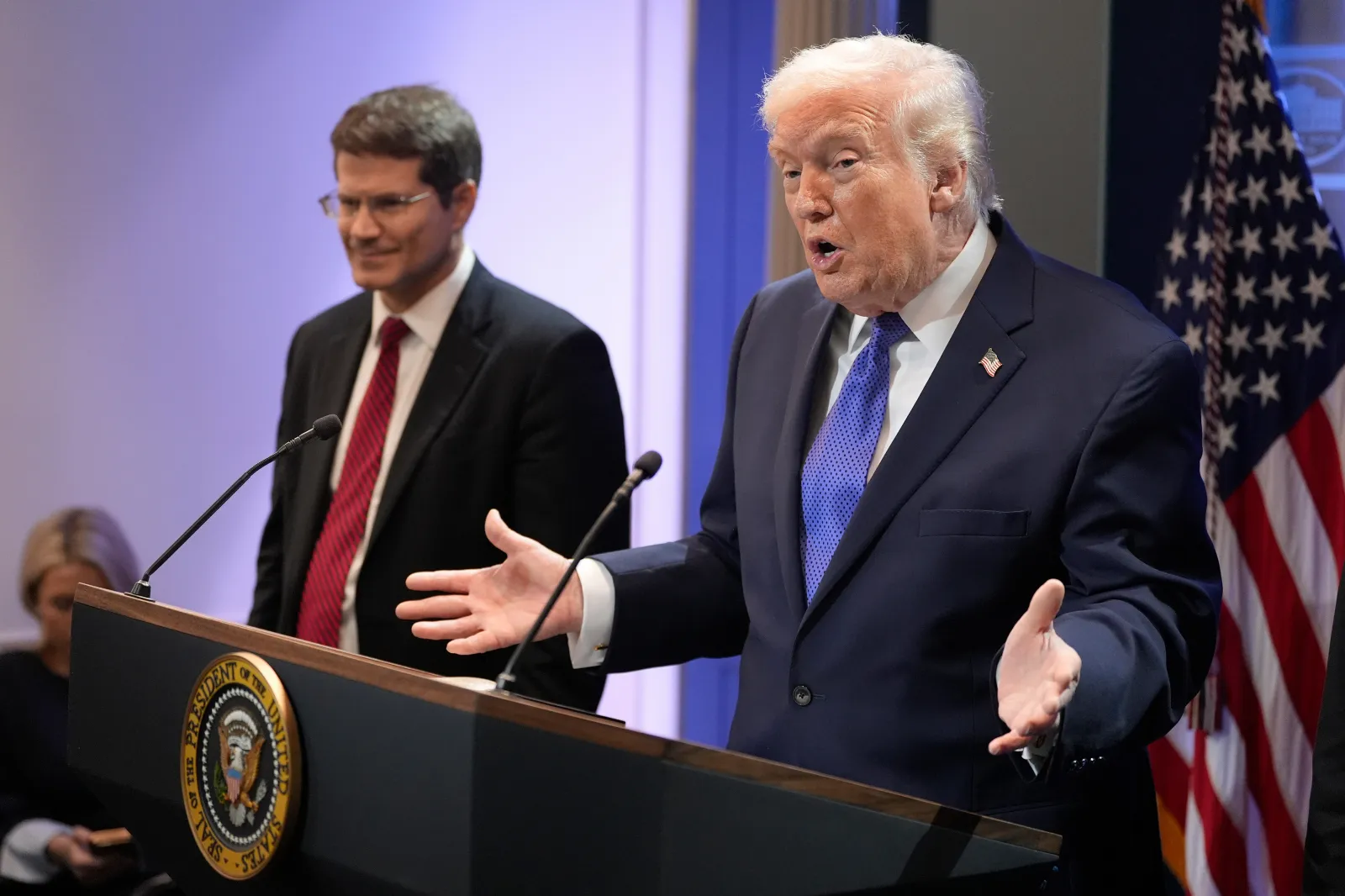
Who is John Sauer?
D. John Sauer is the U.S. solicitor general, the federal government’s top advocate before the Supreme Court. He was appointed to the post by President Donald Trump and took office in April 2025 after previously serving as Missouri’s solicitor general from 2017 to 2023. In his current role at the Justice Department, Sauer represents the federal government in Supreme Court litigation and oversees appellate advocacy on behalf of the United States.
...
Before joining the Trump administration, Sauer built a conservative legal profile through high‑level appellate work and public service. He clerked for the late Supreme Court Justice Antonin Scalia and Judge J. Michael Luttig of the 4th U.S. Circuit Court of Appeals and later argued cases in state and federal courts, including the Supreme Court. Sauer also represented Trump in a 2024 Supreme Court case involving presidential authority, further elevating his prominence on the national legal stage.
What Is the Supreme Court Birthright Citizenship Case?
The Supreme Court case centers on the scope of birthright citizenship under the U.S. Constitution and whether children born in the United States to parents who are not legally present automatically become American citizens. The issue has long been considered settled by precedent but has been revived by legal challenges seeking to narrow that interpretation.
Supporters of the challenge argue that the Constitution does not guarantee citizenship to all children born on U.S. soil regardless of their parents’ status. Opponents say altering that standard would upend decades of legal precedent and affect millions of people nationwide.

...
What Does the Constitution Say About Birthright Citizenship?
Birthright citizenship is rooted in the 14th Amendment, ratified in 1868 in the aftermath of the Civil War. The amendment states that “all persons born or naturalized in the United States, and subject to the jurisdiction thereof,” are citizens of the United States and of the state in which they reside.
The Supreme Court has historically interpreted that language broadly, including in an 1898 ruling that affirmed citizenship for children born in the U.S. to noncitizen parents. Critics of birthright citizenship focus on the phrase “subject to the jurisdiction,” arguing it should be interpreted more narrowly than courts have long held.
Does Canada Have Birthright Citizenship?
Canada recognizes birthright citizenship, granting citizenship to most children born on Canadian soil regardless of their parents’ immigration status. The policy operates similarly to that of the United States.
There are limited exceptions, including children born to foreign diplomats, who are not automatically granted Canadian citizenship. Canada is among a small number of developed nations that continue to practice unrestricted birthright citizenship.
Updates: 4/1/26, 6:33 p.m. ET: This article was updated with new information.
In a polarized era, the center is dismissed as bland. At Newsweek, ours is different: The Courageous Center—it's not "both sides," it's sharp, challenging and alive with ideas. We follow facts, not factions. If that sounds like the kind of journalism you want to see thrive, we need you.
When you become a Newsweek Member, you support a mission to keep the center strong and vibrant. Members enjoy: Ad-free browsing, exclusive content and editor conversations. Help keep the center courageous. Join today.


View 0 Comments
Submit Correction
View Editorial & AI Guidelines