...

By Hannah Millington
Health Reporter
0
Share
Newsweek is a Trust Project member
See more of our trusted coverage when you search.Prefer Newsweek on Googleto see more of our trusted coverage when you search.
It seems that domestic cats were not the first felines to live with humans, a study undertaken in China has revealed.
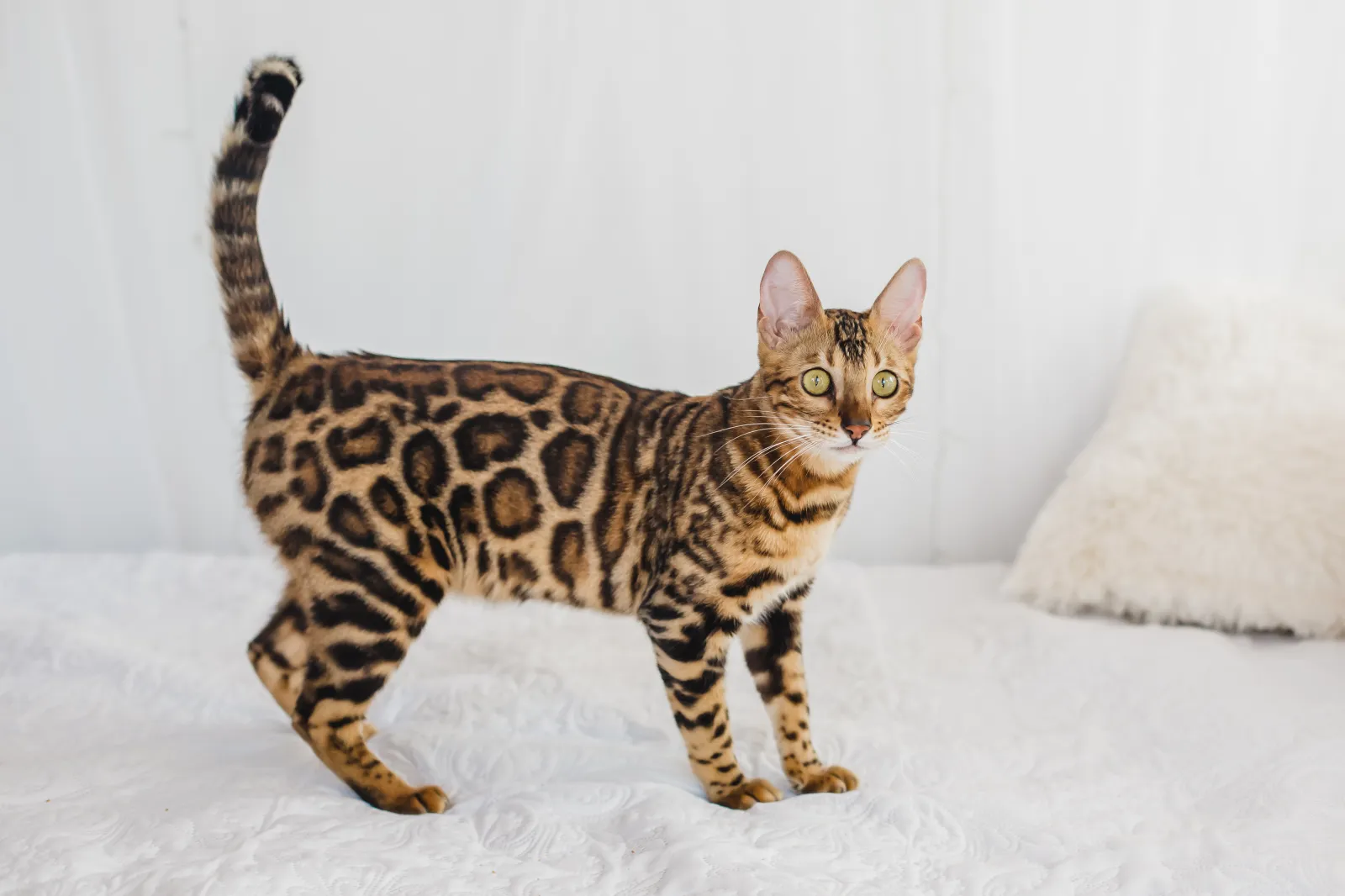
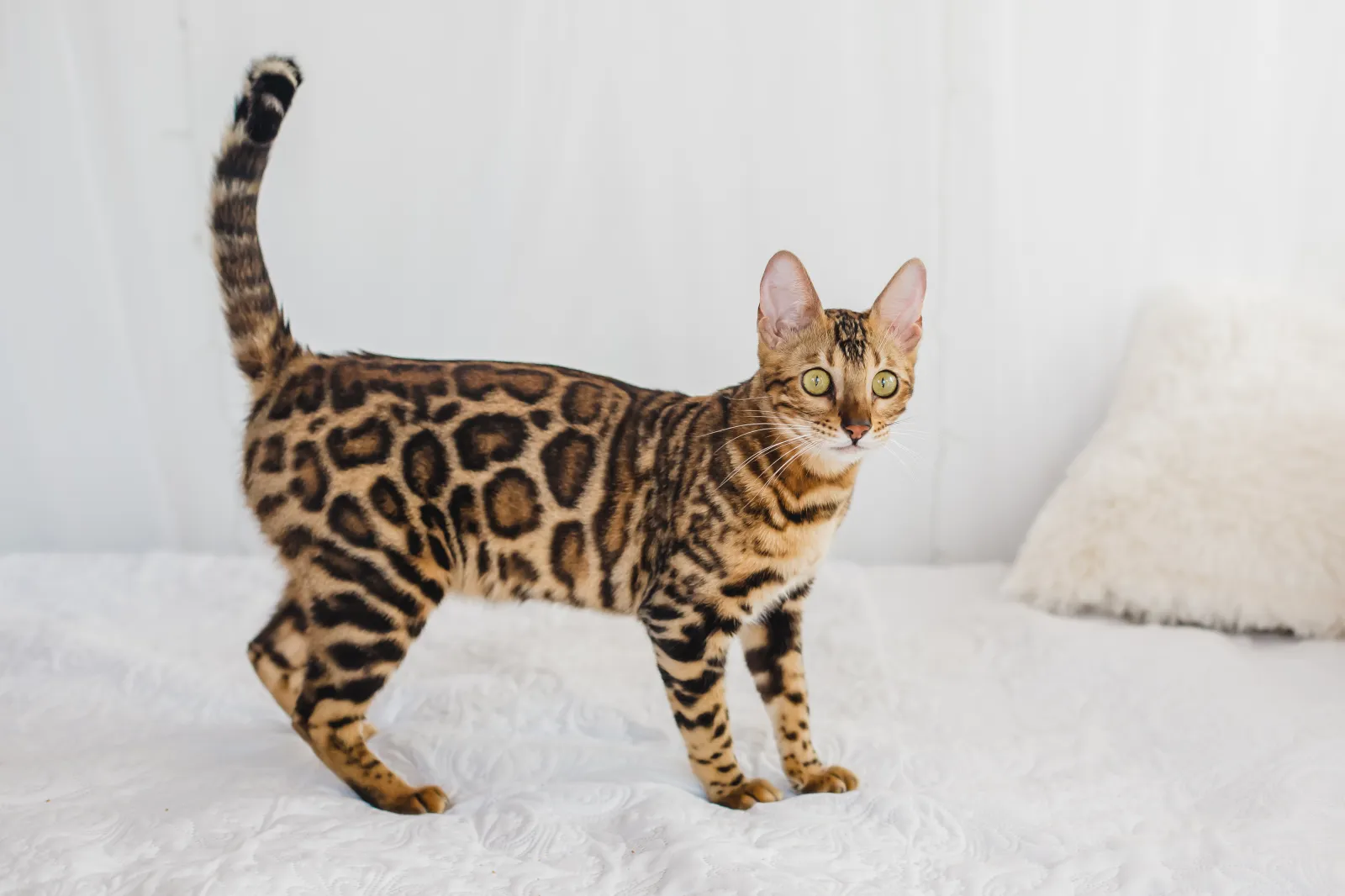
In fact, the cats we are most familiar with they only arrived in the region via the Silk Road around 700 CE, whereas an unrelated species of small cat—the leopard cat—lived in human settlements in the country for around 3,500 years before this.
This is the discovery of international researchers who traced the history of cats living with humans and the arrival of domestic cats in East Asia by analyzing 22 small feline bones excavated from China spanning 5,000 years.
Read More on Science
Ancient DNA revealed leopard cats appeared in human-derived environments at least 5,400 years ago and persisted until 150CE.
"Because cats lived independently, were loosely managed and required transport efforts that often outweighed their benefits, they spread much later than other domestic animals," study author professor Shu-Jin Luo of Peking University in China told Newsweek.
"African wildcats and leopard cats each formed local commensal relationships with humans, but only African wildcat–derived domestic cats eventually dispersed widely, reaching western Eurasia about 2,000 years ago and East Asia around 1,300 years ago. Leopard cats, though living alongside humans in China for over 3,500 years, were never truly domesticated."
...
“Phylogenetic analysis of mitochondrial genomes from 22 ancient specimens, combined with radiocarbon dating, revealed that six of the seven feline remains found in Chinese archaeological sites were leopard cats,” the researchers wrote in their paper.
They cited evidence suggesting that leopard cats may have entered a commensal relationship with humans in ancient China by preying on small rodents in human-modified environments since the Neolithic period.
People may have also welcomed ‘wild cats’ on their farms for pest control, while leopard cats are reflected in ancient Chinese art depicting felines with round spots.
Feeding on resources from human environments would have also benefited the leopard cats, potentially initiating the process of domestication.
A centuries-long gap then appeared to exist between these leopard cats and the emergence of domestic cats, the study found.
“Interestingly, the disappearance of leopard cats coincides with the turbulent era following the Han Dynasty’s collapse and preceding the Tang Dynasty’s rise. This period experienced colder, drier conditions, declining agricultural yields, social unrest and a population contraction lasting 400 years,” said the authors.
"After the Han Dynasty, shifts in poultry farming, from free-ranging birds to cage-based systems, likely intensified conflict between people and leopard cats," Luo added to Newsweek. "Their strong tendency to prey on chickens, and to overkill in confined spaces, would have made them increasingly unwelcome around human settlements. Domestic cats, by contrast, are similar in size but rarely prey on chickens, while remaining highly effective mouse hunters."
The earliest known domestic cat in China (706–883 CE), reconstructed as a fully or partially white cat, was identified in Shaanxi during the Tang Dynasty, according to the research.

...
Genomic analysis combining 130 modern and ancient Eurasian cat specimens suggested an origin of Chinese domestic cats from the Levant—the historic term for the region along the eastern Mediterranean—and a merchant-mediated dispersal via the network of ancient trade routes the Silk Road.
Historical records hint that domestic cats were regarded as exotic pets and were likely kept among the ancient Chinese elite, reflecting their relatively recent introduction to China, according to the team.
While both leopard cats and domestic cats once independently inhabited ancient human settlements in China, they followed different sociocultural paths with only domestic cats becoming fully domesticated and globally introduced.
“A commonly held viewpoint is that domestic cats were present in China as early as the Han Dynasty (206 BCE to 220 CE). However, all small felid remains from before or during the Han era in our dataset, including FS24, the specimen used to support the Han-origin hypothesis from the capital Chan’an, were genetically identified as not F. catus [the domestic cat] according to our ancient DNA analysis,” the researchers wrote in the paper.
“The earliest domestic cat found in Central Asia does not predate the Tang Dynasty in China either. Taken together, these results converged on the conclusion that domestic cats arrived in East Eurasia and China relatively recently.”
Do you have a tip on a science story that Newsweek should be covering? Do you have a question about cats? Let us know via science@newsweek.com.
Update 11/28/25, 12:33 p.m. ET: This article was updated with additional information and comments from Shu-Jin Luo.
Reference
Han, Y., Hu, S., Liu, K., Xu, X., Li, Z., Doherty, S., Jamieson, A. E., Manin, A., Martins, S. G., Yang, M., Yu, C., Wang, J., Wu, Z., Chen, C., Han, S., Lu, D., Peng, L., Wu, X., Fan, W., Cai, Q., … Luo, S.-J. (2026). The late arrival of domestic cats in China via the Silk Road after 3,500 years of human-leopard cat commensalism. Cell Genomics, 6. https://doi.org/10.1016/j.xgen.2025.101099
View 0 Comments
Submit Correction
View Editorial & AI Guidelines