10
Loading video...


By Jenni Fink and Gabe Whisnant
0
Share
Newsweek is a Trust Project member
See more of our trusted coverage when you search.Prefer Newsweek on Googleto see more of our trusted coverage when you search.
The death of country music icon Dolly Parton at age 80 has prompted tributes from across the political spectrum, including from President Donald Trump, who has long spoken positively about the singer, songwriter and philanthropist.
Parton's decades-long career made her one of America's most recognizable entertainers, while her charitable work and efforts to stay above partisan politics earned admiration from both Republicans and Democrats. Although Parton generally avoided talking politics, she made a few comments over the years to clarify her positions when she was brought into the conversation.
In an October poll from the University of Massachusetts, Parton was the only person included in the survey to get over 50 percent favorable rating from Democrats, Republicans and independents.
Read More on News
Her family announced her death in a video on social media on Tuesday.
What Donald Trump Said About Dolly Parton
Trump has repeatedly praised Parton over the years, describing her as an American cultural icon whose influence reached far beyond country music.
"This is a true loss for millions of people. There has never been anyone like her, and never will," Trump wrote in a post on Truth Social following news of Parton's death.
Trump added that he was ordering the American flag to be at half-staff for one week starting Tuesday at 6 p.m.
Speaking on Glenn Beck's radio program Wednesday, the president said he "knew her a little bit" and that she "wasn't a very political person."
Trump added that Parton "really liked me" but believed publicly supporting him could cost her "50 percent" of her fan base.
"I think it's probably more like 20 percent of the fans, not 50 percent, but she was a great person. She was just a nice person. I liked her a lot, and I thought it was a natural thing to lower the flags," he said.
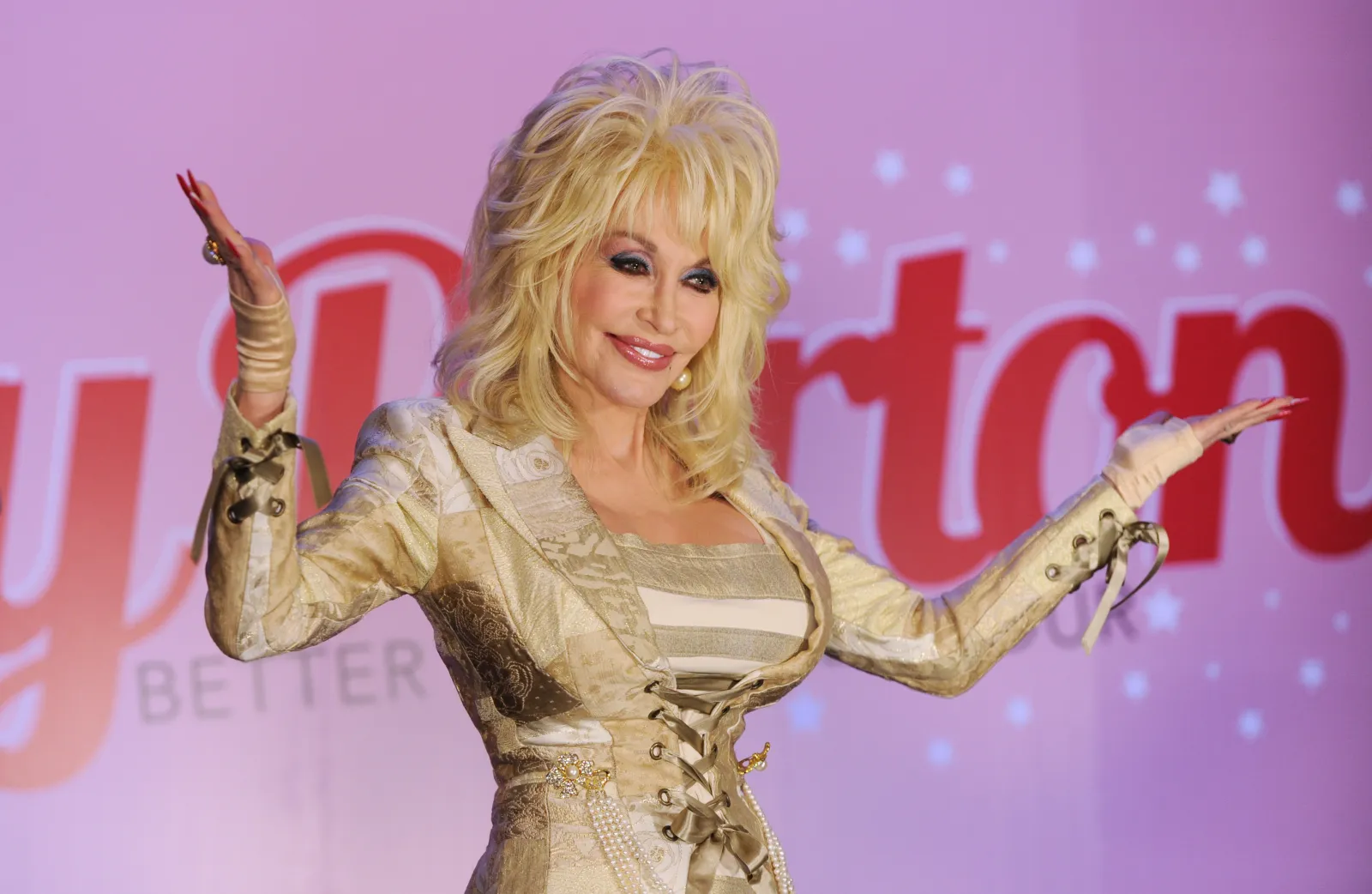
Parton's widespread popularity made her one of the few entertainers admired across political divides. Her career spanned more than six decades and included chart-topping music, film roles, business ventures and major philanthropic initiatives. She sold more than 100 million records and became one of the most successful female artists in country music history.
...
Why Dolly Parton Declined Medal of Freedom From Trump
During his first term, Trump's administration twice offered Parton the Presidential Medal of Freedom, the nation's highest civilian honor.
In a 2021 interview on NBC's Today show, Parton revealed that the Trump administration offered her the award twice. She said she couldn't accept the first invitation because her husband, Carl Dean, was ill. When she was approached again, she declined because she did not want to travel during the COVID-19 pandemic.
Parton emphasized that her decisions were not political. She said that her circumstances simply made it difficult to attend a White House ceremony. Later, when discussions arose about potentially receiving the award from then-President Joe Biden, Parton said she worried that accepting it could be perceived as taking a political side.
"I don't work for those awards. It'd be nice, but I'm not sure that I even deserve it. But that's a nice compliment for people to think that I might deserve it," Parton told Today.
That response reflected a philosophy Parton maintained throughout much of her career. Rather than weighing in on partisan disputes, she often described herself as an entertainer whose role was to bring people together rather than divide them.
Related Story

Dolly Parton’s Real Gift Was Never the Voice. It Was the Open Door
What Dolly Parton Said About Trump
The 2016 election placed pressure on many celebrities to publicly endorse either Trump or Democratic nominee Hillary Clinton. Parton largely resisted those calls.
Throughout the campaign and the years that followed, she consistently avoided explicitly endorsing a presidential candidate. Instead, she frequently emphasized respect for differing viewpoints and encouraged civility among Americans with different political beliefs.
In 2016, Parton told CNN's Brooke Baldwin that the presidential race was the "greatest show on television right now" but declined to endorse either candidate.
"I don't know where they're going to land, but I think they're both nuts," she said, joking that "it's like watching the OJ Simpson trial. You just believe whoever's up next. Whoever testified last is who you believe."
Earlier that year, Parton said that a woman would do a great job as president and that Clinton was qualified, which many took as an endorsement. However, Parton clarified in a Facebook post that reports of her endorsing Clinton were wrong. She said her comments were "taken out of context," and she hadn't endorsed either Clinton or Trump.
"I try not to get political but if I am, I might as well just run myself 'cause I've got the hair for it, it's huge, and they could always use more boobs in the race. But seriously, I have not decided who I'm voting for, but no matter what we're gonna be suffering from PMS, Presidential Mood Swings," Parton said on Facebook.
On Tuesday, former President Bill Clinton paid tribute to the country icon on X, writing that she was "one of a kind." He said that she told the stories of everyday Americans and "never forgot where she came from."
"Hillary and I were big fans and first saw her in 1974, and will always be grateful for the music and the memories. Our thoughts and prayers are with her family, her legion of fans, and everyone who loved her," the former president said.
At the 2017 Primetime Emmy Awards, Parton joined her 9 to 5 co-stars, Lily Tomlin and Jane Fonda, onstage where they criticized Trump for being a "sexist, egotistical, lying, hypocritical bigot." Years later, Parton said she doesn't want to be "dragged into" politics, but she wasn't surprised, since she knows Tomlin and Fonda are political.
"I just did not want everybody to think that whatever they think is what I think. I don't really like getting up on TV and saying political things. I don't even want to make a deal out of it, but I want people to know I'm my own individual self," Parton said.
She also said in a 2019 episode of her podcast that she has too many fans on both sides of the political aisle, so she doesn't "do politics" despite having her own opinions.
I've seen things before, like the Dixie Chicks. You can ruin a career for speaking out." Parton said. "I respect my audience too much for that; I respect myself too much for that. Of course I have my own opinions, but that don't mean I got to throw them out there, because you're going to piss off half the people."
Decades before Trump became president, Parton sent a televised birthday message to the then real estate mogul in 1990, according to BuzzFeed News.
While Dolly remained apolitical, her younger sister, Stella has been an outspoken critic of Trump.
"As a natural born citizen of the United States of America I do not support nor do I agree with Trump or his deranged, ugly, nasty behavior. Many of us are disgusted and feel threatened by his actions and his cabinet, Republican sycophants and the majority of the SCOTUS," Stella posted on X, formerly Twitter, hours before the family announced the news of her death.

...

...

...

...
1 of 4
Dolly Parton's Death: Everything We Know
Parton's family announced on Tuesday that the legendary performer died in Nashville at age 80. Her nephew, Brian Seaver, shared the news in a video statement posted on the family's behalf. According to family statements, Parton died peacefully. No official cause of death was immediately released.
Her death followed a series of publicly acknowledged health challenges. In recent years, Parton discussed undergoing medical procedures and canceled appearances because of health concerns. Reports also noted that she canceled performances and stepped away from the spotlight to focus on recovery.
Parton's final years were also marked by personal loss. Her husband, Carl, whom she married in 1966, died in March 2025. In interviews afterward, Parton said she was continuing to cope with grief while remaining committed to her work and public projects.
Born in rural Tennessee in 1946, Parton rose from poverty to become one of the most successful entertainers in American history. She scored dozens of country hits, wrote enduring classics including "Jolene" and "I Will Always Love You," starred in films such as 9 to 5, and built Dollywood into one of the country's most successful destination attractions.
Her philanthropic legacy may prove just as enduring as her musical achievements. Through her Imagination Library program, Parton distributed millions of books to children and became a leading advocate for literacy. She was also widely praised for charitable giving and support of community causes throughout her life.
As tributes continue to pour in, Parton leaves behind a legacy that transcended country music. Whether through her songs, her charitable work or her deliberate effort to avoid partisan divisions, she became one of the rare cultural figures Americans embraced across political and generational lines.
Pre-order Newsweek's Dolly Parton special commemorative issue here.
Contact Newsweek editors on this story: Samantha Beech and Sam Wilson.
View 0 Comments
Submit Correction
View Editorial & AI Guidelines