...

By Hollie Silverman
News Editor
0
Share
Newsweek is a Trust Project member
See more of our trusted coverage when you search.Prefer Newsweek on Googleto see more of our trusted coverage when you search.
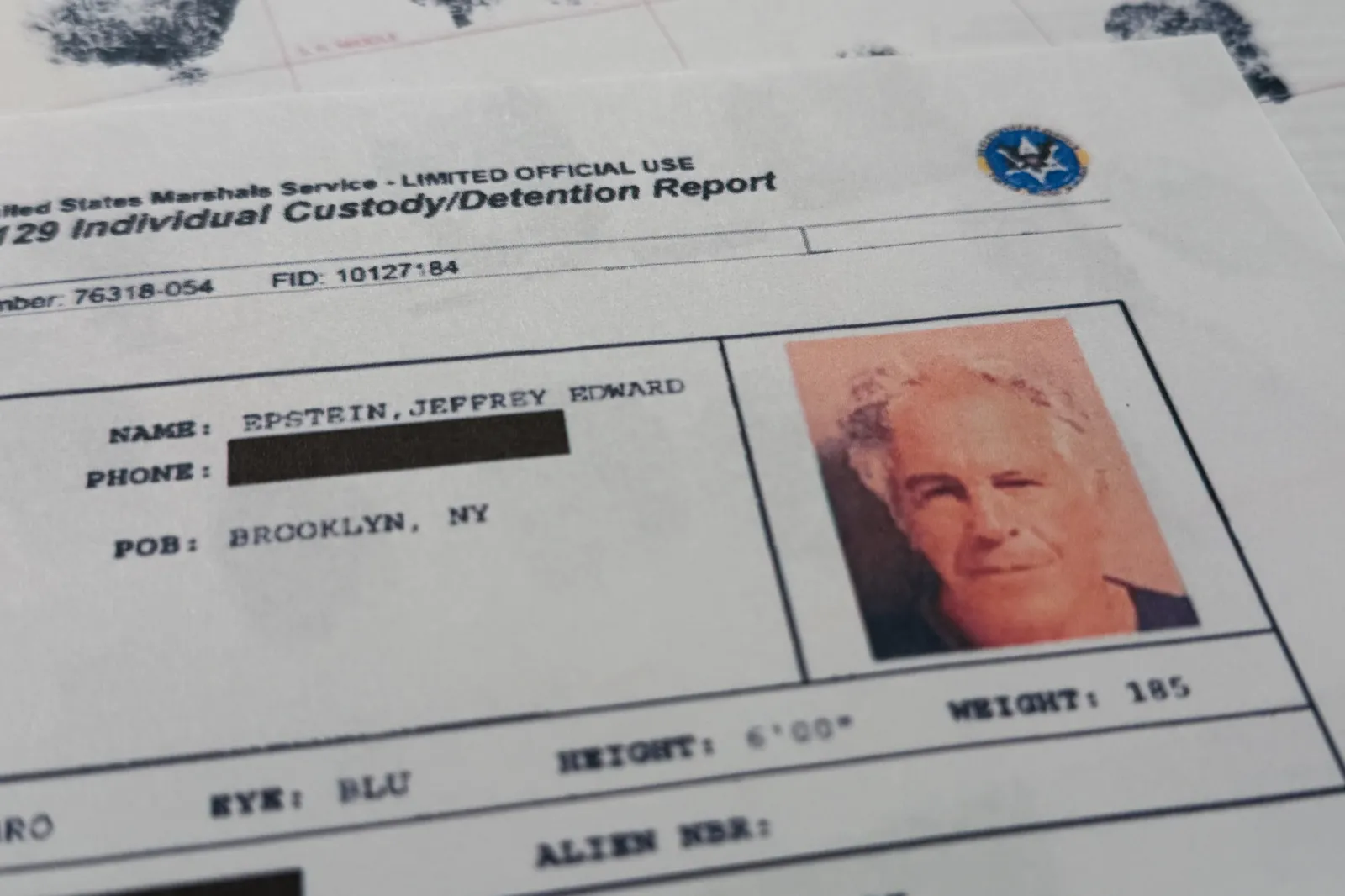
The Department of Justice (DOJ) removed “several thousand” documents and media from its public Epstein files website after victims and their lawyers reported redaction failures that exposed identifying information, according to a letter filed in federal court on Monday.
The filing by U.S. Attorney Jay Clayton of the Southern District of New York said the department took down materials “that may have inadvertently included victim-identifying information due to various factors, including technical or human error.”
“As of the writing of this letter, all documents requested by victims or counsel to be removed by yesterday evening have been removed for further redaction," U.S. Attorney Jay Clayton wrote in the filing. "The Department is continuing to process any new requests and to run its own searches to identify any other documents that may require further redaction."
Read More on News
Why It Matters
The removals came days after the DOJ posted millions of pages of records under the Epstein Files Transparency Act, prompting immediate complaints from survivors and their counsel that names and personal details appeared unredacted in some documents.
Deputy Attorney General Todd Blanche said the broader records review had concluded and emphasized that the department moved to correct any redaction errors quickly, following the law’s mandate while protecting victim privacy.
The DOJ said it removed all materials identified by victims or their lawyers and independently pulled additional files for re-review.
...
What To Know
The DOJ told two federal judges in New York that it had “taken down several thousands of documents and media” to address potential victim-identifying information and that it would continue working with survivors and their counsel to identify materials requiring additional redactions, a court filing shows.
In a Sunday letter to Judges Richard Berman and Paul Engelmayer, attorneys Brittany Henderson and Brad Edwards requested “immediate judicial intervention,” writing that they had reported “thousands of redaction failures on behalf of nearly 100 individual survivors,” including instances where minor victims’ names appeared repeatedly in single documents.
The lawyers said, “There is no conceivable degree of institutional incompetence sufficient to explain the scale, consistency, and persistence of the failures that occurred.”
Blanche said on ABC Sunday that the department’s review of records “is over,” citing more than 6 million pages reviewed and confirming that a subset remains withheld pending court approval under protective orders.
He also noted that the department was moving to “immediately rectify” reported redaction failures during the interview, noting that complaints had been received from victims and their attorney's.
Blanch also said over the weekend that 500 reviewers examined the files, noting that "0.1% of released pages have been found to have victim identifying information unredacted.”
The DOJ’s letter indicated the department did not plan to take the entire site offline but had “iteratively revised its protocols” and was making “further enhancements” to address victim concerns while meeting disclosure requirements under the Epstein Files Transparency Act.
The Trump administration has faced continued bipartisan criticism over the handling of the disclosures, even as President Donald Trump said the latest release “absolves” him of wrongdoing.
“I was told by some very important people that not only does it absolve me, it’s the opposite of what people were hoping,” the President said, as cited by The Hill Monday.
Lawmakers including Rep. Thomas Massie, a Kentucky Republican, and Rep. Ro Khanna, a California Democrat, continue to press for access to unredacted records and fewer blanket redactions.
The Letter Reads in Full:
"Dear Judges Berman and Engelmayer:
The Department respectfully submits this letter to provide an update to the Court and counsel regarding its ongoing efforts to protect victim privacy. In particular, the Department has further expedited its processes for receiving and responding to victim outreach concerning documents, as well as removing documents that inadvertently were produced and contain victim-identifying information. In addition, the Government writes to respond to, and provide additional context for, representations made by counsel in its letter motion, dated February 1, 2026. As of the writing of this letter, all documents requested by victims or counsel to be removed by yesterday evening have been removed for further redaction, and the Department is
continuing to process any new requests and to run its own searches to identify any other documents that may require further redaction. The Department submits this letter jointly to Your Honors as it believes that the issues raised are overlapping between the two cases.In our letter of Friday, January 30, 2026, we alerted the Court that the Department would, with specifically identified exceptions, produce identified documents, files, records, videos and images held by the Department related to the various investigations of Jeffrey Epstein and Ghislane Maxwell as required by Epstein Files Transparency Act, Pub. L. 119-38, 139 Stat. 656 (Nov. 19, 2025) (the “Act”). As indicated, and throughout the course of Friday, the Department uploaded more than 3 million pages to the public website. Since those files were uploaded, the Department has continued to engage with victims and counsel for victims regarding concerns they may have regarding any of the documents posted.
The Department recognizes that the importance of implementing an extensive process to manually review and redact documents to best protect victim identifying information necessitates a supplemental process to address any concerns raised by victims following the posting of documents. Since the release of documents on Friday, victims and counsel have requested further redaction of particular documents, alerted the Department to new victim identifiers and name variants of victims, and requested changes to the process for review and redaction of posted documents flagged for additional review. Based on such communications and experience with the relevant document management systems over the weekend, the Department has iteratively revised its protocols for addressing flagged documents.
The Department has teams of personnel committed to monitoring requests by victims and counsel to add additional redactions to posted documents. As a victim concern is raised to the Department, the document or documents in question promptly will be pulled down from the Epstein Library website while the Department evaluates the claim or concern raised by the victim and whether redactions or other measures are appropriate. Once that process is complete, the Department promptly will re-post a redacted version of the document—ideally within 24 to 36 hours—using the same Bates number the document previously bore to ensure consistency and continuity in the files posted on Friday.
In that vein, the Department has received numerous inquiries and requests for additional redactions, and continues to encourage victims and their counsel to identify any documents that they view as concerning to their privacy, reputation or personal safety. In addition, the Department is running searches against the Epstein Library database, based on communication with counsel, victims, and third parties to identify documents that refer to identifiers for victims previously not known to the Department, name variations that counsel has identified, as well as PII that inadvertently may have been published despite the Department’s extensive review. The Department notes, however, that it is not relying solely upon counsel and the victims to identify specific documents—although it does prioritize such identified documents where appropriate. The Department through the weekend has had a team running supplemental searches to identify missed redactions when a victim or counsel raises a concern that a victim is appearing in the public database and is now additionally running searches to identify potentially missed redactions even where counsel or a victim has not contacted the Department.
The first 24 hours of engagement on these issues, as well as the Department’s own internal review of its processes, following the release of documents on Friday led to significant enhancements to and streamlining of the Department’s processes for addressing victim concerns.
The Department continuously is evaluating its processes and making further enhancements as necessary or appropriate based on continued engagement with victim counsel so that the Department can best address victim concerns while also complying with the Requirements of the Act.
The Department has worked all hours through the weekend from the point when the first victim-related concerns were raised. To that end, out of the larger production described above, the Department now has taken down several thousands of documents and media that may have inadvertently included victim-identifying information due to various factors, including technical or human error. As of the date of this letter, the Department now has taken down nearly all of those materials specifically identified by victims or their counsel, as well a substantial number of documents identified independently by the Department. The Department is reviewing those documents and will re-process them. As part of this procedure, for reasons related to the operation of the document management system, the Department must periodically “re-index” the data contained on the Epstein Library website to ensure that, although a document has been reviewed and redacted for reposting, the underlying metadata that permits the search functionality of the database also is cleansed of the relevant information related to the document. This process and the additional searches are substantially complete but remain ongoing.
To be sure, the Department’s commitment to protecting victims is being approached consistent with the Department’s commitment to transparency. In this regard, the Department has committed to work with House and Senate leadership to allow members of Congress to inspect unredacted versions of the produced materials to demonstrate that the redactions have been imposed consistent with the requirements of the Act, including the protections of victim-identifying information set
for at Section 2(c)(1)(A).The undersigned will continue to keep the Court apprised of relevant developments and remains available, as always, to answer any questions the Court may have."
Respectfully yours,
PAMELA J. BONDI
United States Attorney General
TODD BLANCHE
Deputy United States Attorney General
United States Department of Justice
/s/ Jay Clayton
JAY CLAYTON
United States Attorney
Southern District of New York
What People Are Saying
Epstein victims’ lawyers Brittany Henderson and Brad Edwards wrote to Judges Richard Berman and Paul Engelmayer, CNN reported: “Within the past 48 hours, the undersigned alone has reported thousands of redaction failures on behalf of nearly 100 individual survivors whose lives have been turned upside down by DOJ’s latest release.”
They added: "There is no conceivable degree of institutional incompetence sufficient to explain the scale, consistency, and persistence of the failures that occurred—particularly where the sole task ordered by the Court and repeatedly emphasized by DOJ was simple: redact known victim names before publication."
Deputy Attorney General Todd Blanche told ABC News on Sunday: “This review is over...There are a small number of documents…that are waiting for a judge to say we can release because of a protective order.”
What Happens Next
The DOJ said it would continue to engage with victims, run supplemental searches to identify missed redactions, and repost corrected documents, with some materials still pending judicial guidance or protective-order review before release.
The department indicated it would keep the website online while continuing removals and re-reviews as needed, and it has implemented enhanced protocols to process victim requests within 24 to 36 hours before reposting redacted versions.
Update 2/2/26, 4:42 p.m. ET: This article has been updated with additional information.
In a polarized era, the center is dismissed as bland. At Newsweek, ours is different: The Courageous Center—it's not "both sides," it's sharp, challenging and alive with ideas. We follow facts, not factions. If that sounds like the kind of journalism you want to see thrive, we need you.
When you become a Newsweek Member, you support a mission to keep the center strong and vibrant. Members enjoy: Ad-free browsing, exclusive content and editor conversations. Help keep the center courageous. Join today.


View 0 Comments
Submit Correction
View Editorial & AI Guidelines