...


By Lucy Notarantonio and Anders Anglesey
0
Share
Newsweek is a Trust Project member
See more of our trusted coverage when you search.Prefer Newsweek on Googleto see more of our trusted coverage when you search.
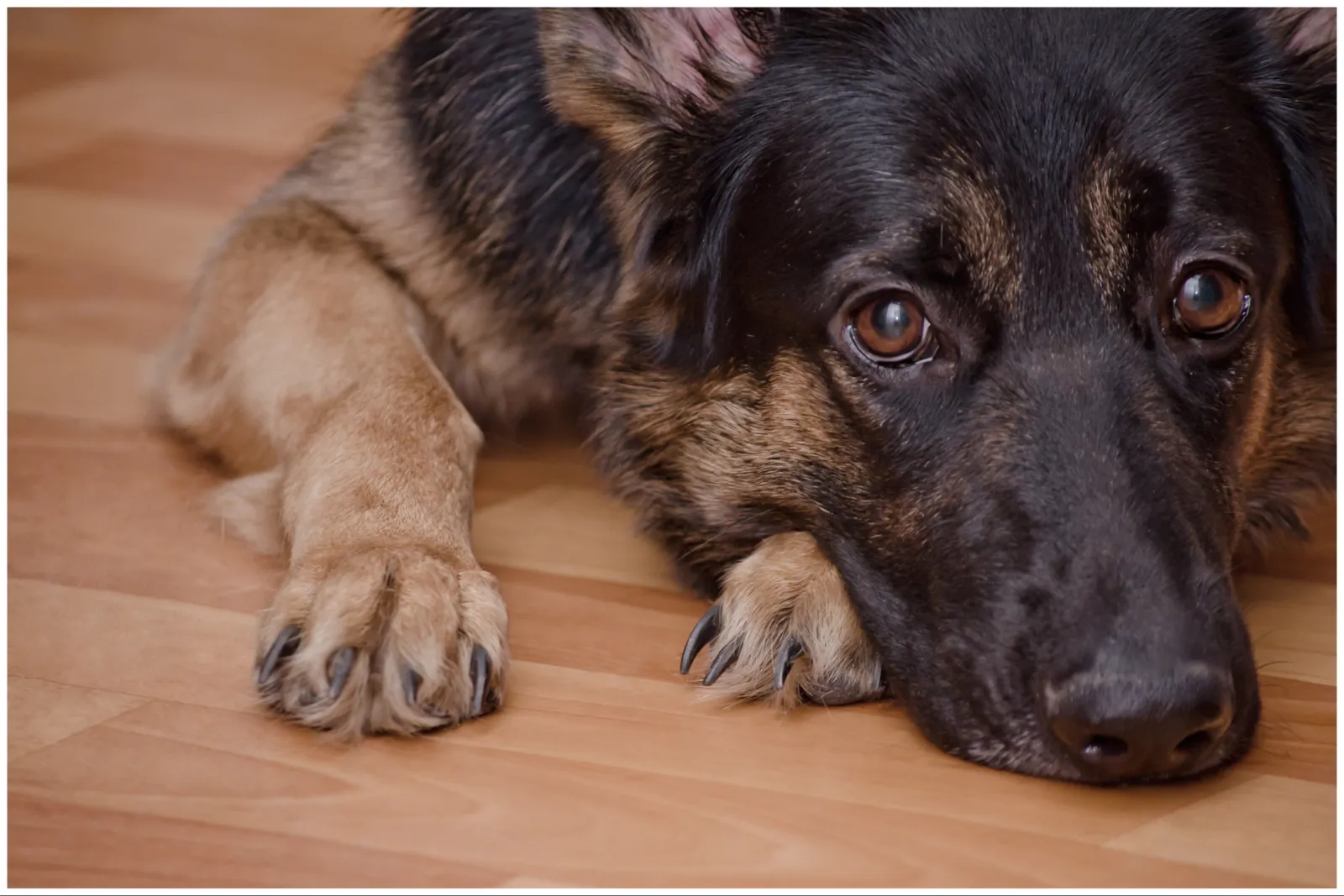
A viral video of a dog appearing to grieve following the death of its companion who was said to be like a "momma" has left the internet in tears.
In the viral video shared to TikTok, user normaflores016 explained that her German shepherd recently lost his companion dog.
The clip shared had the caption: "My little princess crossed into puppy heaven on Good Friday. She was the best girl."
Read More
Hearts Break As Tiny Dachshund Refuses To Leave Owner: ‘Our Little Lap Dog’3 min read

Golden Retriever Pup Caught Expressing ‘Tiny Confusion’ Over Crate Training5 min read

Laughter Over Grumpy Golden Retriever’s Expression—’Wrong Side of the Bed’3 min read

...
As the clip began, the German shepherd could be seen nuzzling the deceased dog that was laid down on her side in the garage.
It continued to prod the dog with its nose and walk around her while the owner recorded from a distance."
Another caption on the clip stated: "Animals grieve too. They've been together for four years. She was like his momma. He was crying because she wouldn't get up. Therapist said we had to let him say goodbye to her or he would be waiting for her."
According to VCA Animal Hospitals: "When a dog loses a companion, two- or four-legged, he grieves and reacts to the changes in his life. Dogs alter their behavior when they mourn, much like people do."
This can include the following:
- They may become depressed and listless.
- They may have a decreased appetite and decline to play.
- They may sleep more than usual and move more slowly, sulking around.
Dr. Anna Foreman, Everypaw Pet Insurance's in-house vet, told Newsweek: "Dogs are incredibly sensitive and emotive creatures, and much like humans they tend to form strong bonds with other dogs, animals, and humans during their lifetime.
"Also, much like us, dogs will grieve if they lose somebody who they have one of these strong bonds with. One of the first behaviors dogs may show when they have lost a human, animal, or other dog is searching—dogs will often look for the departed person or animal, sometimes becoming distressed, showing signs of separation anxiety (whining, unsettle etc.).
"An animal may also show signs of depression—a lack of energy or motivation and a reduced or absent appetite. The extent of the grief very much depends on the individual dog and the sort of bond they had with the departed—two dogs who have lived together for a long time but do not have a particularly strong bond may not show overt signs of grief."
She added: "Because of the chance of searching behavior after another animal has been put to sleep or if their owner has died, it is recommended to show the animal the departed one before their body is taken away. This may help them to sense that the person or animal is gone (see they are not breathing or moving and are unable to be woken) so that they have some sort of closure, rather than becoming confused that they can't find them anymore.
"If an animal is feeling depressed, the best way to help their mood is to distract them with things they enjoy, whether this be toys, walks or food. 'Little and often' distraction and being patient with their mood is important, much like with a grieving human. Some dogs who are particularly bonded to another animal, especially a dog, may need a 'friend' for company—whether this be inviting a friend/family member with a dog round, 'borrowing' a dog from a family or friend member for a length of time, fostering a dog looking for a new home, or adopting/buying another dog. It must be taken into consideration whether the owner is ready for a new dog or animal and where they are in the grieving process too, however.
"If a dog has lost a human, human company is very important to help them through this period. However, due to the anxiety of being 'abandoned,' dogs may form a dysfunctional attachment to a new human quickly, which may lead to separation anxiety behaviors when not with this person.
"If you are worried about a dog after the loss of one of their companions, they may simply need distraction and time to adjust to the new situation. However, the clinical signs of depression such as appetite loss and lethargy can be attributed to many types of illness, which could be missed if symptoms are put down to grief. If worried, always contact a vet."
According to the American Kennel Club: "There are many reasons why German Shepherds stand in the front rank of canine royalty, but experts say their defining attribute is character: loyalty, courage, confidence, the ability to learn commands for many tasks, and the willingness to put their life on the line in defense of loved ones.
"German Shepherds will be gentle family pets and steadfast guardians, but, the breed standard says, there's a certain aloofness that does not lend itself to immediate and indiscriminate friendships."
Since being shared on Monday, the video has attracted an estimated 1.1 million views and 172,000 likes.
Many of those who commented on the video shared their own experiences of dogs that had appeared to grieve the passing of another companion pet.
TikTok user Tiffany Walder said: "When my dog passed I let my cat see him and sniff him so she knew he was gone. She still carried his toys around crying for weeks."
Lindsey added: "Yep. They need closure too. And this doesn't just apply to their furry family. If something happens to us, they need to see us too."
Kat_Suarez816 posted: "Dogs do grieve and it's horrible. I watched my two change completely when they lost their daughter."
Jose Cabral commented: "Why my husky died, my sister's dog was sad for a while. You can definitely see it."
Newsweek has reached out to normaflores016 via TikTok for comment.
Do you have funny and adorable videos or pictures of your pet you want to share? We want to see the best ones! Send them in to life@newsweek.com and they could appear on our site.
Update 4/17/23, 6:04 a.m. ET: This story was updated with comment from Dr. Anna Foreman.
View 0 Comments
Submit Correction
View Editorial & AI Guidelines