

By Liz O'Connell
Reporter
0
Share
Newsweek is a Trust Project member
See more of our trusted coverage when you search.Prefer Newsweek on Googleto see more of our trusted coverage when you search.
A dog owner’s decision to leave her puppy home alone for the first time highlights the issues around crate training, confinement anxiety and how best to prepare dogs for time apart.
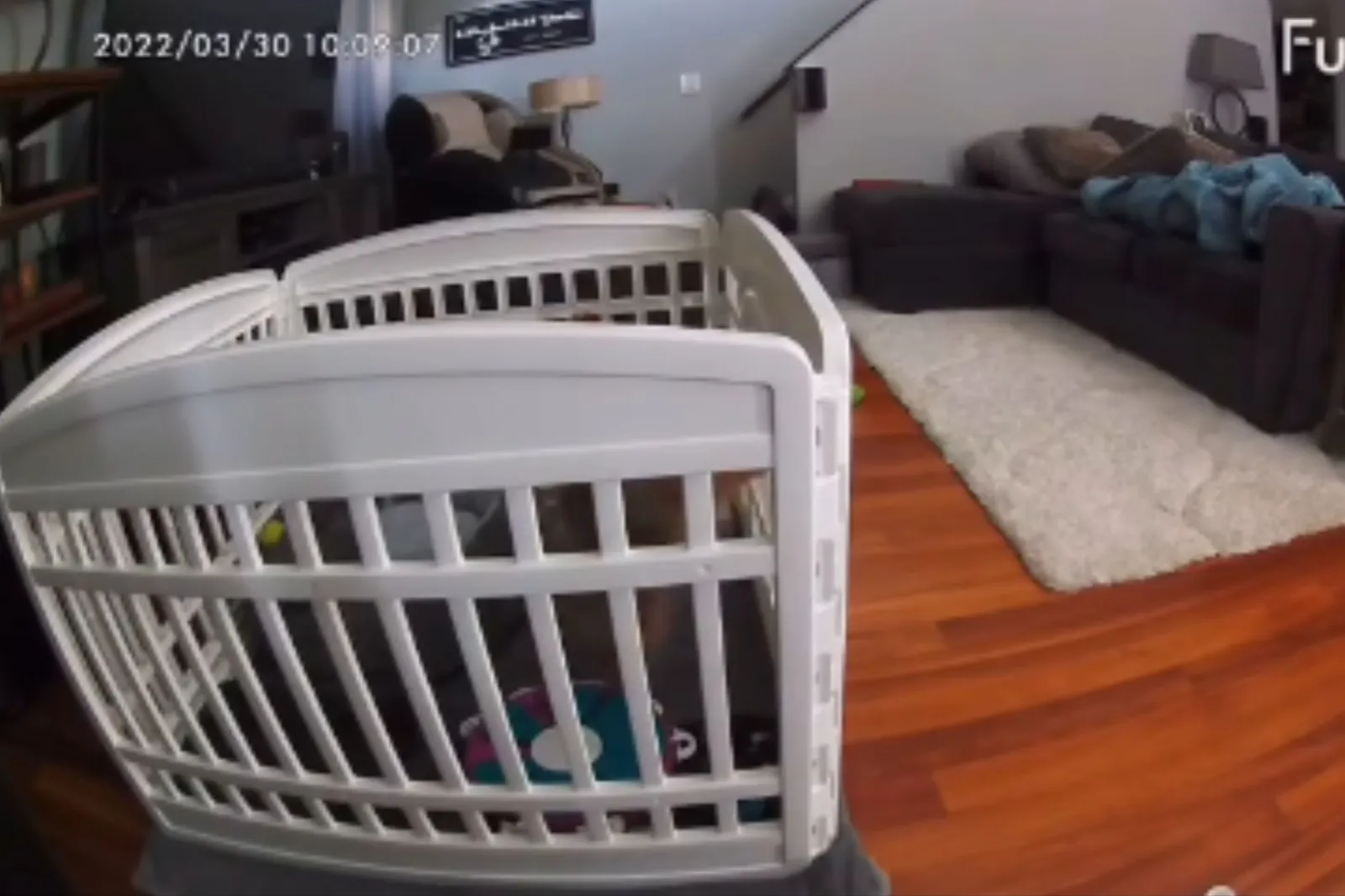
Heber, the owner of a three-month-old Pomeranian named Marky, told Newsweek left the house for a short 30-minute errand and monitored him via a pet camera. While she had been hesitant about using a crate, she decided to try it as part of early training.
But the footage quickly showed Marky in distress. The puppy barked and cried continuously and was soon able to escape from the crate altogether—behaviour experts say can be a key warning sign of confinement-related anxiety.
“It must have started the second we left,” Heber said, adding that she would still have regrets about the decision years later. Heber shared the footage to a May 25 Instagram post on the dog's account, @markyandmilly, showing the tiny pup crying consistently, seemingly calling for his family to come home.
Read More on Life
...
It wasn't just the loud cries. Heber said the dog escaped from the crate, hopping right over the top.
She decided after this situation to "retire the crate." Marky made it clear from the start that the crate was not going to work for him, especially after showing how quickly he could escape. And the change proved successful.
"We decided to let him free roam," Heber said. "And honestly? He’s been a much happier king ever since. No more jail breaks needed!"
Plus, the family has since grown. After Heber returned to work, she welcomed a second dog, a "little sister" to keep Marky company during the day.
Crate or No Crate?
Crate training is a common tool used by dog owners, particularly during puppyhood, but many debate whether it should be used. Veterinary behaviourists describe escape attempts, vocalization and agitation as typical signs of confinement anxiety or separation-related distress, rather than disobedience. Experts stress that crates should be viewed as a safe space rather than a form of punishment.
Crates can become a dog's personal space, where they can relax, sleep and feel secure, an article from the American Kennel Club (AKC) says. It can also help with house training and preventing destructive behavior.
However, crate training is not a one-size-fits-all solution. The AKC adds that dogs should never be forced into a crate or made to associate it with punishment, as it could create negative feelings about the space. Instead, dogs should gradually build positive associations with the crate, which will make them more willing to use it.
Marky’s reaction reflects a common issue among young dogs adjusting to being alone.
Crate Training: What Experts Recommend
Animal welfare organizations including the RSPCA and PDSA emphasise that crates must be introduced gradually, positively and never as punishment.
Key safety principles cited by veterinary and welfare guidance include:
- Dogs should enter crates voluntarily, with positive reinforcement
- Time inside should be limited and built up slowly
- Distress signals such as persistent crying, escape attempts or self-injury risk mean training should be reassessed
- Some dogs—particularly those with confinement or separation anxiety—may not benefit from crates at all [rover.com]
In Marky’s case, escaping the crate and vocalizing continuously suggests the experience may have been overwhelming rather than settling.
...
How to Safely Transition an Anxious Dog to Free Roaming
For owners reconsidering crate use, experts recommend a structured, step-by-step transition rather than an abrupt change.
1. Start with a “safe zone”
Create a puppy-proofed area using a single room or gated section of the home, with familiar bedding and toys.
2. Introduce short, supervised periods
Allow the dog to explore the space freely while you are present, gradually increasing independence over time.
3. Build tolerance to being alone
Use gradual desensitization, starting with very short absences (seconds or minutes) and slowly increasing duration.
4. Reinforce calm behaviour
Reward relaxed behaviour and avoid punishing signs of anxiety, which experts say are driven by fear rather than disobedience.
5. Expand access gradually
Once the dog is comfortable, slowly widen the areas they can access while unsupervised, maintaining consistent routines.
6. Monitor stress signals
Watch for barking, pacing or destructive behaviour, which may indicate the transition is happening too quickly.
View 0 Comments
Submit Correction
View Editorial & AI Guidelines