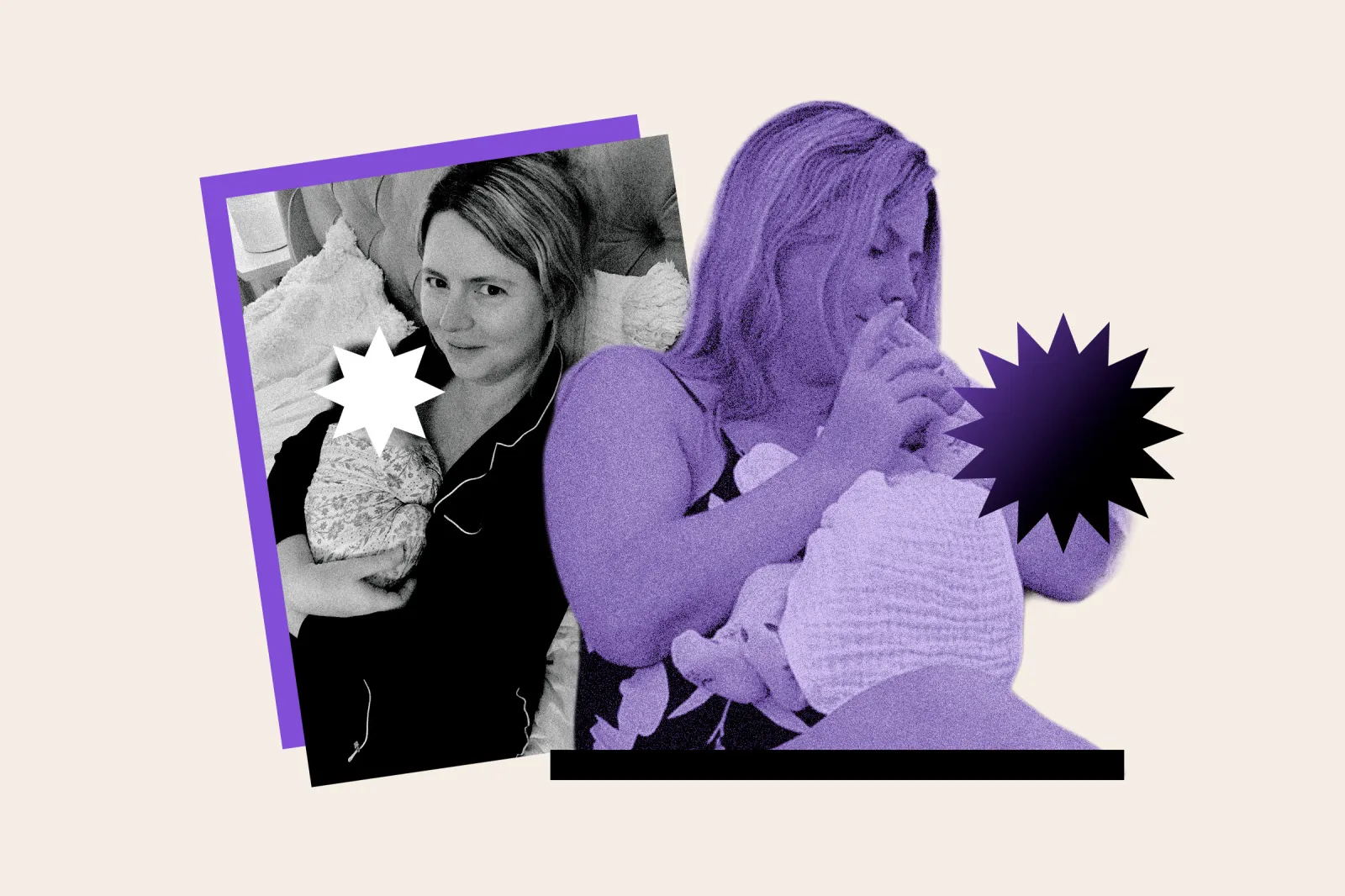
Photo-illustration by Newsweek/Courtesy Ashley Graham

By Ashley Graham
0
Share
Newsweek is a Trust Project member
See more of our trusted coverage when you search.Prefer Newsweek on Googleto see more of our trusted coverage when you search.
My daughter arrived on August 5, 2025, after a whirlwind and terrifying birth experience: 35 hours of labor, preeclampsia, hypertension, sepsis and ultimately an emergency cesarean section. Those first few days postpartum were a blur of IV bags, vital checks, sleeplessness and trying to bond with my newborn while my body worked to stabilize. When I was discharged, I was exhausted but relieved to get home and start the next chapter of my life. I thought the dangerous part was behind us.
But I was wrong. Instead, I almost died in my bathroom six days later.
On August 8, we went to our first pediatrician appointment. When the doctor looked at me and said, "You don't look OK, Momma," I felt a wave of relief that someone had seen me. I was barely standing, running on no sleep; my anxiety was through the roof, and my body felt profoundly weak. But she gave me a Pedialyte and sent us on our way.
Read More on My Turn
My Husband Tried To Tough It Out. Then Came a Devastating Diagnosis10 min read

Doctor Said I Just Needed a Laxative, Then One Test Changed Everything9 min read

I Dropped My Son Off at Daycare—Hours Later, He Was Dead10 min read


...
That weekend, I cried almost hourly. I couldn’t eat or sleep. I was anxious, shaking, weak and had an overwhelming feeling that something was wrong. But I couldn't articulate exactly what was off—and didn’t want to leave my newborn or deal with another hospital stay—so when my husband asked if I wanted to go to the emergency room, I said no. To me, my symptoms felt vague enough to be dismissed as normal recovery or postpartum anxiety.
On August 11, just six days after giving birth, I went to the bathroom and saw a significant amount of blood in the toilet. My postpartum bleeding had nearly stopped, so this was alarming. I'd been instructed to watch for saturating multiple pads in an hour, or large clots, but it was hard to tell how much blood I’d lost. I got up and called the nurse hotline for answers.
While on hold, I felt an intense sensation in my abdomen, similar to when I'd had my first miscarriage a year earlier. Then came a massive gush. Blood and large clots dropped from my body, so forceful they pulled my bottoms down, and splattered everywhere. On the floor. Nearly 10 inches up the wall. Across the cabinets. It looked like a crime scene.
My husband was in the other room feeding the baby. He heard me saying "Oh my God, oh my God" over and over and ran in with fear in his eyes that I’ll never forget. When the nurse came back on the line, she told me to get to the ER immediately. But I was so weak I couldn’t move, so my husband called 911 for an ambulance. As I carefully made my way back to the toilet to wait for the paramedics, still bleeding, I was losing consciousness rapidly, but I told myself to stay awake, alert and alive for my 6-day-old daughter.
The ambulance ride was a blur. The paramedic tried repeatedly to insert an IV, but my veins had receded from blood loss. When we arrived at the ER, there was no color in my face or body.
What happened next was a choreographed medical emergency. Nearly 10 people were in the room, all working on different parts of my body at once. But at one point, while I was dissociating from the chaos around me, I heard my own inner voice say clearly: "This is not how I go." I held on to that the entire time they worked to stabilize me.
Once the bleeding was controlled, the doctor explained what had happened: a delayed postpartum hemorrhage, which occurs when pregnancy tissue or placental membranes remain in the uterus after delivery, preventing it from contracting properly and causing blood and clots to build up and fill the cavity. It's relatively rare—especially in C-section patients—but it's dangerous.
I'd never heard of this and I especially had no idea it could happen days or even weeks later. The doctors discussed options: wait for my body to pass the remaining tissue naturally, perform a bedside dilation and curettage (D&C) procedure, or, if that failed, a hysterectomy to save my life.

...
The next morning, they performed the bedside D&C. My husband sat beside me and watched the entire procedure. He told me afterward that they collected nearly three large cups of blood and clots. Combined with what I'd lost at home, in the ambulance, in the ER, overnight and during the D&C, it was astounding that my body endured through so much blood loss, especially considering I’d already been anemic during pregnancy.
When I was discharged on August 13, my husband and I left with more questions than answers. We'd been given brief explanations that lacked accountability. We wondered: If doctors clean the uterus during a C-section before closing the incision, how could tissue and membranes have been left behind in the first place? Had doctors missed something? How could we trust that they'd taken proper care of me this time? Why hadn't anyone warned me about delayed hemorrhage before I left the hospital originally? Why wasn't I educated on specific warning signs beyond the vague reminder to "watch for heavy bleeding"?
I’ll never know exactly what happened that caused my hemorrhage, but I'm sharing my story because silence around birth complications costs lives. I’m grateful I survived: I know things could have ended differently, particularly if I lived in a more rural area without quick access to medical care. But that survival has galvanized me to make sure other mothers know where the medical system may be failing them and how to advocate for themselves.
I’m here to tell mothers: Advocate for yourself loudly and without apology if something feels wrong. Don't worry about being "that person" who calls too much or goes to the ER unnecessarily. Your life is worth the inconvenience. I'm here to tell families: Educate yourselves on postpartum complications before delivery. Know the warning signs, and have a plan for emergencies that accounts for distance to care. And I'm here to tell the medical system: You must do better. New mothers deserve comprehensive education, adequate follow-up care, transparency when complications occur, and recognition of the psychological trauma that medical emergencies cause.
What no one tells you is that surviving a near-death experience doesn't mean you immediately feel alive again. I spent the first four weeks of my daughter's life terrified of my own body—convinced another hemorrhage would come while I held her, while I slept, while I dared to believe I was OK. I had to repeat mantras every night just to close my eyes: “My body is healed. I am safe.”
Before this, I'd never experienced PTSD. I'd done years of personal growth work, and even with those tools, I came home from the hospital feeling like a ghost—numb, disconnected, watching everyone care for my baby while I sat on the couch as if I'd died. What saved me was having faith in myself and learning to hold myself steady while I held her, even when my body and mind felt fragile. That showed me the true strength of a mother’s love. I'm still healing. But I'm here, and I'm learning what it means to trust my body again—one day at a time.
Ashley Graham is the founder of The Conscious Publicist, a human-centric PR community and podcast, and writes about conscious living, motherhood and wellness. She is a wife, mother and firm believer that our most vulnerable stories become our most powerful tools for helping others.
All views expressed in this article are the author's own.
Do you have a personal essay you want to share with Newsweek? Send your story to MyTurn@newsweek.com.
View 0 Comments
Submit Correction
View Editorial & AI Guidelines