
...

By Suzanne Blake
Reporter
0
Share
Newsweek is a Trust Project member
See more of our trusted coverage when you search.Prefer Newsweek on Googleto see more of our trusted coverage when you search.
A deadly hantavirus outbreak linked to a cruise ship has sparked a wave of conspiracy theories online, reviving COVID-era vaccine skepticism and fueling false claims about pharmaceutical companies and a viral social media “prediction.”
The claims reflect how early-stage biomedical research can be interpreted in ways that shape public perceptions of vaccine development following the COVID-19 pandemic. Public discussion may also influence how risks tied to hantavirus are understood, particularly as researchers continue preclinical work and health officials monitor cases linked to the Andes hantavirus strain.
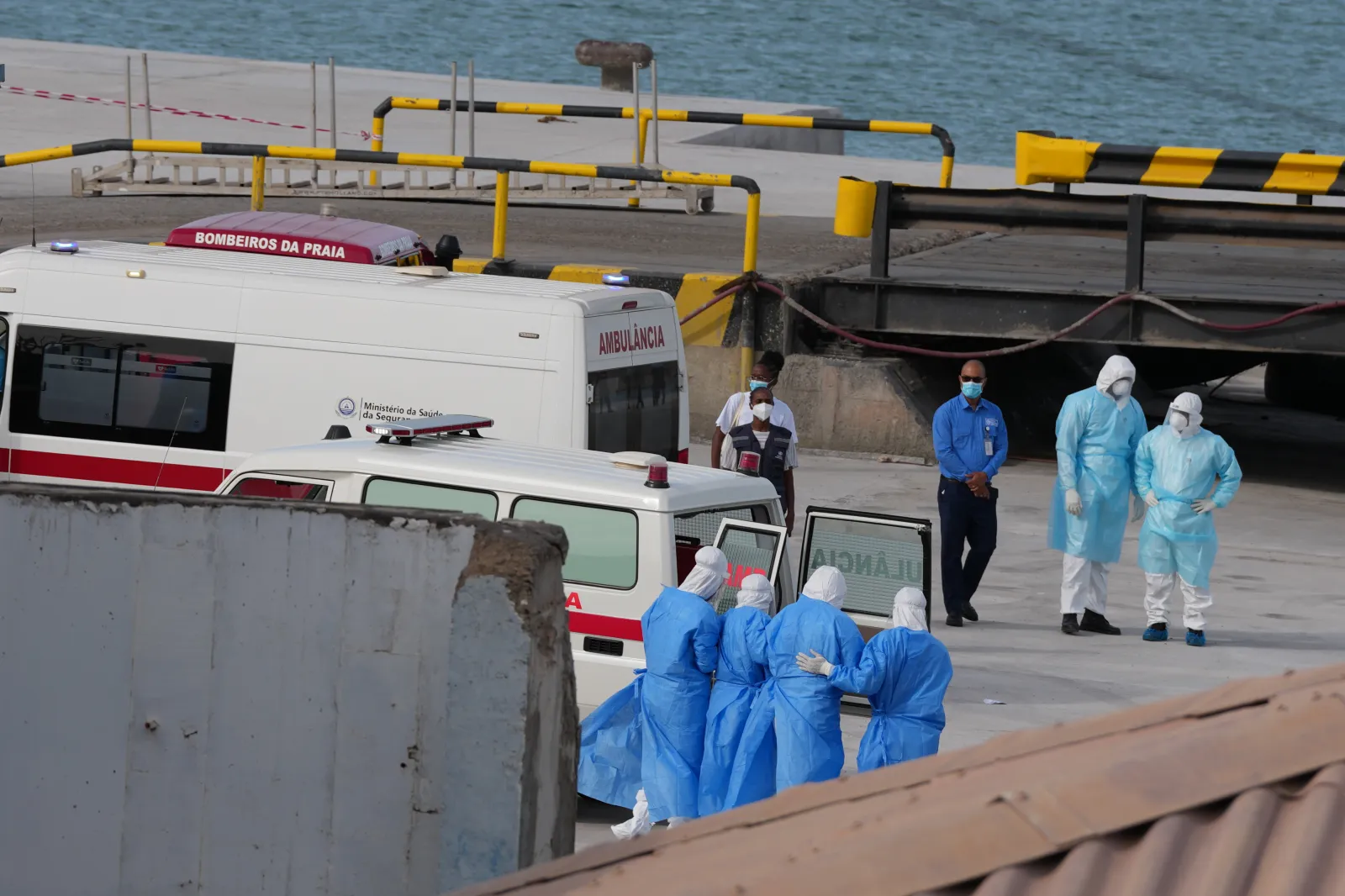
The speculation comes amid heightened interest in hantavirus after an outbreak on the Dutch cruise ship MV Hondius, where three passengers have died, and another remains in intensive care at a South African hospital, according to the Associated Press. Health authorities have said the cases are linked to the Andes hantavirus strain, the World Health Organization confirmed.
Read More on Science
...
Moderna’s Hantavirus Work Explained
The claims circulating online are tied to a legitimate—but early-stage—research collaboration announced in 2024 between Korea University’s Vaccine Innovation Center and Moderna.
The project focuses on hantaviruses that cause Hemorrhagic Fever with Renal Syndrome (HFRS), a form of the disease found mainly in East Asia and parts of Europe. The work is part of Moderna’s mRNA Access Program, under which the company provides technical support and materials to outside researchers.
Critically, the effort is still preclinical, meaning it has not entered human testing and is not part of any approved or planned vaccination program, either in the United States or elsewhere.
The research does not target the Sin Nombre virus, the strain most commonly associated with U.S. cases, and there is currently no approved hantavirus vaccine available to Americans.
Hantavirus is not a single virus but a family of related viruses, with different strains circulating in Asia, Europe and the Americas. Vaccines targeting one strain may not offer protection against others.
“Researchers have worked on hantavirus vaccines for decades, but earlier candidates were less effective against some European strains. Moderna’s vaccine is designed to provide broader protection across multiple strains,” Luis Marcos, an infectious disease expert at Stony Brook Medicine in New York, told Newsweek. “This is a normal part of scientific progress: vaccines are continually improved as researchers learn more about viruses and immune responses.”
Moderna confirmed that the company conducted preclinical research on hantaviruses in collaboration with the U.S. Army Medical Research Institute of Infectious Diseases (USAMRIID), "reflecting the ongoing regional impact of these pathogens."
"In parallel, through our mRNA Access Program—which supports external research on viruses of concern in advance of potential outbreaks—we have partnered with the Vaccine Innovation Center at Korea University College of Medicine," a spokesperson for Moderna told Newsweek. "These efforts are early-stage and ongoing and reflect Moderna’s broader responsibility to develop countermeasures against emerging infectious diseases."
Old “Prediction” Circulates Again
Separately, viral social media posts have revived a years-old “prediction” about a hantavirus outbreak in 2026, further fueling conspiracy theories.
An X account known as “iamasoothsayer” posted in June 2022: “2023: Corona ended 2026: Hantavirus.” The post has since gained more than 255,000 likes, 100,000 reposts and 21,000 replies following the cruise ship outbreak.
The X user account said in its bio that it "reads the future" and lists "Astrologist" as a profession.
Social Media Reaction and Political Framing
Despite the limited scope of the research, Moderna's work has been framed online as evidence of a broader vaccine agenda.
“They manipulate the virus (bioweapon), make the vaccine (poison), and then make the profits because they own the vast majority of your elected leaders,” former Representative Marjorie Taylor Greene wrote on X. “They call this science.”
Other commentators have pointed to the timing of the research, suggesting it indicates advance knowledge of outbreaks.
“Luckily 2 years ago, Moderna started working on a vaccine for Hantavirus. They just have the best foresight…” Jordan Crowder, host of the Conscious Observers Podcast, wrote on X.
“3 weeks ago, Moderna's ‘next-gen’ hantavirus mRNA vaccine was on the brink of collapse, now there's a story of some terrible outbreak on a cruise ship in Antarctica that no one can verify going viral on social media. Lol. I think we've seen this playbook before,” Sam Parker, a Republican former U.S. Senate candidate from Utah, wrote.
...
Cruise Ship Outbreak Fuels Public Attention
The resurgence of these claims has coincided with a sharp increase in public discussion of hantavirus following the MV Hondius outbreak.
At least five passengers have been identified as infected with the Andes virus, a strain typically found in South America. The deadly cases have drawn global attention because hantavirus outbreaks are rare and often localized.
Hantavirus infections in the United States remain uncommon, with only 890 cases reported between 1993 and 2023, according to the Centers for Disease Control and Prevention.
The virus is typically spread through exposure to infected rodent droppings or saliva, and the strains that circulate vary widely by region.
What Happens Next
From Korea University’s announcement, Moderna’s role is limited to providing mRNA materials and technical support under its mRNA Access Program, which helps researchers in other countries explore vaccines for emerging or neglected infectious diseases.
The hantavirus vaccine candidates involved are preclinical, meaning they have not entered human trials and face significant funding and regulatory hurdles before that could happen.
View 0 Comments
Submit Correction
View Editorial & AI Guidelines