...

By Adeola Adeosun
Weekend Night Editor
0
Share
Newsweek is a Trust Project member
See more of our trusted coverage when you search.Prefer Newsweek on Googleto see more of our trusted coverage when you search.
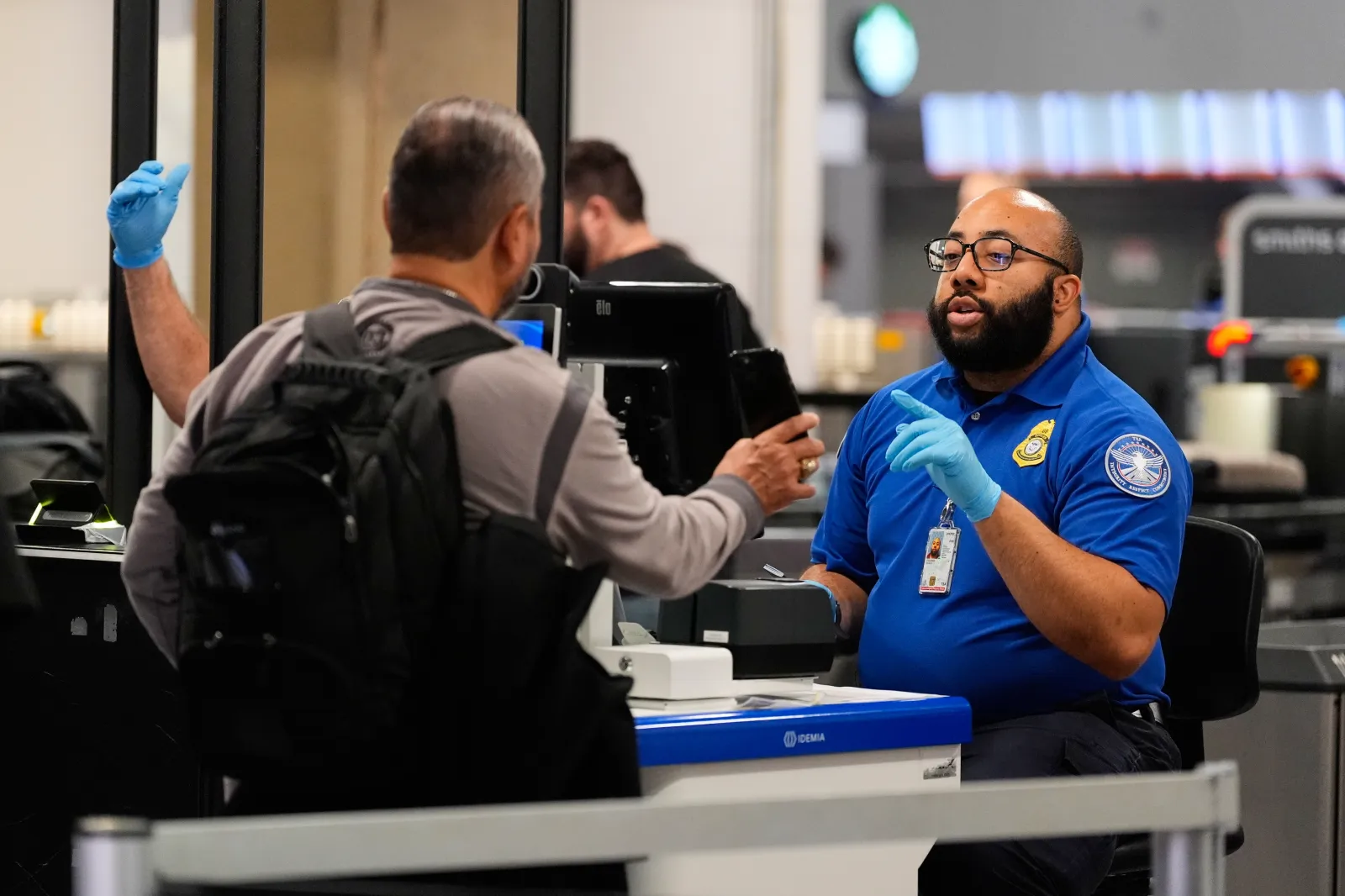
The Department of Homeland Security (DHS) shutdown took effect at midnight Saturday, requiring Transportation Security Administration (TSA) officers to continue screening passengers and baggage at airports nationwide without receiving paychecks, the Associated Press reported.
According to the department's contingency plan, approximately 95 percent of TSA workers are classified as essential personnel and must remain on duty despite the funding lapse. The shutdown comes as lawmakers failed to reach an agreement on DHS' annual funding before the deadline.
Newsweek reached out to the DHS and TSA via email on Saturday for comment.
Read More on News
Why It Matters
After the fatal shootings of U.S. citizens Renee Good and Alex Pretti in Minneapolis in January amid the Operation Metro Surge immigration operation, President Donald Trump's administration has faced significant public backlash, at home and abroad, with lawmakers and celebrities joining the growing "ICE out" movement.
In the wake of the two shootings, and as federal agents continue to detain even some people who are legally in the country, as well as others, Democrats are pushing for new limits on Immigration and Customs Enforcement (ICE) operations while Republicans support a clean funding bill.
Unlike the previous two government shutdowns, including for a record 43 days last year, the funding lapse only concerns DHS, so it would not have as wide a scope of impact.
What To Know
This shutdown differs significantly from previous government closures because only DHS funding has expired, while the rest of the federal government remains funded through September 30.
Air traffic controllers employed by the Federal Aviation Administration (FAA) will continue receiving regular paychecks, reducing the immediate risk of widespread flight cancellations that occurred during last year's shutdown.
House and Senate Democrats have stated they won't approve DHS funding until new restrictions are placed on federal immigration operations following the two fatal shootings. The White House has been negotiating with Democratic lawmakers, but the two sides failed to reach a deal before senators and members of Congress left Washington for a 10-day break, though lawmakers remain on notice to return if an agreement is struck.
Aviation experts say disruptions to air travel typically build over time rather than occurring immediately. During last year's month-long shutdown, TSA temporarily closed two checkpoints at Philadelphia International Airport, and the government took the extraordinary step of ordering all commercial airlines to reduce their domestic flight schedules.
Travelers are advised to arrive at airports early and allow extra time for security screening, as even a handful of unscheduled TSA absences could quickly lead to longer wait times, particularly at smaller airports with single security checkpoints.
Flight delays remain possible even with air traffic controllers funded, as airlines might delay departures to wait for passengers to clear screening, and TSA staffing shortages could slow checked luggage screening.

...
What People Are Saying
U.S. Travel, Airlines for America, and American Hotel & Lodging Association, in a joint statement: "Travelers and the U.S. economy cannot afford to have essential TSA personnel working without pay, which increases the risk of unscheduled absences and call outs, and ultimately can lead to higher wait times and missed or delayed flights."
John Rose, chief risk officer at Altour, told the Associated Press: "It's still fresh in their minds and potentially their pocketbooks," referring to TSA workers remembering the last shutdown.
Ha Nguyen McNeill, senior official performing the duties of administrator for the Transportation Security Administration, in a statement earlier this week: "We cannot forget our history and why this Agency was founded after 9/11, to prevent terrorist attacks on the Nation’s transportation systems. On behalf of the TSA workforce, I urge Congress to pass the DHS budget and provide TSA with the funding certainty it needs to secure the U.S. transportation system. The Nation cannot afford the safety and security of the traveling public and U.S. transportation systems to be threatened by budget uncertainties. As we enter our 25th year as an agency, we must ensure TSA remains an employer of choice for those who want to serve our country and their communities."
Gregg Phillips, associate administrator of FEMA’s Office of Response and Recovery, on Wednesday: "This will hinder communication, planning, and joint operations, affecting disaster relief outcomes and complicating recovery efforts. Crippling FEMA’s central operations and recovery-related work will come at the expense of the American people.
"A government shutdown will erode public trust in the federal government’s ability to respond to emergencies. Even though emergency response activities will continue during a shutdown, communities may feel vulnerable and unsupported during critical times, which could have lasting effects on public confidence and resilience."
What Happens Next
Lawmakers remain in negotiations to end the shutdown, with both chambers on notice to return to Washington if a deal is reached during their 10-day break.
Travelers should monitor airport security wait times online before departure and practice patience with TSA agents working without pay under reduced staffing conditions.
Reporting from the Associated Press contributed to this article.
In a polarized era, the center is dismissed as bland. At Newsweek, ours is different: The Courageous Center—it's not "both sides," it's sharp, challenging and alive with ideas. We follow facts, not factions. If that sounds like the kind of journalism you want to see thrive, we need you.
When you become a Newsweek Member, you support a mission to keep the center strong and vibrant. Members enjoy: Ad-free browsing, exclusive content and editor conversations. Help keep the center courageous. Join today.


View 0 Comments
Submit Correction
View Editorial & AI Guidelines