...

By Sam Stevenson
Associate News Editor
0
Share
Newsweek is a Trust Project member
See more of our trusted coverage when you search.Prefer Newsweek on Googleto see more of our trusted coverage when you search.
Democrats say candidate recruitment is reaching historic levels ahead of the midterms, as state legislative races draw once-in-a-generation levels of participation nationwide.
Why It Matters
Candidate recruitment is an early signal of party momentum, shaping how competitive races may be months before ballots are cast.
Read More on Politics
Democrats argue this cycle reflects sustained organizing following recent state‑level gains.
Newsweek has contacted the Republican National Committee for comment.

...
What To Know
Democrats are reporting record‑setting candidate recruitment across state legislative races as the party ramps up preparations for the midterm elections, according to a new release from the Democratic Legislative Campaign Committee (DLCC).
"State Democrats are shattering recruitment records across the country," DLCC President Heather Williams said, pointing to a surge in candidates filing to run in battleground, traditionally red, and reliably blue states alike.
Party officials attribute the trend to earlier investment in organizing infrastructure, staffing, and support for state legislative caucuses.
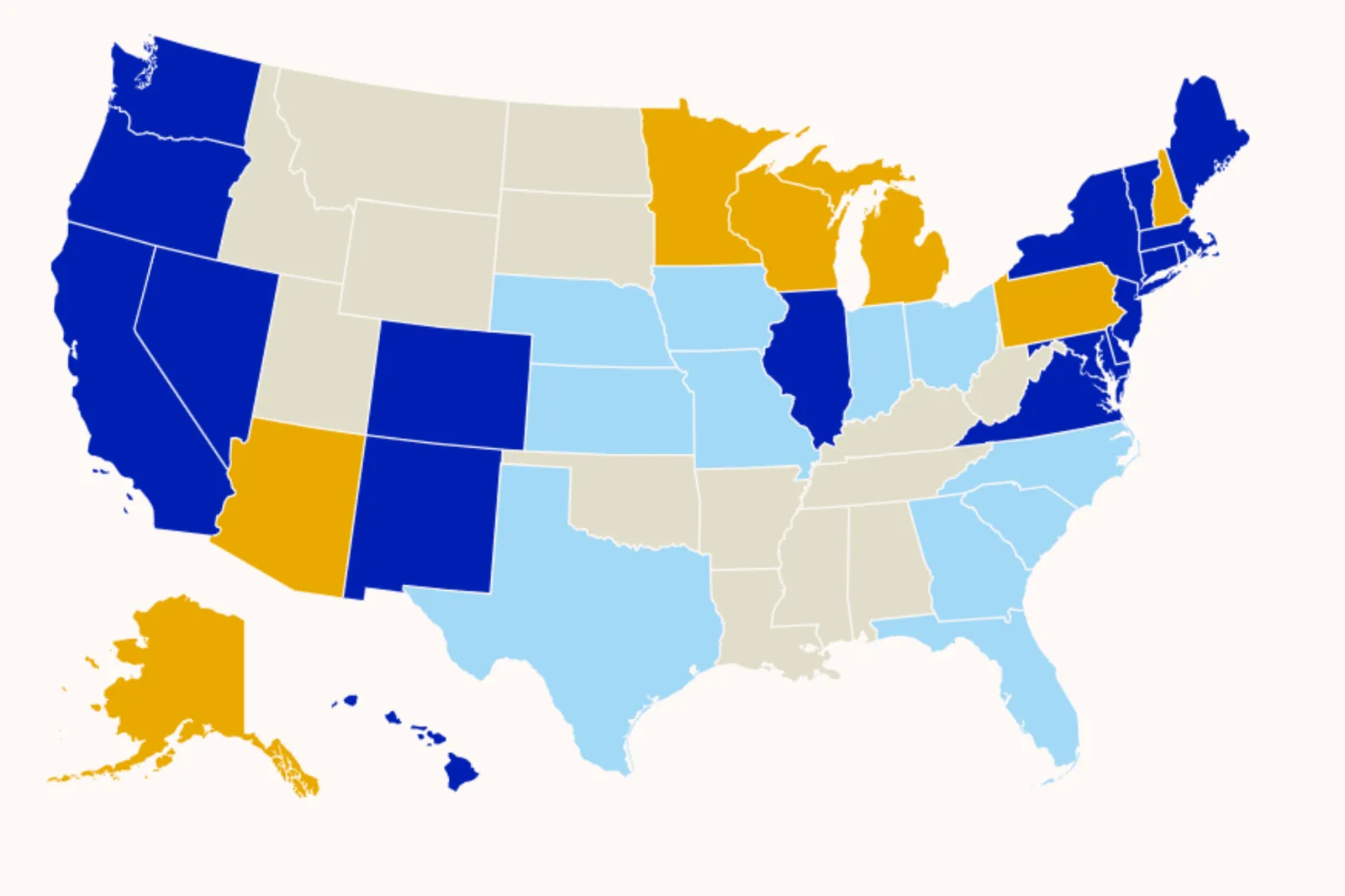
The DLCC’s 2025-2026 target map outlines where Democrats see the most viable paths to winning power in state legislatures, focusing resources on districts viewed as decisive for control.
Party officials say the map is designed to prioritize efficiency, directing early investment toward races where candidate recruitment and organizing can have the greatest impact.
In Texas, Democrats will contest all 150 state House districts and all 16 state Senate districts, marking the first time in modern history that either party has fielded candidates in every legislative race in the state.
Georgia is also seeing a notable expansion, with Democrats running in 204 legislative races and contesting the vast majority of seats in both chambers.
The party says this represents its highest level of participation there in at least three decades.
Similar patterns are emerging elsewhere.
North Carolina Democrats have candidates running in every House and Senate district, while Pennsylvania Democrats have recruited candidates for roughly nine in 10 state House seats, a level not seen in the past decade.
Indiana Democrats are contesting all state Senate districts and nearly all House seats, which the party describes as its strongest showing this century.
Ohio, South Carolina, Maine and Arizona are also highlighted in the release.
In Ohio, Democrats are running candidates in nearly every House district.
South Carolina Democrats have fielded candidates in every statehouse race for the first time in modern history.
Maine Democrats are contesting almost all Senate districts and 137 of 151 House races, including 22 where Republicans are not running a candidate.
Arizona Democrats, meanwhile, are running in every legislative district statewide.
DLCC officials note that filing deadlines remain open in several target states, but say recruitment goals are being reached earlier than in previous cycles.
The committee’s stated objective is to recruit candidates in more than 500 targeted districts by June, including hundreds currently held by Republicans.
Party leaders frame the recruitment push as part of a longer‑term strategy that has already produced results at the state level.
According to the DLCC, state legislatures will play an outsized role in shaping policy outcomes after the midterms, from election administration to cost‑of‑living issues.
Organizers say expanding the candidate map now is intended to put Democrats on offense well before November.
Inside the DLCC’s Expansive Target Map
Behind the surge in candidates is an unusually broad midterm strategy.
The DLCC says its 2025–2026 target map spans 42 legislative chambers across 27 states, with as many as 650 seats identified as competitive heading into November.
Party officials argue that even modest gains across that map could have an outsized impact on control of state governments.
According to the committee, flipping just 19 seats across four battleground states—Arizona, Michigan, Minnesota, and Wisconsin—would be enough to create four new Democratic trifectas and six new majorities in presidential swing states.
The DLCC notes that Democrats have already flipped 30 seats through special elections and off‑year contests in 2025 and 2026, gains achieved before the bulk of midterm races have even begun.
What People Are Saying
Democratic Legislative Campaign Committee President Heather Williams said: "State Democrats are shattering recruitment records across the country, and the grassroots enthusiasm is undeniable.
"Our efforts are putting strong candidates in hundreds of key districts that will decide majorities and secure the largest shift of power at this ballot level in a generation.
"The DLCC’s proven strategy has already flipped 30 seats since Trump’s election, and we’re carrying our winning playbook forward into the midterms.
"Democrats are on offense across the country, and the DLCC’s work will ensure record candidate recruitment translates into record flips this November."
What Happens Next
Candidate filing deadlines over the coming weeks will provide a clearer picture of how competitive individual races may be.
Attention is also expected to shift toward fundraising totals, messaging strategies, and how state‑level contests intersect with the broader national political climate heading into the midterms.
View 0 Comments
Submit Correction
View Editorial & AI Guidelines