10
Loading video...

By Alex J. Rouhandeh
National Political Correspondent
0
Share
Newsweek is a Trust Project member
See more of our trusted coverage when you search.Prefer Newsweek on Googleto see more of our trusted coverage when you search.
Democratic governors from across the country descended upon the Arizona Biltmore Hotel this past weekend to lay out their 2026 midterm battle strategy to defeat President Donald Trump and his Make America Great Again (MAGA) movement.
With both the U.S. House of Representatives and U.S. Senate under Republican control, Democrats remain relatively powerless to counter the administration in Washington, which has positioned governors as de facto leaders of the left’s counter strategy. At the forefront of that effort is the Democratic Governors Association (DGA).
The DGA leads the Democratic Party’s nationwide electoral strategy and played a key role in the 2025 victories of candidates Mikie Sherrill in New Jersey and Abigail Spanberger of Virginia that helped the party unify around the message of promoting affordability.
Read More on Politics
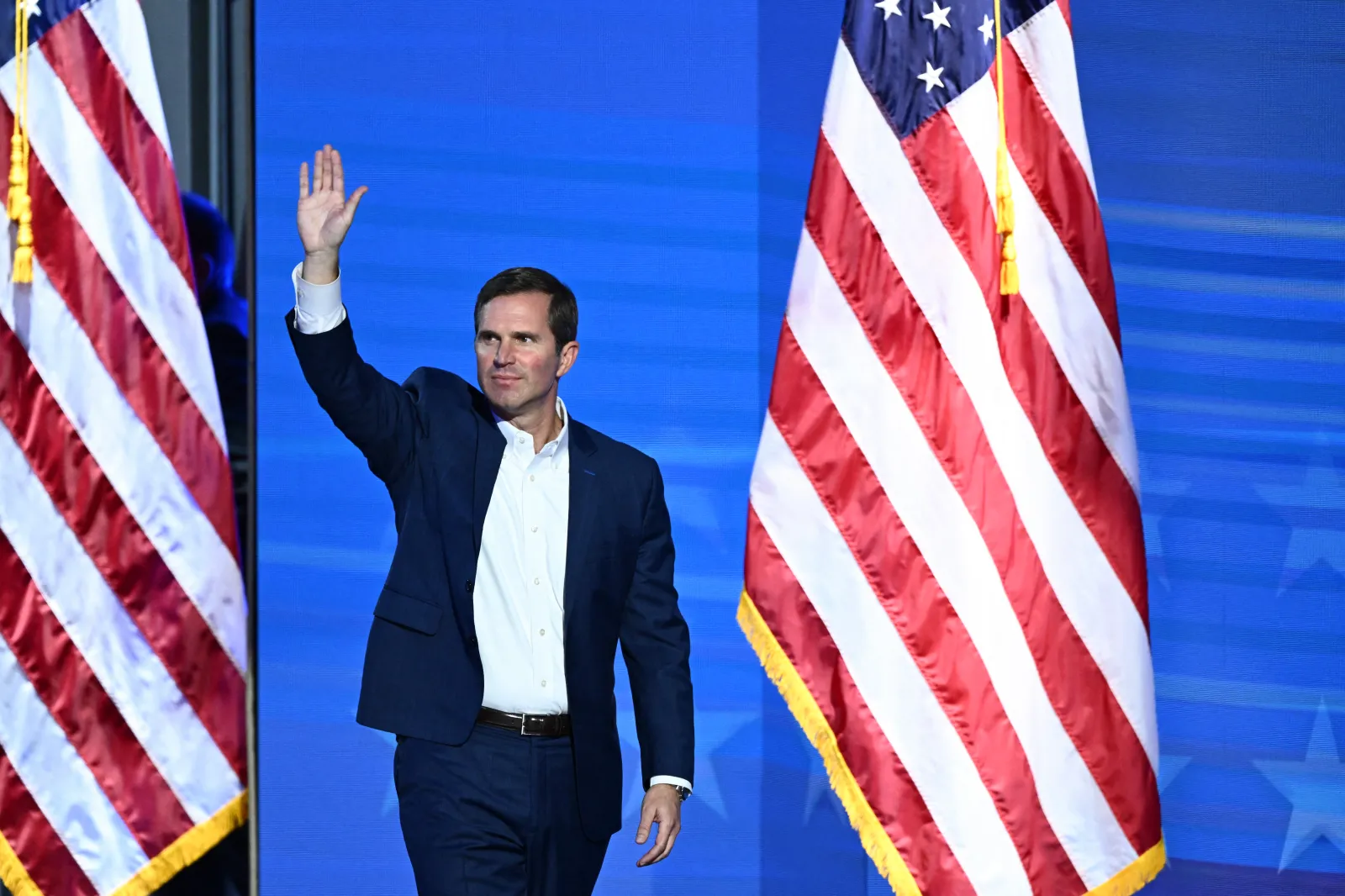
Red state Democratic Governor Laura Kelly of Kansas chaired the DGA during that cycle and on Sunday bestowed the reins of the organization to the nation’s only other red state Democratic governor, Andy Beshear of Kentucky. In a briefing before Newsweek and other members of the press, Beshear—who many speculate could seek the party’s presidential nomination in 2028—offered a glimpse into the DGA’s 2026 message.
“Most of America should feel betrayed right now with the tariffs making everything more expensive and the Big Ugly Bill and what it’s going to do,” Beshear said. “We understand that the American dream feels like it is unattainable, and we're going to do everything we can to make sure that if you work hard and play by the rules, you can afford that house, you can take your family on vacation, you can live a good life, and we'll start winning in places we haven't for a long time.”
...
Beshear named Iowa, Georgia, and Nevada as three of the 36 governor races next year that the DGA plans to prioritize flipping. At the start of next year, Democrats will control 24 of America’s 50 governorships, and Beshear predicted that by this time in 2026 the party will have clinched a majority.
Replacing Beshear as vice chair of the DGA is Michigan Governor Gretchen Whitmer who will assist the Kentuckian in implementing his strategy. Like Beshear, she knows how to win in a state Trump carried, and like Beshear, many see her as a potential candidate for the 2028 Democratic presidential nomination.
“The DGA has played a big role in my success and the reason that I'm taking this [role] on in my last year as governor,” Whitmer said. “I think that this is another high stakes election, and I think Democratic governors have been the frontline in protecting people from all the chaos coming out of Washington, D.C.”
I spoke with DGA staff at the event who similarly said that they see their organization as a preeminent force in Democratic politics, which they acknowledged as a shift from where the organization was prior to the 2024 election. Democratic National Committee (DNC) chair Ken Martin, who ascended to his role in 2025, has made strengthening state parties a focus of his tenure.
During the briefing with Beshear, I asked how he plans to further that vision through partnering with other state-focused organizations, like the Democratic Legislative Campaign Committee (DLCC)—which works to elect statehouse leaders. He said he aims to encourage a new level of coordination and cooperation with that organization and others like it to make it clear to voters that success up and down the ballot enables progress.
California Governor Gavin Newsom, who’s widely viewed as the frontrunner for the party’s 2028 presidential nomination, struck a similar tone. I asked Newsom during a briefing how he thinks the party should build its local infrastructure to support such races.
“As it relates to party building, first you start with the obvious: Stop with this obsession with the guy or gal on the white horse to come save the day—Stop," Newsom said. "Just stop. It actually takes hard work, building a party is not top down, it’s bottom up. And it’s what happens between the ‘24s and ‘28s and ‘32s and ‘36s that matter. That’s why governors’ races matter.”
Newsom said he believes the Democratic Party has “woken up” to that fact that state races matter but thinks the left has previously lacked such understanding while the right has made gains. Part of continuing this work, he said, involves figures like him drawing attention to less visible races like those for school board seats.
Kelly said in a briefing that the party’s donor base is increasingly recognizing the importance of state races and said there’s been a growth in business entities and advocacy groups interested in the work of Democratic governors and getting them elected.
As Kelly noted in a prior exclusive interview with Newsweek, the reasons for her success in ruby red Kansas came from focusing on issues specific to the state over those being deliberated in Washington and venturing to Kansas to speak with voters in communities where Democrats have historically underperformed.
The ability of governors to reach new groups of people and easily show the work they’ve done is a reason why Kelly wants the party’s 2028 nominee to be a governor. As stateside Democrats become increasingly alienated from what’s happening in Washington, it’s increasingly clear that governors have emerged as the party’s top messengers.
The conversations and strategies developed at the Arizona Biltmore are likely to be those that shape the party’s platform come 2026, and if that year brings electoral success, they will likely also define its platform come 2028.
As governors hone a winning message, they’ve also enhanced their credibility to serve as leaders within the party, and with the way Sherrill is communicating, we can expect to see state leaders make a grab for the party influence that has long been held by their D.C. counterparts.
“You have people in Washington who are acting like this is the 1980s, and they're just going to go to lunch, and it's going to all sort itself out,” Sherrill said. “Governors can't do that because you can't duck behind like 99 other people. You have to deliver, and you have to show your work.”
View 0 Comments
Submit Correction
View Editorial & AI Guidelines