...

By Sam Stevenson
Associate News Editor
0
Share
Newsweek is a Trust Project member
See more of our trusted coverage when you search.Prefer Newsweek on Googleto see more of our trusted coverage when you search.
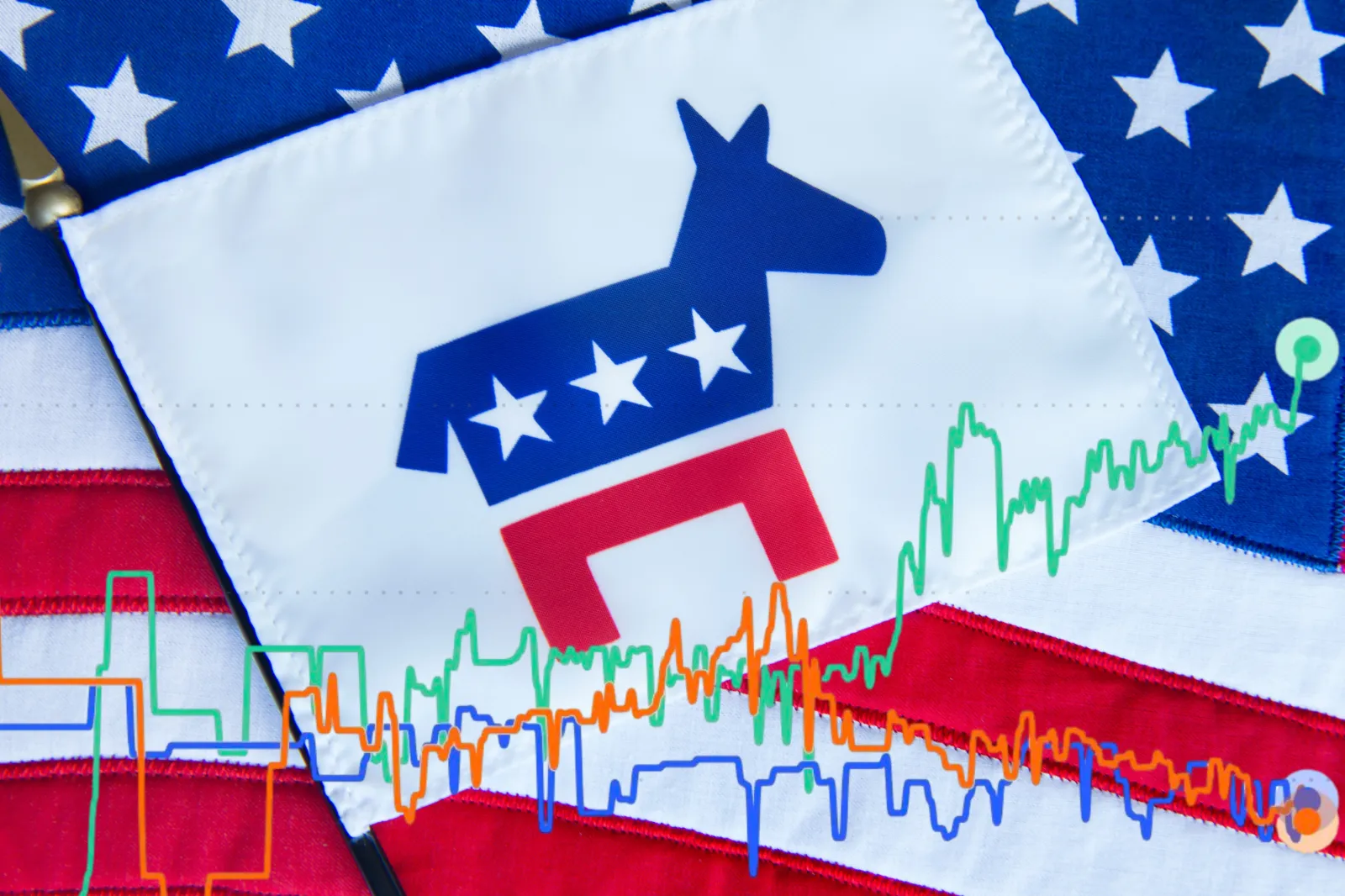
Democrats have seen their strongest-ever odds of winning the White House and both chambers of Congress, according to new data tracking the 2028 election from a leading prediction market.
Why It Matters
Markets that aggregate thousands of real-money bets are signaling growing confidence in a Democratic governing trifecta in 2028.
Read More on News
Those shifts often reflect changing expectations around candidates, turnout and control of Congress.
...
What To Know
The probability of Democrats sweeping the presidency, House and Senate has climbed to its highest level since the market was created with Kalshi, a U.S.-regulated prediction market.
Posting on X, Kalshi’s official account said on March 31 that traders were pricing a 43 percent chance of a Democratic sweep—an all‑time high.
At the time of writing on April 1, on Kalshi’s “2028: Who will win the Presidency, House, and Senate?” market, odds on a Democratic sweep had softened from their previous high and were trading around 40 to 41 percent, compared with 21 percent for a full Republican sweep, and with other split‑control outcomes trailing behind.
More than $162,000 has already been traded on this single Kalshi market, reflecting growing interest as attention slowly turns toward the 2028 cycle.
Prices have steadily climbed over recent months, with the Democratic sweep line rising from the teens earlier in 2025 to above 40 percent by spring 2026.
Kalshi, like other prediction markets, allows users to buy contracts tied to political outcomes, with prices fluctuating as traders react to polls, election results and broader political developments.
The platform is regulated by the Commodity Futures Trading Commission, unlike many offshore betting sites.
A similar trend is visible on Polymarket, another major prediction platform.
On its market tracking which party will win the 2028 presidential election, Democrats were priced at 60 percent, compared with 42 percent for Republicans.
That market has attracted far more money, with nearly $1.6 million in total trading volume.
Contracts backing a Democratic victory accounted for roughly $686,000 of that total, while Republican contracts drew about $894,000, underscoring how divided trader sentiment remains despite Democrats holding a narrow edge.
Taken together, the two platforms suggest traders currently see Democrats as favorites not just to win the presidency, but to potentially secure unified control of Washington.
What Is a Prediction Market?
Prediction markets allow users to buy and sell contracts based on the likelihood of future events, from elections to economic data.
Prices move as traders react to new information, effectively producing real‑time probability estimates.
Supporters argue these markets can sometimes outperform traditional polling by aggregating large volumes of independent bets.
Critics caution that they reflect trader sentiment rather than voter behavior and can be influenced by sudden news shocks or speculative activity.
How Traditional Betting Odds Compare
Conventional political betting markets are broadly aligned with the prediction platforms, though they tend to present outcomes in simpler terms.
U.K. bookmaker William Hill currently lists Democrats as 4/6 favorites to win the 2028 presidential election, implying a 60 percent chance. Republicans are priced at 6/5, while any other outcome is considered a long shot.
Democrats are also heavy favorites to retake the House of Representatives this fall, listed at 1/6, while control of the Senate is far tighter, with Democrats at 4/5 and Republicans at 10/11.
In the Democratic nomination race, California Governor Gavin Newsom is the clear front‑runner at 13/8, ahead of Alexandria Ocasio‑Cortez at 7/4, with Senators Mark Kelly and Jon Ossoff both priced at 10/1.
What People Are Saying
Lee Phelps, a spokesperson for William Hill, told Newsweek via email “We make the Democrats 1/6 favourites (85 percent chance) of flipping the House of Representatives this November but the Senate remains too close to call, with the Democrats and Republicans both tied at 5/6.
“Looking ahead to 2028, the Democrats are 4/6 to win the Presidential Election (60 percent chance), with Gavin Newsom the stand-out candidate to run for office: he’s 13/8 to take the nomination (38 percent chance) ahead of Alexandria Ocasio-Cortez (7/1), Mark Kelly and Jon Ossoff (both 10/1).
“With all that considered, the probability of a Democrat run House of Representatives, Senate and a Newsom presidency is currently the most likely scenario as things stand.”
What Happens Next
Market probabilities are likely to remain volatile as new polling, legislative battles and candidate decisions reshape the political landscape.
Early shifts may harden or reverse as the 2026 midterms draw closer and the 2028 field comes into sharper focus.
Sign Up With Kalshi Promo Code WEEK
To create your Kalshi account now, just click here or use the following links to lock in $10 in bonuses once registration is complete and you have completed $100 worth of trades.
Newsweek may earn an affiliate commission if you sign up through any links in this article. See the prediction market operator’s terms and conditions for important details. The probabilities referenced in this story are correct at the time of publication and are subject to change.
View 0 Comments
Submit Correction
View Editorial & AI Guidelines