...

By Jeff Young
Environment and Sustainability Editor
0
Share
Newsweek is a Trust Project member
See more of our trusted coverage when you search.Prefer Newsweek on Googleto see more of our trusted coverage when you search.
A Chinese AI company's more frugal approach to training large language models could point toward a less energy-intensive—and more climate-friendly—future for AI, according to some energy analysts.
"It raises the potential that electric demand from model training may end up being lower than previously thought," John Larsen, a partner at the research firm Rhodium Group, told Newsweek via email.
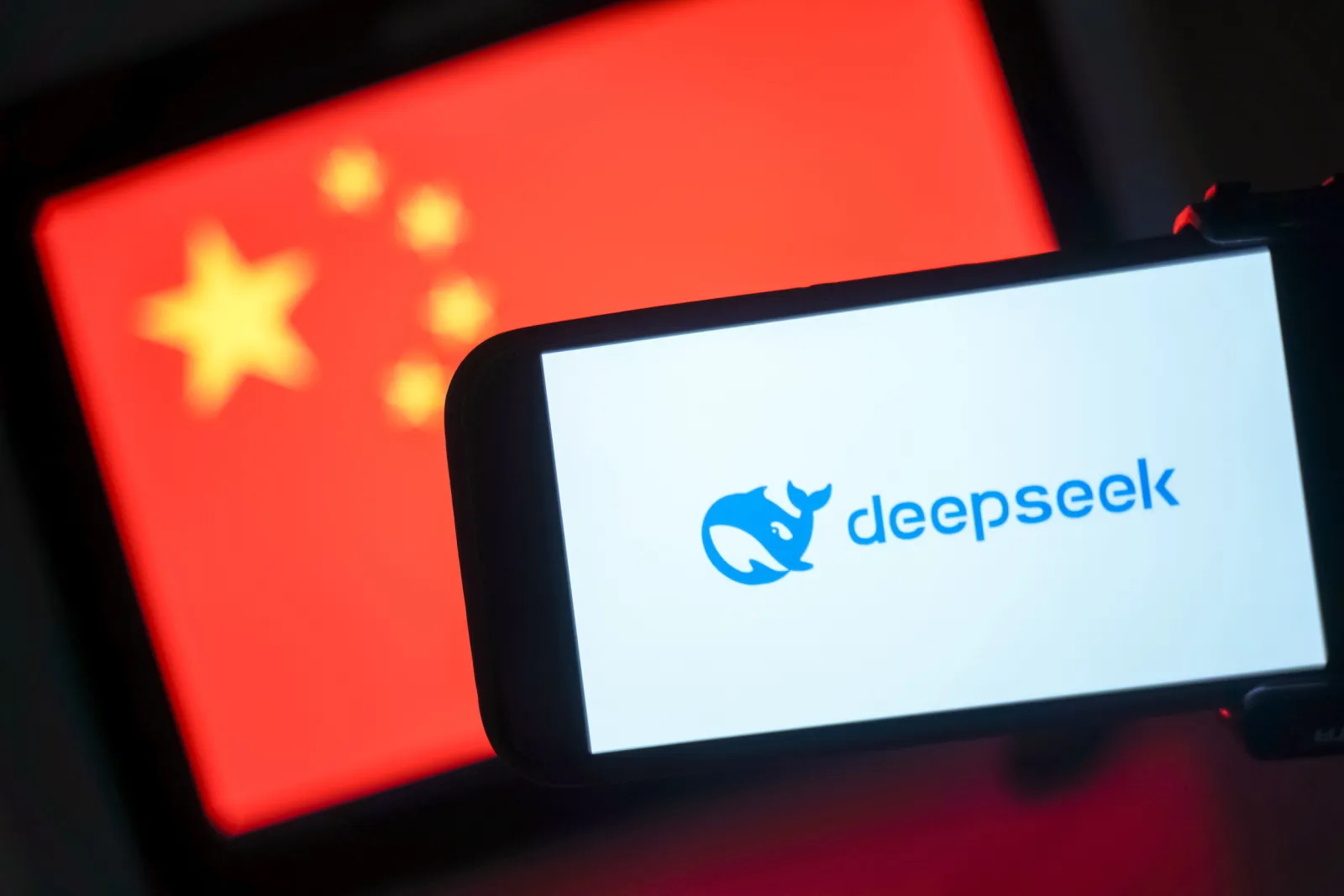
Chinese startup DeepSeek claims to have developed its high-performing AI tool using a fraction of the computing power that U.S. tech companies have needed to train an AI large language model (LLM).
Read More on News
The news roiled tech stocks this week because DeepSeek's apparent success undermined the presumption that U.S. tech companies would dominate AI through size, leveraging bigger data sets and building bigger data centers to provide that computing power.
...
DeepSeek's claims of greater computing efficiency also raise questions about recent projections of escalating energy demand to power those bigger data centers. If DeepSeek can do more with less, maybe the broader tech sector can do the same.
"The emergence of DeepSeek is one example of what might be possible as this nascent technology continues to scale," Larsen said.
Arvind Ravikumar is co-director of the Energy Emissions Modeling and Data Lab at the University of Texas at Austin, where he is an assistant professor. Ravikumar explained that DeepSeek's efficiency was borne out of necessity. U.S. policy limits microchip sales to Chinese companies, creating a radically different environment than the AI developers in the U.S. had.
"There was not a need to think about efficiency, you can just add more chips," Ravikumar told Newsweek in an email. "What this means is that there are significant unrealized efficiency gains in AI [computing] that could reduce energy consumption. At least, the markets think so."
Tech stocks weren't the only sector affected by DeepSeek. Some energy companies took a hit as well, as investors reasoned that the projected power demand growth for AI data centers might be overblown.
As Newsweek has reported, several research groups have found that electricity use by data centers in the U.S. and globally will likely grow rapidly in the coming few years. A report last month from the Department of Energy found that data center energy use could triple by 2028, growing to consume up to 12 percent of the country's total electricity output.
However, that study and others like it carry the caveat that there is a lot of uncertainty involved in the projections.
Tom Wilson, principal technical executive for energy systems and climate analysis at the nonprofit Electric Power Research Institute, said researchers try to account for gains in efficiency when they calculate energy demand.
"Dramatic efficiency improvements of large language models are not only expected but necessary to drive down costs and make AI tools accessible to all," Wilson said via email.
Several tech companies are off target for their net-zero climate objectives as data center buildout and energy-intensive investments in AI push their total emissions of greenhouse gases higher. It's tempting to think that more efficient AI models could help. But, as with most things relating to this rapidly evolving technology, it's complicated.
"I don't think they've cracked the efficiency problem, per se," Sasha Luccioni, artificial intelligence researcher and climate lead at the AI company Hugging Face, told Newsweek via email.
The Big Tech companies' approach to LLM training "was bound to hit a wall at some point," Luccioni said, and a less resource-intensive alternative like DeepSeek was inevitable.
However, she cautioned, training is not the end goal of AI models and not the only thing about them that consumes power and produces emissions. AI models also get put to use by consumers, and each use—called an "inference" in AI speak—also gobbles up a small amount of energy. Luccioni said that the DeepSeek model might be more efficient in training but does not appear to be any better than comparable models when it comes to inference.
"So, all of those gains would be lost as more and more people use the model in practice," she said. "I think focusing on efficient inference is just as, or even more, important than training."
Larsen at Rhodium Group voiced similar concern that greater AI use would overwhelm any efficiency gains.
"If it's cheaper to build and access models like DeepSeek, consumer demand for AI services may be higher," Larsen said. "That could lead to higher electric demand from inference."
Ravikumar at the University of Texas said that while we should be skeptical of "overhyped claims" of electricity demand increases for AI, demand growth is coming.
The key question, he said, is whether that new power demand will be manageable on a time scale that power suppliers can meet with clean sources.
Power plants that people decide to build today will likely last for decades, and any carbon emissions they produce will last for decades more, Ravikumar said.
"How we respond today to increasing electricity demand will determine whether we can achieve our emissions reduction goals," he said.
Newsweek is hosting the first AI Impact Awards this year to recognize the best use of AI to solve practical problems in a range of areas, including sustainability.
View 0 Comments
Submit Correction
View Editorial & AI Guidelines