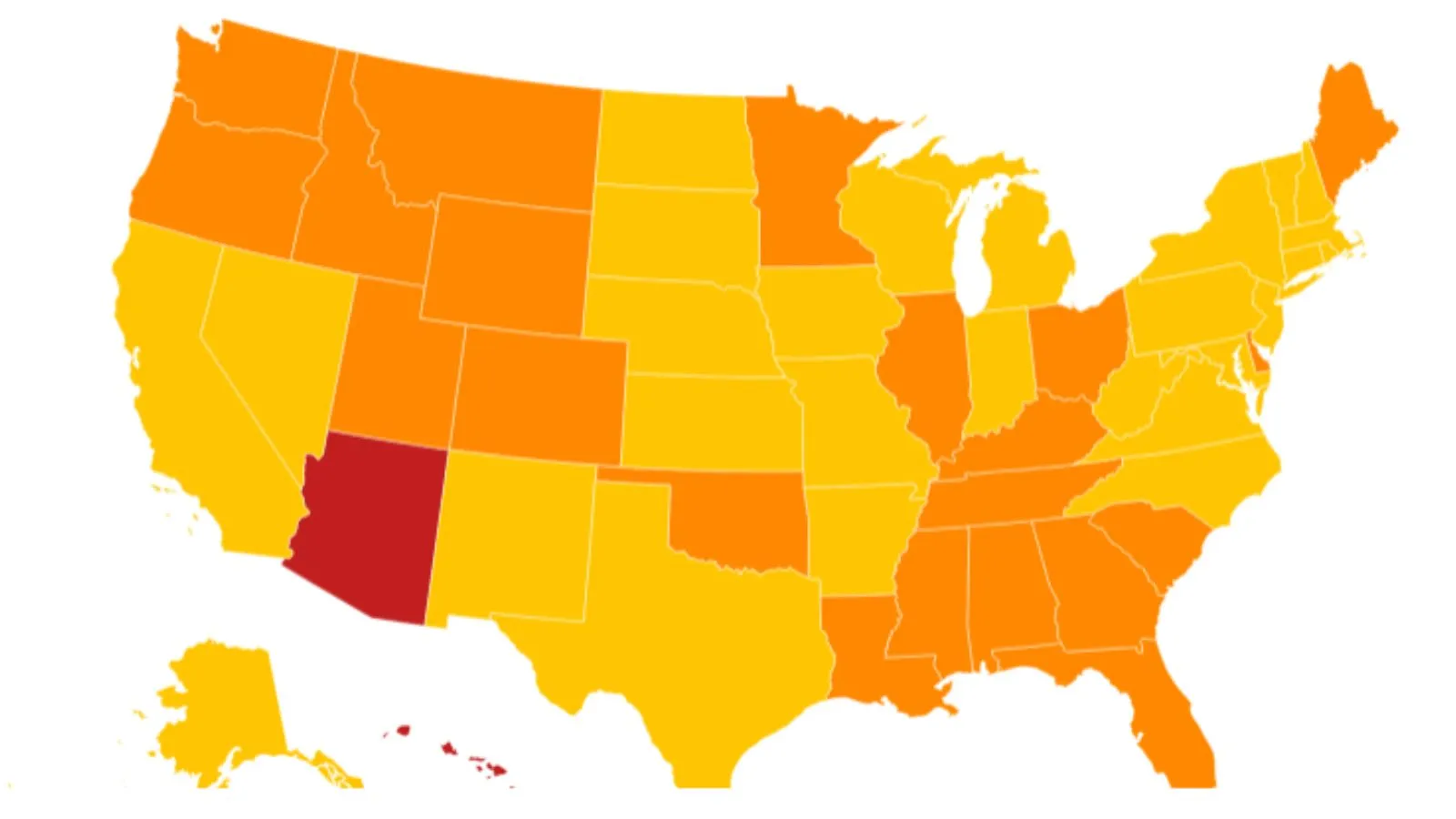
Flourish/Daylight Savings Map

By Theo Burman
Live News Reporter
0
Share
Newsweek is a Trust Project member
See more of our trusted coverage when you search.Prefer Newsweek on Googleto see more of our trusted coverage when you search.
With President Donald Trump's return to the White House, the debate around Daylight Saving Time has rekindled.
President-elect Donald Trump has pledged to abolish DST, labeling it as "inconvenient and costly, and he's not alone in that sentiment. Two states already don't follow Daylight Saving Time, and 20 states are considering scrapping the policy.
Why It Matters
Daylight Saving Time in the U.S. is the practice of setting clocks forward by one hour in the spring and setting them back by one hour later in the year. This system is designed to make better use of daylight during the longer days of summer, but it comes under criticism for disrupting sleep patterns and adversely affecting both mental and physical health.
Read More on News
What To Know
Daylight Saving Time is currently followed in 48 states. Hawaii and Arizona (with the exception of the Navajo Nation) are the only two states that do not follow the policy, with Arizona switching to a permanent time in 1968.
Additionally, the territories of American Samoa, Guam, the Northern Mariana Islands, Puerto Rico, and the United States Virgin Islands, also all follow a permanent time.
Over the last six years, 20 states have seen legislation at the local level aimed at switching away from DST. Those states are:
- Oregon
- Washington
- Idaho
- Montana
- Wyoming
- Utah
- Colorado
- Tennessee
- Louisiana
- Alabama
- Maine
- Florida
- South Carolina
- Oklahoma
- Minnesota
- Illinois
- Ohio
- Kentucky
- Mississippi
- Georgia
The most recent addition to the list is Maine, where a bill that would move the state to Eastern Standard Time permanently was brought to the state legislature on Thursday.
Similar action is being taken in Illinois, which saw two bills be considered by its House Rules Committee on Wednesday that would abolish DST there.
The concept of daylight saving time was first federally introduced during World War I with the Standard Time Act of 1918. Though the federal enforcement of the law was later repealed, it remains the norm for the majority of states in the U.S.
What People Are Saying
In December 2024, Donald Trump said: "The Republican Party will use its best efforts to eliminate Daylight Saving Time, which has a small but strong constituency, but shouldn't! Daylight Saving Time is inconvenient, and very costly to our Nation."
**In a statement to Newsweek, Illinois State Representative Bob Morgan said: "**Since I joined the legislature six years ago, I've introduced a bill every session to end the nightmare of Daylight Saving Time. Anyone with small children knows the struggle of moving the clocks forward—losing sleep and dealing with the ripple effects on our kids, their moods, and their productivity throughout the day.
"Ending this practice wouldn't just benefit families; it would also help businesses. Allowing them to stay open longer while it's still daylight outside would boost customer activity and strengthen their bottom line."
What Happens Next
Legislation in Maine, Illinois and Utah is set to be considered by those states' legislatures, which could see all three move away from the DST system in the next few months.
Do you have a story we should be covering? Do you have any questions about this article? Contact LiveNews@newsweek.com.
View 0 Comments
Submit Correction
View Editorial & AI Guidelines