- U.S.
- World
- Science
- Health
- Life
- Rankings
- Opinion
- Entertainment
- Fact Check
- My Turn
- Education
- EventsSportsPodcastsBetter PlanetBetter WorkplacesMightierAutosNewslettersUnconventionalVantageExpertsLeadershipDev Pragad
- Subscribe

- Login
×
Subscribe Login
- U.S.
- World
- Science
- Health
- Life
- Rankings
- Opinion
- Entertainment
- Fact Check
- My Turn
- Education
- Events
- Sports
- Podcasts
- Better Planet
- Better Workplaces
- Mightier
- Autos
- Newsletters
- Unconventional
- Vantage
- Experts
- Leadership
- Dev Pragad
Dato Lau Beng Long
Home > Rankings Portal
Share
Share on Facebook Share on Twitter Share on LinkedInShare on RedditShare on Flipboard Share via Email Comments
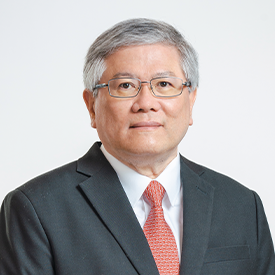
Dato' Lau Beng Long
Sunway Healthcare Group

Company Info
Sunway Healthcare Group
5 Jalan Lagoon Selatan
Bandar Sunway
47500 Subang Jaya
Selangor Malaysia
About
With 42 years of experience, Dato' Lau leads the health care division of the Sunway Group. Sunway Healthcare Group (SHG) currently has five hospitals around Malaysia, specialist day ambulatory care centers, complementary care centers, home healthcare services, as well as a senior living residence, Sunway Sanctuary.
SHG's expansion plans include owning and operating five additional hospitals, totaling 10 hospitals, with a combined 3,500 beds by 2030.
This vast network of hospitals will allow SHG to participate in the government's public-private partnership scheme. In addition, the comprehensive tertiary and quaternary clinical services provided by Sunway Medical Centre, with 1,150 beds by 2026, will position it as a leading medical tourism hospital in Malaysia and ASEAN.
The Sunway Clinical Research Centre and Sunway Postgraduate Training Centre were established for clinical research and postgraduate medical education and training, leveraging its multiple international partnerships.
Dato' Lau holds a Bachelor of Science (Hons) from Universiti Sains Malaysia, a Master of Healthcare Administration from University of New South Wales, an MBA from Southern Cross University, Australia, and attended the Healthcare Quality Leadership Program at Harvard Medical School, U.S.
Education
- Master of Healthcare Administration
University of New South Wales, Australia - Bachelor of Science (Hons)
Universiti Sains, Malaysia - Master of Business Administration
Southern Cross University, Australia
Awards & Certifications
- Association of Private Hospitals Malaysia
Board member - Harvard Medical School
Healthcare Quality Leadership Programme
Philanthropic Endeavors
- Kasih Hospice Foundation
Board of Directors member
Links to Rankings during tenure
Past Rankings Appearances

Was there a particular experience that planted a seed for your interest in health care?
I am from a relatively poor family in Malaysia. My experience of contact with health care came early - both my parents were relatively sick even though they were young. As the eldest in the family, I had to take them to all these different health care facilities. That was my early contact.
One can be poor, but it's even worse if one is poor and sick, because you have to maneuver around public health care services, which can be quite challenging. That experience shaped my outlook and my vocation, to pursue a career where I can make a difference in health care.
How did you start on that trajectory?
[Studying] medicine is a pretty long course that I couldn't afford. I pursued a degree in biology, majoring in microbiology, which helped me understand diseases, prevention and treatment.
How did you transition towards leadership?
After graduating, I pursued the public sector. I was recruited into the National Administrative Service and worked in the Ministry of Agriculture, where I planned and implemented the country's different agricultural policies and projects, but that really wasn't what I wanted to do. I had my first break in health care in a thriving private hospital fully owned by medical specialists.
I became general manager of that hospital and helped build it up. Next, I was offered a job in Singapore to join a for-profit hospital, nursing home and hospice group. I then joined the Franciscan Missionaries of the Divine Motherhood (FMDM), which owned a hospital, a nursing home, and a cancer hospice. That exposed me to the not-for-profit sector, which I really wanted: perspective on different operating models.
After that, I had an offer to return to Malaysia to start a new hospital. And that's with my current company, which is the conglomerate Sunway Healthcare Group. So it was a totally greenfield project. I'd been managing existing facilities, and that was a chance to be involved in commissioning a new hospital.
Then I was back here for four years and got the hospital up and running. Then I returned to FMDM in Singapore to help oversee their Singapore and Malaysia operations for a couple years, then Sunway Group pulled me back to expand their existing hospital.
The Sunway Group's vision today includes expanding throughout Malaysia and the ASEAN region. I helped expand the current hospital from 200 beds to 810 beds today, and by next year it'll be 1,100beds. The main hospital, the hub, is Sunway Medical Center, with another four throughout Malaysia. We plan to expand from five hospitals to 11 and are now planning those.
What year did you set up the first hospital for Sunway?
It was in 1997 during the Asian financial crisis.
After contributing to the establishment of the first hospital for the first four years, I left in 2001. I returned to Sunway Medical Center in 2011 and have since continued working closely with architects and consultants on our expansion plans.
Besides overseeing this expansion, we are also expanding to new hospitals. So I've planned and project-managed and commissioned other hospitals.
It's also very important to expand the continuum of care, and so I've added things like home health care services, hospice services and traditional and complementary medicine. I also have a few offerings of traditional complementary medicine (TCM) set up.
Then about three years ago I completed the first senior facility for independent assisted living, with 473 rooms.
What personal values guide you as a leader and how do they shape your vision for Sunway Healthcare Group?
My personal value is to be passionate in whatever you pursue and have a greater sense of purpose in life beyond making sure you can take care of yourself and your family, to make a difference to the society where you live. My perspective has always been that we need to contribute, to make a difference to others, especially in health care. To pursue that requires commitment. And there will be obstacles along the way, so you need focus and a deep sense of purpose.
We should also help to groom others. Because health care is all about frontline services, where you need lots of talented, driven professionals with compassion and respect for life. I like to mentor and I'm glad that I have mentored a number of executives along the way.
Doctors have choices as to where they will join when they leave the public service, so the facility must be a supportive ecosystem [that offers] what they need to provide the level of care they are expected to deliver. In a private-sector facility, competition is serious, especially here where there's a shortage of doctors.
And trust is very important. I deal with billions of dollars of investments – a new hospital costs hundreds of millions and integrity and honesty are important when making sure you get the best arrangements for your shareholders.
Because we deal with patients' safety, we have to strive for excellence. I make sure that these values are all passed down the organizational culture.
How does the organization ensure consistently high standards across so many hospitals?
To ensure clinical standards across five hospitals and another six in the future, it's critical to have established center operating procedures, clinical protocols and clinical practices.
We benchmark against international accreditation bodies. Also, we aim to learn from the world's best. We have fellowship, clinical attachments, continuing medical education sessions that bring in key knowledge leaders from abroad to share and guide our clinicians. We also have collaborations for our research and continuing education, with institutions like the University of Cambridge.
How do you embed personalized patient care within such a large network?
It's about being patient-centric in the way we run the hospital. Patients' needs are paramount.
We make sure that doctors and nurses are well supported. We engage with them constantly to understand our strong points and gaps, which helps us continuously improve.
We also gather patient feedback and leverage that information to elevate our standard of care. Nonclinical feedback also is valuable because in a private setting, patients might expect almost a hospitality standard. We run our hospitals like hotels and personalize care to make everything more comfortable and convenient.
How does hospitality influence your strategy in becoming a medical tourism destination?
In cultures like Thailand, Malaysia, Indonesia and Japan, hospital hospitality is better because of their whole cultural aspect of service.
Reaching out to more medical tourists is a main strategic plan. We market our services abroad, especially in ASEAN countries and today roughly 60 percent of our international patients come from Indonesia.
When you receive feedback, is the driver procedural/technical, hospitality-based, or equally split?
It's equally split, but because we get patients largely from countries with less-developed health care systems, feedback is more for high-end super specialty care. Another part is the charges of affordability because in Malaysia, our total health care cost in private care is slightly more expensive than in Indonesia. Singapore is three times more expensive than Malaysia.
Sunway plans to double its network by 2030. What strategic considerations guide those plans?
The main reason is growing demand for private health care in Malaysia and the ASEAN regions, countries that face aging populations and a rise in non-communicable diseases.
Government hospitals are overwhelmed, and our medical insurance [in Malaysia] is privately purchased. So, with corporations or employees buying more insurance, there's also this growing uptake in private hospitals. We want to expand to be in the capital cities of each of Malaysia's 13 states.
How is Sunway Healthcare leveraging technology to improve patient outcomes and operational efficiency?
We have adopted automation and an electronic health report system so that clinicians can access a database instead of hard copies. All doctors' and nurses' notes, all lab results are there. Clinicians can use that intelligence information to analyze or compare cases.
We have an automated outpatient-inpatient dispensing system because of the volume we deal with, and automation at nursing stations. To assist surgeons, the operating theater also uses automation like robotics-assisted systems, including Da Vinci Xi Robotic Surgical systems (WCI), Mako (KO), ROSA Knee and Medtronic AiBle Spine Surgical Suite.
Automating also cuts down the number of workflow steps and helps procedures become less invasive, potentially resulting in fewer complications.
How does the adoption of new technology affect patient experience and outcomes?
From the patient-experience perspective, automation and digitization have helped to streamline processes and touch points. The SunMed app enables patients to skip a central registration counter; because it is all digitized, patients are moved through processes quickly. Patients get admitted into the room and then registration takes place there. Discharge can take place there as well, because medication is dispensed where you are discharged - in the ward. It also enables patients to find a doctor in a particular discipline and schedule appointments.
It also stores the patient's medical and appointment history. Those records can be accessed with a PIN. These technologies have reduced risks and shortened hospital stays. The app is still a work in progress because things evolve and demands are complex.
How have you addressed the biggest challenges of leading such a large health care network?
Like any enterprise, the biggest challenge is access to capital as well as asset allocation. Because we are expanding, we have to first raise funds. Another challenge is [procuring] talent.
Another challenge as we expand is to have consistent, standardized organizational culture – our mission, vision and value system, and to make sure that it permeates across all levels.
As a leader, how do you get that talent and create unified culture?
We've got to be clear as to what we stand for and then share those statements among all stakeholders. It has to start with the top echelon and then hopefully it reaches the frontline staff here. It's important also to be seen on the ground. I make rounds so that I can talk with staff members. I encourage all my leaders to do their rounds. You also have formal ways, like team building, meetings, etc.
What is your vision for the future of Sunway Healthcare Group?
To continue to further leverage what we have achieved so far. As the country's largest quaternary and tertiary hospital, we need to continuously improve on being a referral center.
We must further improve on our involvement in clinical trials, research and teaching. We hope to attract the frontier clinical trials from pharma and med tech companies. The third will be teaching.
We will also set up more ambulatory care centers, which can take care of simpler cases, to drive down costs of hospital care. We also will roll out a home care service.
What excites you most about Sunway's future?
The most exciting part will be increased collaboration between governments and private services. Sunway will be ready.
It's remarkable that you have achieved the full circle, from a child wanting to integrate health care for the good of society and here 40 some years later, having made it happen.
I feel very blessed that I'm able to achieve my dream.
 Visit our rankings portal
Back To Top


U.S.WorldScienceHealthRankingsOpinionEntertainmentFact CheckMy TurnEducationEventsSportsPodcastsBetter PlanetBetter WorkplacesMightierAutosNewslettersUnconventionalVantageExpertsLeadershipDev Pragad
Trending
Israel at War Vladimir Putin Russia-Ukraine War Donald Trump
Subscriptions
Membership Monthly $4.99 Membership Yearly $49.00 Membership+Print Monthly $9.99 Membership+Print Yearly $99
Newsletters in your inbox See all
The Bulletin (Daily)See Sample
The Gist of It (Daily)
Geoscape (Twice a Week)
The 1600 (Daily)
Inside Trump Policy (Weekly)
Newsweek AI (Weekly)
Sports Daily (Daily)
The Josh Hammer Report (Weekly)See Sample
For The Culture (Three Times a Week)See Sample
Discoveries (3 Times a Week)
Like & Subscribe (Daily)
Breaking News (As it Breaks)
The Debate (Twice a Week)
Pawsitively (Daily)
Better Planet (Weekly)
The Good Life (Weekly)
Newsweek Pulse (2x3 Times a Month)
Sign up now
You can unsubscribe at any time. By signing up you are agreeing to our Terms of Service and Privacy Policy
In The Magazine  September 19
2025 Issue
Company
About UsMastheadDiversityAnnouncementsArchivePolicies and StandardsMission StatementLeadershipNewslettersPress Center
Editions:
Contact
AdvertiseCareersContact UsCorrections
Terms of Use
Cookie PolicyCopyrightPrivacy PolicyTerms & ConditionsTerms of Sale Privacy Settings
© 2026 NEWSWEEK DIGITAL LLC