10
Loading video...


By Anna Skinner and Gabe Whisnant
0
Share
Newsweek is a Trust Project member
See more of our trusted coverage when you search.Prefer Newsweek on Googleto see more of our trusted coverage when you search.
Two deaths have been linked to the nationwide cyclosporiasis outbreak by the Michigan Department of Health and Human Services, and they appear to be the first fatalities officially connected to the illness.
Both individuals had contributing factors that may have been complicated by cyclosporiasis, said officials.
"Two deaths have been identified as part of the cyclosporiasis outbreak affecting Michigan. According to medical records, both individuals had significant underlying health conditions that may have been impacted by cyclosporiasis and dehydration. No additional information will be provided on these two cases," the MDHHS said in its most recent update.
Read More on U.S.
However, fewer cyclospora cases have been reported to Michigan health officials when compared to past weeks, an MDHHS spokesperson told Newsweek, with fewer people reporting new onset of symptoms as well, allowing the department to say it has "growing confidence that the outbreak is declining."
Newsweek reached out to the CDC by email for comment.
The Latest on the Cyclospora Outbreak in the US
According to the CDC, the 2026 cyclospora season has seen an unusually large increase in illnesses nationwide. Since May 1, the agency has received reports of 6,707 laboratory-confirmed domestically acquired cases and is aware of more than 11,500 additional cases that are either unconfirmed or still under investigation, with many reported by Michigan and Ohio. The CDC is investigating several clusters of infections, including a multistate outbreak linked to iceberg lettuce, and notes that reported case counts likely underestimate the true number of illnesses because many infections go undiagnosed or have not yet completed the reporting process. The agency says cyclospora cases typically rise during the May-to-August season and has begun issuing weekly surveillance updates because 2026 case levels are significantly higher than those seen during the same period in 2025.
The outbreak linked to iceberg lettuce has sickened at least 1,947 people and resulted in at least 98 hospitalizations across nine states.
Michigan Cyclospora Deaths: What We Know
The deaths come as Michigan's outbreak continues to grow. As of August 3, MDHHS reported 11,234 cases statewide and 193 hospitalizations. The true number of infections may be even higher because many people recover without seeking medical care or are never tested for the parasite.
Health authorities stress that cyclosporiasis is generally not considered life-threatening, but severe diarrhea and vomiting can lead to dangerous dehydration, particularly among older adults and people with underlying health problems. Investigators continue to examine the outbreak's source.
...
What Foods Should You Avoid During the Cyclospora Outbreak?
Public health officials have not advised consumers to avoid all fresh produce, but they are urging people to pay close attention to outbreak notices and recalls. In the current U.S. outbreaks, investigators have linked illnesses to products containing iceberg lettuce, prompting several recalls from Taylor Farms. Consumers should check for ongoing FDA and CDC updates and avoid any recalled products or foods identified as part of outbreak investigations.
Newsweek reached out to Taylor Farms by email for comment.
Cyclospora is spread when food or water becomes contaminated with the microscopic parasite, often before it reaches consumers. While washing fruits and vegetables is always recommended, experts note that Cyclospora can be particularly difficult to remove completely through rinsing alone. If a specific product is implicated in an outbreak, the safest approach is to avoid eating it until health officials determine the contamination risk has passed.
For people who want to be especially cautious about Cyclospora exposure during an outbreak, fruits and vegetables with thick, removable outer peels are generally considered a lower-risk option because any contamination is more likely to remain on the surface that is discarded before eating. Examples include bananas, oranges, avocados, melons, and mangoes.
Cooking is the most reliable way to kill or inactivate the parasite, making thoroughly cooked fruits and vegetables a safer choice than raw produce during an outbreak.
What Is Causing the Cyclospora Outbreak?
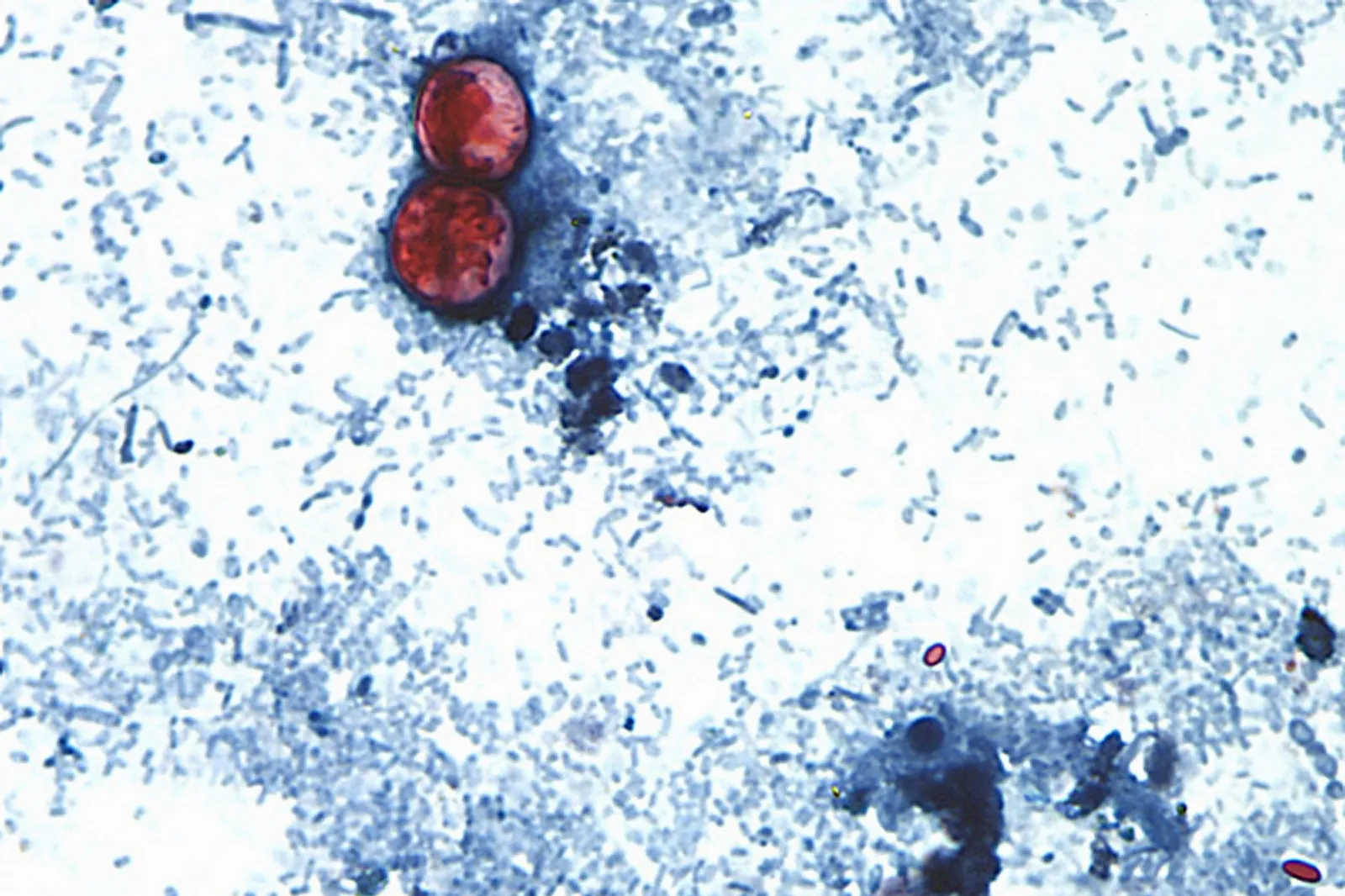
Cyclospora infections are caused by the parasite Cyclospora cayetanensis. People become sick after consuming food or water contaminated with the parasite, which is most commonly associated with fresh produce. Unlike many foodborne bacteria, Cyclospora typically requires days to weeks in the environment before it becomes infectious, meaning the parasite is generally not spread directly from one sick person to another.
The source of contamination in each outbreak can vary and is often difficult to identify. Investigators frequently trace cases to fresh fruits, vegetables, herbs, or leafy greens that may have been exposed to contaminated water or unsanitary conditions during growing, harvesting, or processing. In the current investigations, federal and state officials are continuing to examine supply chains to determine exactly how the contamination occurred and whether additional products may be involved.
Federal investigators say their findings suggest lettuce imported from Mexico and served at Taco Bell locations in at least five states may have contributed to a Cyclospora outbreak cluster amid a broader increase in cases nationwide.
What Symptoms Are Associated With Cyclospora, and How Do You Treat It?
Cyclospora infection, known as cyclosporiasis, most commonly causes prolonged, watery diarrhea that can be explosive. Other symptoms can include loss of appetite, stomach cramps, bloating, nausea, fatigue, weight loss, and sometimes a low-grade fever. Symptoms often begin about a week after a person consumes contaminated food, though the timing can vary from person to person.
Without treatment, symptoms can last for days or even weeks and may come and go over time. The standard treatment is the antibiotic combination trimethoprim-sulfamethoxazole (TMP-SMX), according to the CDC. Most people recover fully with appropriate treatment, but anyone experiencing severe diarrhea, dehydration, persistent symptoms, or signs of illness after eating recalled products should contact a healthcare provider. Staying hydrated is especially important while recovering from the infection.
Cyclosporiasis Outbreak
Check out Newsweek's latest coverage:
- Taylor Farms Says FDA Has Apologized Over ‘False Positive’ Cyclospora Test
- Cyclospora Patient Reveals What Symptoms are Really Like as Outbreak Spreads
- Which Salad Greens Are Safe From Cyclospora Parasite? List of Companies, Where to Buy
- What Kills Cyclospora? Food Safety Tips Amid Explosive Diarrhea Outbreaks
- Medicine To Treat ‘Explosive’ Diarrhea Outbreaks Could Cause More Diarrhea
- Cyclospora Isn’t the Only Parasite in Fresh Produce—Experts Warn of Others
- How Long Does Cyclospora Incubate? Symptoms To Watch For, How to Treat It
- Where Does Cyclospora Parasite Come From? How to Protect Yourself
Contact Newsweek editors on this story: Gabe Whisnant, Trevor Davies and Gray R. Thomas.
View 0 Comments
Submit Correction
View Editorial & AI Guidelines