...

By Ian Randall
Deputy Science Editor
0
Share
Newsweek is a Trust Project member
See more of our trusted coverage when you search.Prefer Newsweek on Googleto see more of our trusted coverage when you search.
Paleontologists have discovered the fossilized remains of a pterosaur from 76 million years ago—bearing a bite mark from an ancient relative of the crocodile.
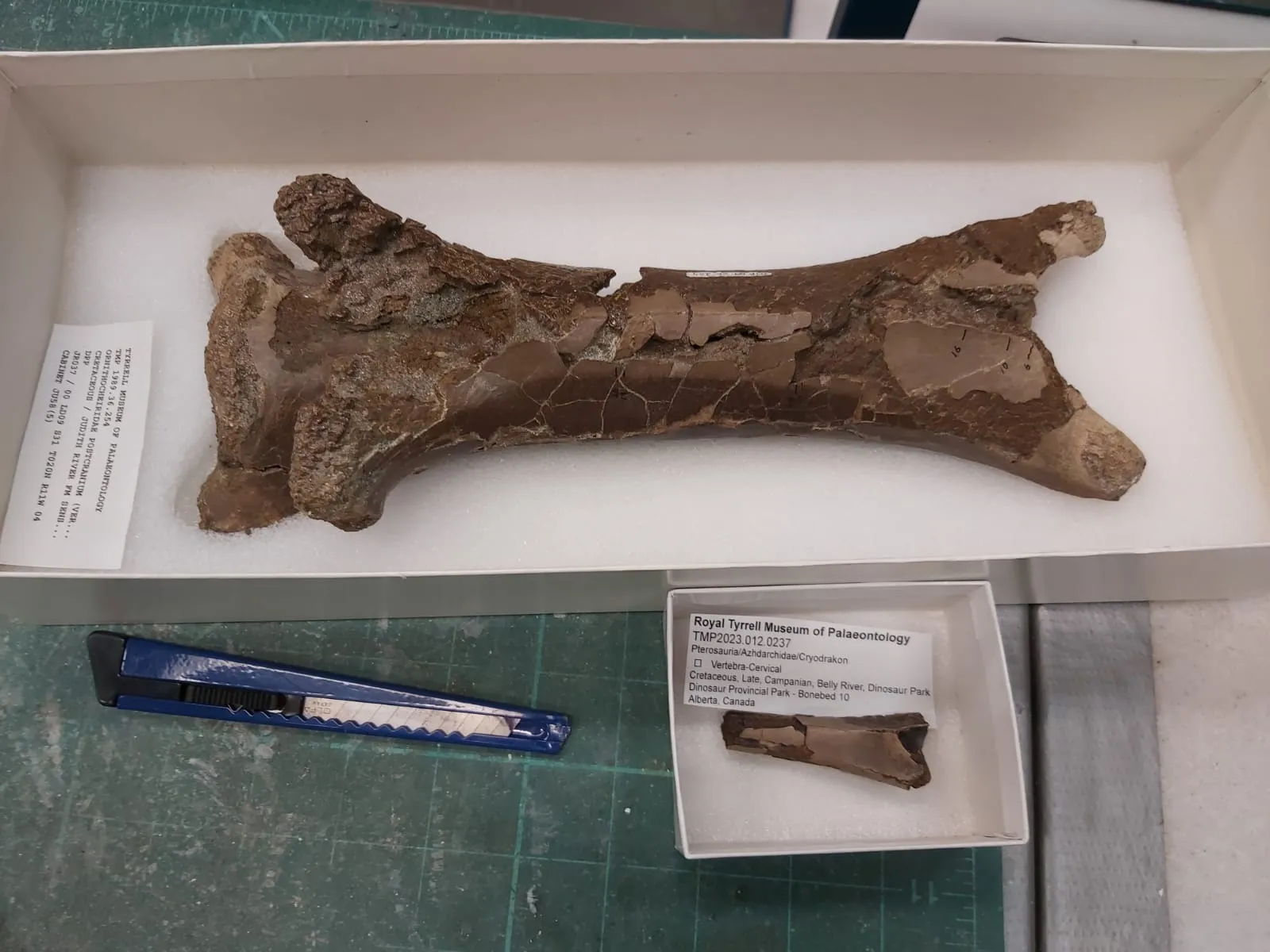
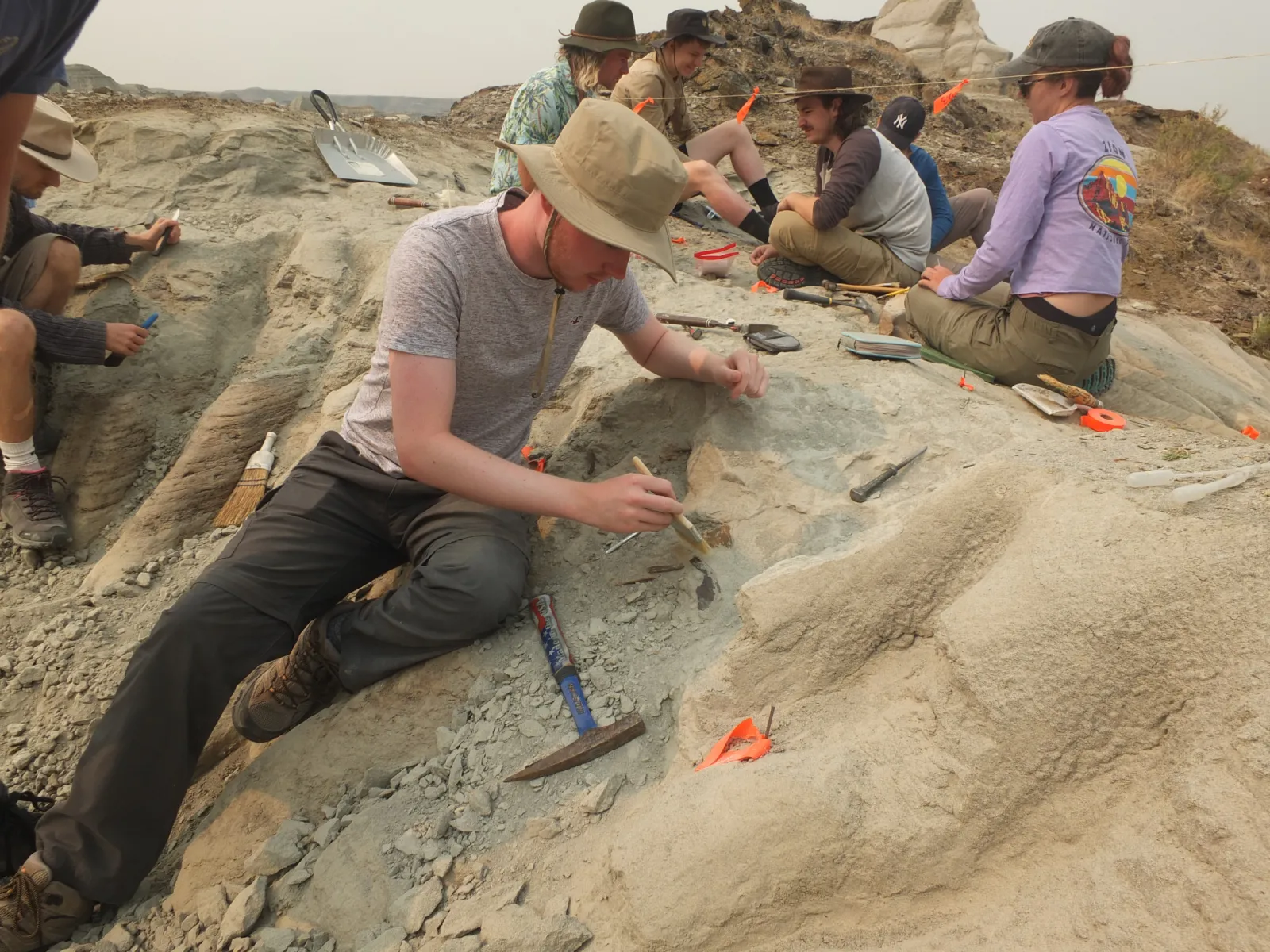
The flying reptile, represented by a vertebra from the neck, was found in Dinosaur Provincial Park in Alberta, Canada, in July 2023.
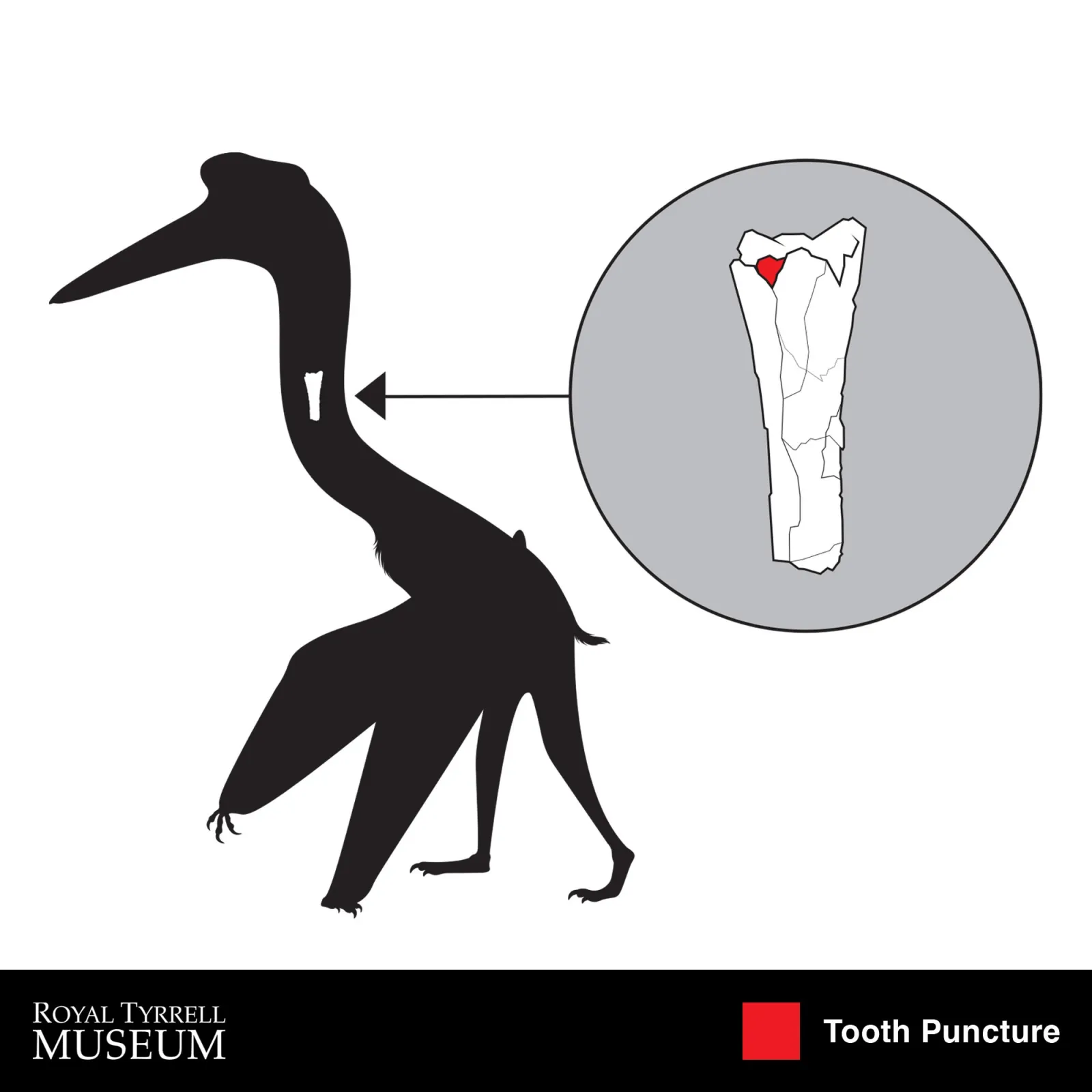
The revelation of a 0.16-inch-wide tooth mark on the neck bone, the researchers said, provides a special insight into predator-prey dynamics of the Cretaceous Period.
Read More on Science
"Pterosaur bones are very delicate—so finding fossils where another animal has clearly taken a bite is exceptionally uncommon," lead author Caleb Brown of the Royal Tyrrell Museum of Palaeontology in Drumheller, Alberta, said in a statement.
"This specimen being a juvenile makes it even more rare."
...
According to the researchers, the punctured vertebra appears to have come from a young pterosaur of the family Azhdarchidae.
The juvenile likely had a wingspan of roughly 6.5 feet. Had it reached adulthood, this figure might have reached nearly 33 feet.
In the study, the team took micro-CT scans of the fossil and compared it with other pterosaur specimens. This allowed them to confirm that the puncture was indeed a bite mark, and not damage endured during either the fossilization process or its excavation.
...
...
"Bite traces help to document species interactions from this period," paper co-author and ecologist Brian Pickles of the University of Reading, England, said in a statement.
"We can't say if the pterosaur was alive or dead when it was bitten, but the specimen shows that crocodilians occasionally preyed on, or scavenged, juvenile pterosaurs in prehistoric Alberta over 70 million years ago."
This is the first time that evidence of an ancient crocodilian's bite on a pterosaur has been found in North America. However, examples of Azhdarchid fossils bearing possible crocodilian bites have previously been unearthed in Romania.
Do you have a tip on a science story that Newsweek should be covering? Do you have a question about ecology? Let us know via science@newsweek.com.
Reference
Brown, C. M., Bell, P. R., Owers, H., & Pickles, B. J. (2025). A juvenile pterosaur vertebra with putative crocodilian bite from the Campanian of Alberta, Canada. Journal of Paleontology, 1–10. https://doi.org/10.1017/jpa.2024.12
View 0 Comments
Submit Correction
View Editorial & AI Guidelines