...

By Jess Thomson
Science Reporter
0
Share
Newsweek is a Trust Project member
See more of our trusted coverage when you search.Prefer Newsweek on Googleto see more of our trusted coverage when you search.
COVID-19 levels in sewage and wastewater are falling across the country, according to new data from the U.S. Centers for Disease Control and Prevention (CDC).
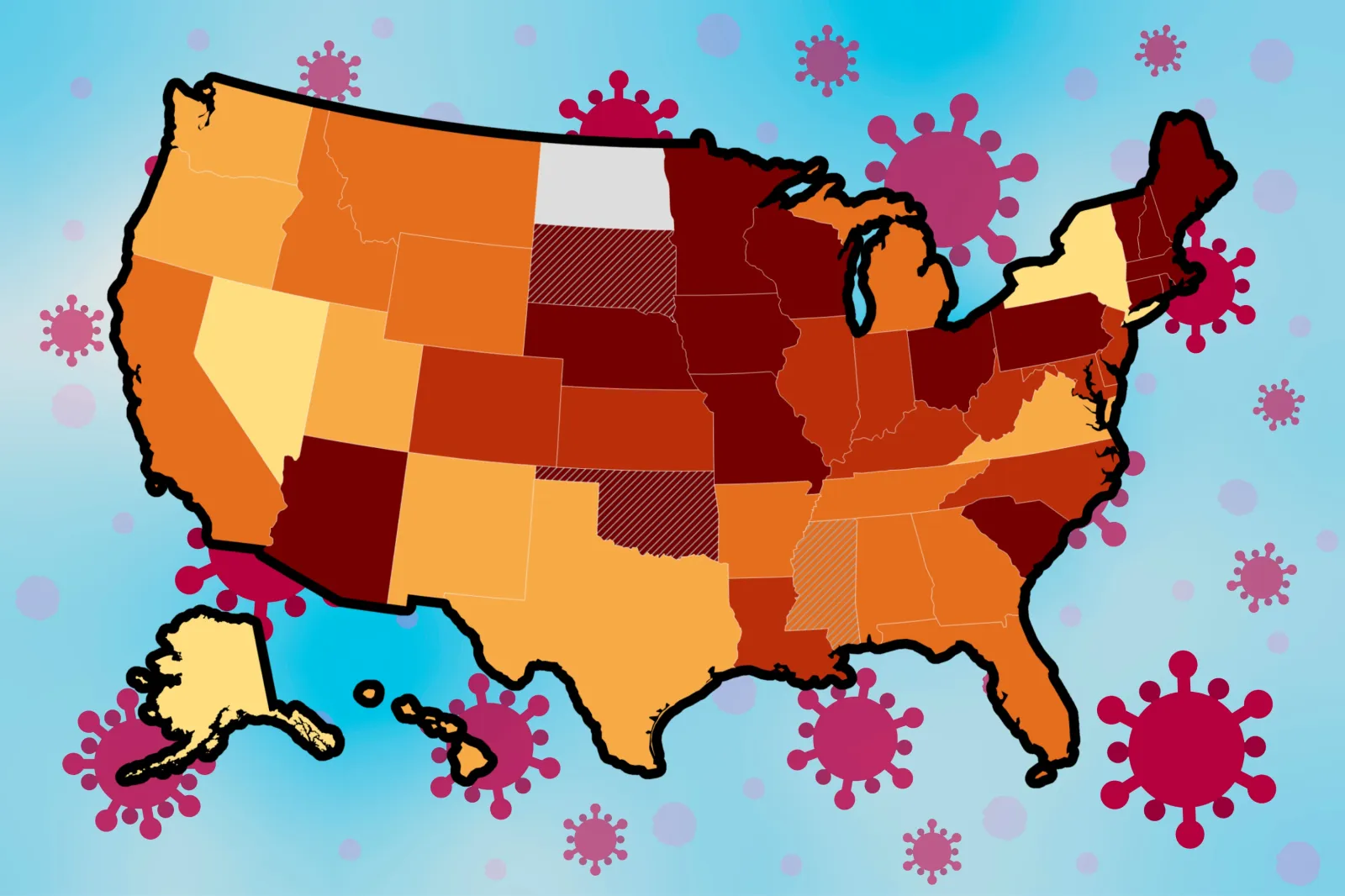
Seventeen states around the U.S. reported "very high" wastewater levels of SARS-CoV-2—the virus that causes COVID-19—during the week between January 5 and January 11.
This is a drop from the week before, where 20 U.S. states (as well as D.C.) had very high levels. The week before that, between December 22 and December 28, 16 states had "very high" levels of the virus.
Read More
California Set for Much Needed Rain, but It Comes With Mudslide Risks3 min read

Florida Heroes Rescue Sea Turtles From Freezing Waters3 min read

Vet Reveals How To Keep Your Dog Safe in the Cold and Snow4 min read

"The wastewater viral activity levels may indicate the risk of infection in an area," the CDC explains.
According to the newest CDC data, Arizona, Connecticut, Iowa, Maine, Massachusetts, Minnesota, Missouri, Nebraska, New Hampshire, Ohio, Oklahoma, Pennsylvania, Rhode Island, South Carolina, South Dakota, Vermont and Wisconsin all reported "very high" levels of COVID-19 in their wastewater for this period.
Colorado, Delaware, Illinois, Indiana, Kansas, Kentucky, Louisiana, Maryland, New Jersey, North Carolina, West Virginia and D.C. all had "high" levels of the virus present in wastewater, while Alabama, Arkansas, California, Florida, Georgia, Idaho, Michigan, Mississippi, Montana, Tennessee and Wyoming had "moderate" levels.
The wastewater in Hawaii, New Mexico, Oregon, Texas, Utah, Virginia and Washington all had "low" levels of COVID-19, and Alaska, Nevada and New York had "minimal" levels.
North Dakota had no data available for this period, and Oklahoma, South Dakota, and Mississippi had "limited coverage" for this week's data, which means that their viral activity level is "based on a small part (less than 5 percent) of the population and may not represent viral activity levels for the entire state or territory," according to the CDC.
"Wastewater monitoring can detect viruses spreading from one person to another within a community earlier than clinical testing and before people who are sick go to their doctor or hospital. It can also detect infections without symptoms," the CDC explained.
"If you see increased wastewater viral activity levels, it might indicate that there is a higher risk of infection."
CDC testing data for the same period reveals that 6.6 percent of COVID-19 tests came back positive, with Illinois, Indiana, Michigan, Minnesota, Ohio and Wisconsin seeing the highest test positivity rates of any region at 8.9 percent.
"Many respiratory virus illnesses peak during the winter due to environmental conditions and human behaviors," a CDC spokesperson previously told Newsweek.
"COVID-19 has peaks in the winter and at other times of the year, including the summer, driven by new variants and decreasing immunity from previous infections and vaccinations."
Do you have a tip on a science story that Newsweek should be covering? Do you have a question about COVID-19? Let us know via science@newsweek.com.
View 0 Comments
Submit Correction
View Editorial & AI Guidelines