10
Loading video...

By Craig Addy
0
Share
Newsweek is a Trust Project member
See more of our trusted coverage when you search.Prefer Newsweek on Googleto see more of our trusted coverage when you search.
We are living through the greatest communication boom in human history, yet it often feels that genuine human connection is becoming increasingly difficult to find.
Every day brings another platform, another messaging tool, another AI assistant promising to help us communicate faster and more efficiently. None of them seem to address the growing absence of feeling genuinely heard.
I believe that gap risks becoming one of the defining cultural failures of our time, and we ignore it at our own peril.
Read More on Leadership Insights
I have spent years listening to people whose lives could not look more different on paper. They arrive from different countries, professions, generations, and circumstances, yet they reveal the same hunger.
They are exhausted by constant communication that never reaches the places that matter most. They spend their days responding, updating, commenting, texting, emailing, and posting, but many cannot remember the last time they experienced uninterrupted attention from another human being.
To my mind, we seem to have somehow normalized constant interaction while allowing genuine listening to disappear.
The data shows this is far bigger than personal frustration. One in six people worldwide experienced loneliness between 2014 and 2023, according to a World Health Organization report on social isolation which drew on research, data and anecdotal evidence.

...
Social connection is surely fundamental to healthy, resilient societies because trust, cooperation, and community all depend upon it. This is no longer a lifestyle issue. It is a cultural one, and it deserves the same urgency we bring to every other force reshaping modern life.
Many blame smartphones alone. That explanation is far too simple. We have built an environment saturated with notifications, algorithmic feeds, AI-generated conversations, endless entertainment, and perpetual digital stimulation.
Interactions compete for attention. Platforms encourage speed. Interruptions can fragment our ability to remain fully present with another person. Communication has become virtually immediate, and human presence appears to be increasingly unnecessary.
Artificial Intelligence is accelerating this need for speed. It writes emails, summarizes meetings, drafts presentations, creates music, and imitates conversation with astonishing sophistication.
I use these tools myself because they offer enormous practical value. They also make one question impossible to ignore. Can humanity itself be automated? Presence, emotional intuition, silence, patience, and genuine curiosity surely remain beyond the reach of any algorithm. Those qualities define meaningful connection, and they only become more precious as synthetic content floods every corner of daily life.
That realization has become unmistakable through my own work. I have guided well over one thousand deeply personal musical experiences, and the same pattern appears again and again.
People often struggle to explain what they are carrying because modern life rarely gives them the space to discover the words. Once they slow down, breathe, and encounter music that responds to the emotional reality of the moment, something opens. Memories emerge, long-buried emotions surface, and clarity arrives without being forced.
Those experiences convinced me long ago that people are searching for permission to feel, not another stream of content demanding their attention.
...
Improvised music creates that possibility because it requires complete presence. Every note exists for one moment, and every phrase responds to a living conversation unfolding in real time.
There is no script, no template, and no opportunity to polish away every imperfection.
As artificial intelligence produces increasingly near-flawless creative work, human expression will become more culturally significant because people appreciate the difference between something manufactured and something genuinely lived.
Research increasingly supports this reality. Shared music listening increased emotional understanding and interpersonal connection between participants, according to a study published in the journal Cortex, which publishes peer-reviewed articles.
Researchers describe music as one of humanity’s oldest mechanisms for strengthening social bonds because shared musical experiences align emotions in ways ordinary conversation often cannot. Those findings reflect what I continue witnessing every week. Music reaches emotional territory where language frequently falls short.
The same need for genuine connection appears throughout the modern workplace, the evidence suggests. As many as 92 percent of workers reported experiencing mental or cognitive strain at work, according to Headspace's 2026 Workforce State of Mind report, based on a survey of more than 700 U.S. employees and people leaders conducted by YouGov.
Employees reported declining focus, disrupted sleep, and growing difficulty making sound judgments under constant mental pressure. These trends affect every conversation we have, I have found, and consequently exhaustion narrows attention, constant distraction weakens empathy, and listening becomes another casualty of relentless productivity.
This growing hunger for authentic experiences also explains why experiential wellness continues expanding around the world. People are investing in moments that create lasting emotional significance, arguably because those experiences cannot be mass-produced, automated, or endlessly replicated.
The bottom line is that authentic human experiences are valuable.
A society flooded with communication can still suffer from profound emotional distance.
Listening and human presence deserves urgent conservation. I believe every meaningful relationship, every resilient community, and every healthy society depends on this.
We already possess remarkable technology. The challenge before us is deciding whether we still possess the discipline to truly hear one another before constant communication drowns out genuine human connection altogether.
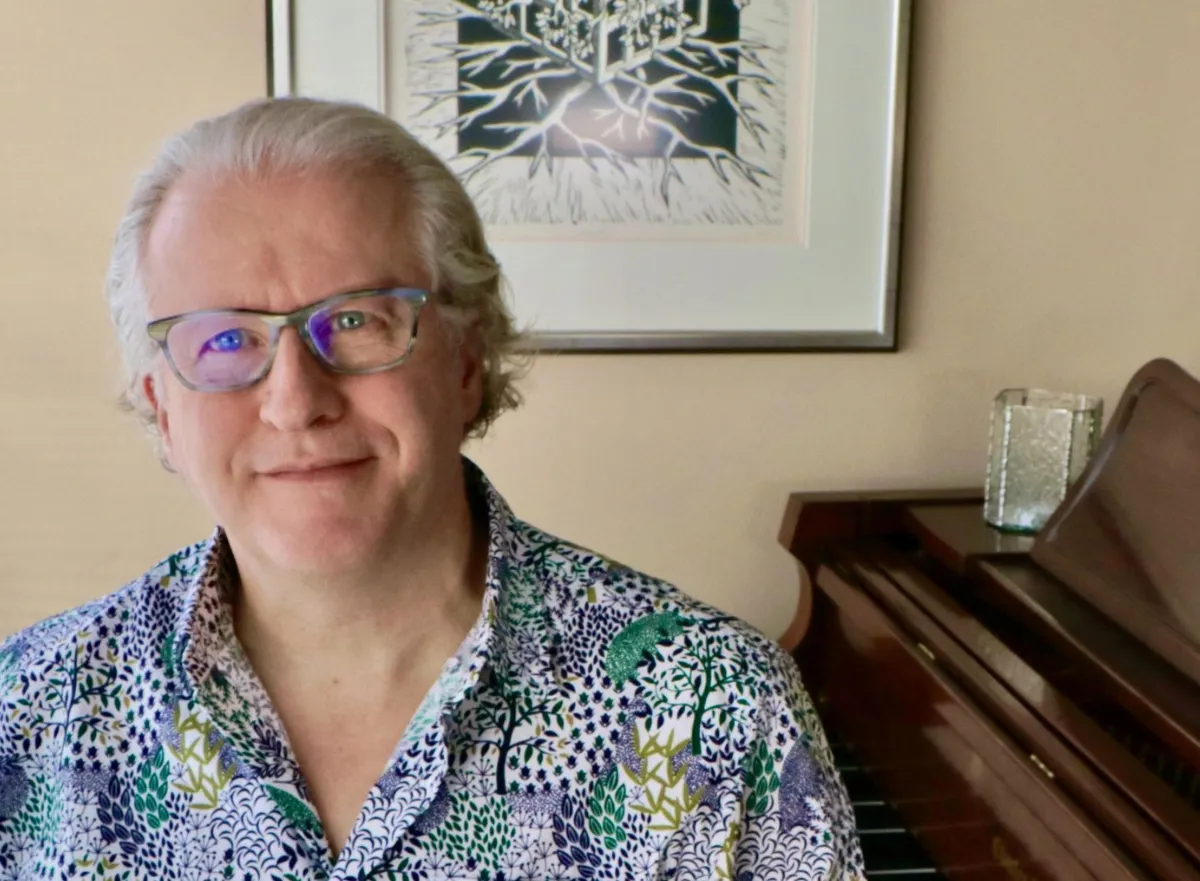
Craig Addy is a Vancouver-based pianist, composer and improviser, and the founder of Under the Piano, which offers personalized live-music experiences. The views expressed in this article are his own.
View 0 Comments
Submit Correction
View Editorial & AI Guidelines