By Jesus Mesa
Reporter
0
Share
Newsweek is a Trust Project member
See more of our trusted coverage when you search.Prefer Newsweek on Googleto see more of our trusted coverage when you search.
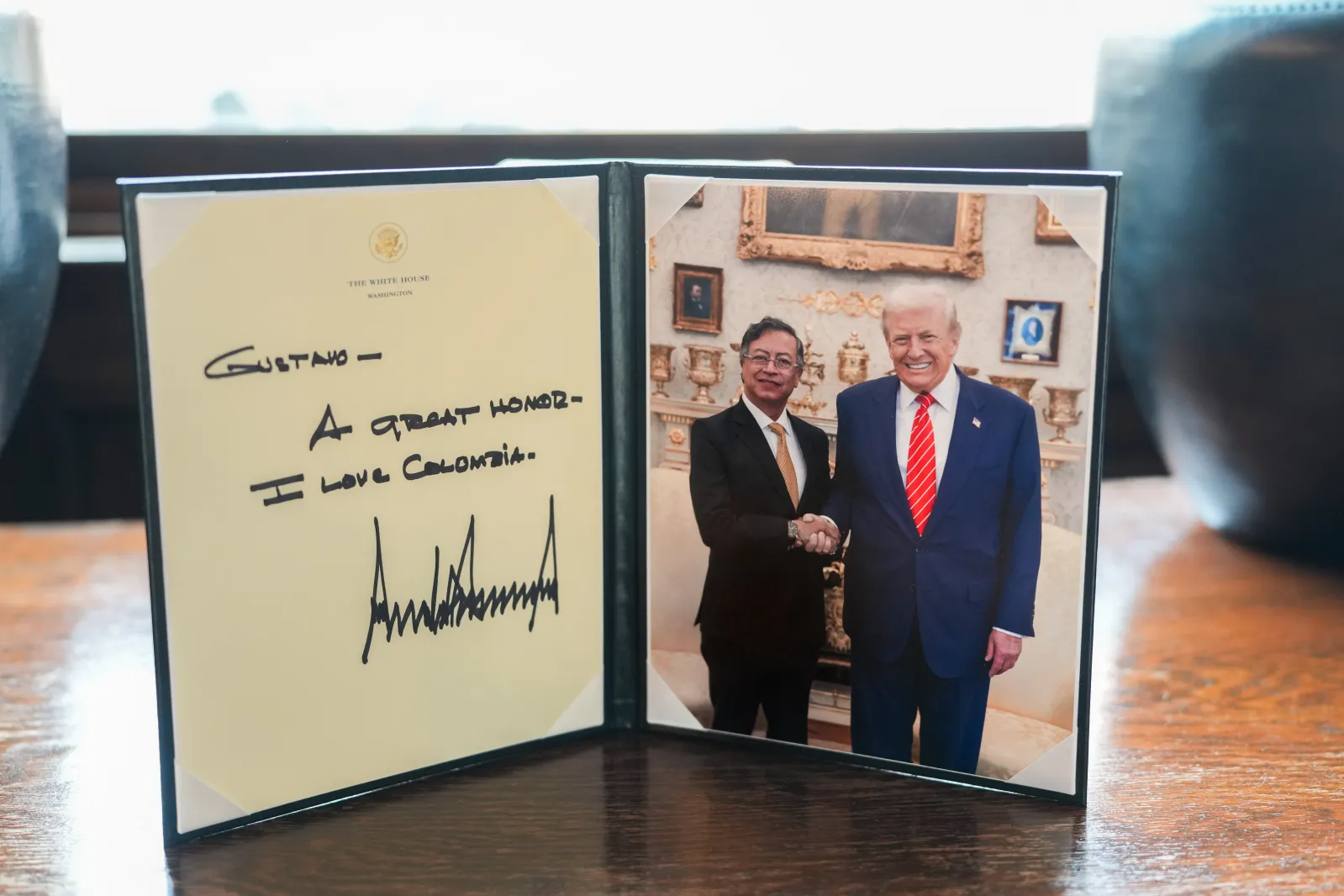
Colombian President Gustavo Petro on Tuesday shared a photo of a handwritten note signed by U.S. President Donald Trump, along with an image of the two leaders shaking hands, signaling a positive outcome from their White House meeting.
The note, posted on Petro’s X account after the meeting, read: “Gustavo: A great honor. I love Colombia,” and was signed by Trump.
Why It Matters
Trump held talks with Petro at the White House on Tuesday only weeks after threatening military action against the South American country and accusing the leader of pumping cocaine into the United States.
Read More on Politics
The meeting focused on regional security and counternarcotics cooperation and came as Trump said Petro has shown greater willingness to work with his administration to curb illegal drug flows from Colombia, despite Petro’s continued criticism of Trump and the U.S. operation to capture Venezuelan President Nicolás Maduro.
What To Know
Few details have emerged about the substance of the meeting. Petro shared only photos, which suggested a cordial, friendly encounter. In an exclusive interview with Caracol Radio after the talks, Petro offered his own assessment, describing the meeting as largely positive.
“I would give it a nine,” Petro said, adding that the meeting was held “government to government” and focused on what he called “the issues of today.”
According to Petro, the two leaders found common ground on energy and security, particularly regarding Venezuela and counternarcotics cooperation. He said he raised the idea of clean energy projects in Colombia’s La Guajira region as a means to help stabilize western Venezuela and reduce coca cultivation in Colombia’s Catatumbo region.
...
“There was a clear understanding, without fighting, that clean energy could help reactivate western Venezuela and allow us to remove coca leaf fields from Catatumbo,” Petro said.
The meeting also addressed tensions between Colombia and Ecuador, Petro added, where escalating cartel violence along the shared border has strained relations between the two neighbors. The Colombian leader said Trump offered to help mediate between Bogotá and Quito.
'You Are Great'
Trump was joined by Vice President JD Vance, Secretary of State Marco Rubio and Ohio Senator Bernie Moreno, the latter born in Colombia and a vocal critic of Petro. Colombian Foreign Minister Rosa Yolanda Villavicencio, Defense Minister Pedro Arnulfo Sánchez Suárez and Ambassador Daniel García-Peña accompanied Petro to the White House.
Before the meeting, García-Peña was seen holding a copy of The Art of the Deal, Trump’s signature book. Afterward, Petro shared a photo of the book with a handwritten dedication from Trump reading, “You are great.” Petro jokingly cited his limited English skills in response to Colombian critics who have accused him of taking a confrontational stance toward Washington.
Petro was also seen holding several MAGA hats, likely gifts from Trump, as well as gold medallions bearing the U.S. presidential seal. White House Press Secretary Karoline Leavitt said afterward that the meeting lasted about two hours and that she had spoken with Trump beforehand, describing him as being in a “positive head space” ahead of the talks.
...
The relationship between Petro and Trump has been tense for much of the past year, marked by public clashes over immigration, counternarcotics policy and Venezuela. Trump repeatedly accused Petro of weakening Colombia’s fight against drug trafficking, while Petro criticized U.S. deportation practices and what he described as Washington’s heavy-handed approach to the region.
Tensions escalated further after the U.S. operation in January to capture Maduro, a move Petro publicly condemned as destabilizing. Trump, however, later suggested the operation marked a turning point, saying Petro had softened his stance in the weeks that followed and become more open to cooperation with the White House.
Colombia has long been a key U.S. ally in Latin America, particularly on security and counternarcotics efforts. But Petro’s presidency has represented a sharp shift from previous governments, with an emphasis on reducing forced coca eradication, pursuing negotiations with armed groups and calling for a reset of U.S.-backed drug policies that he argues have failed.
What People Are Saying
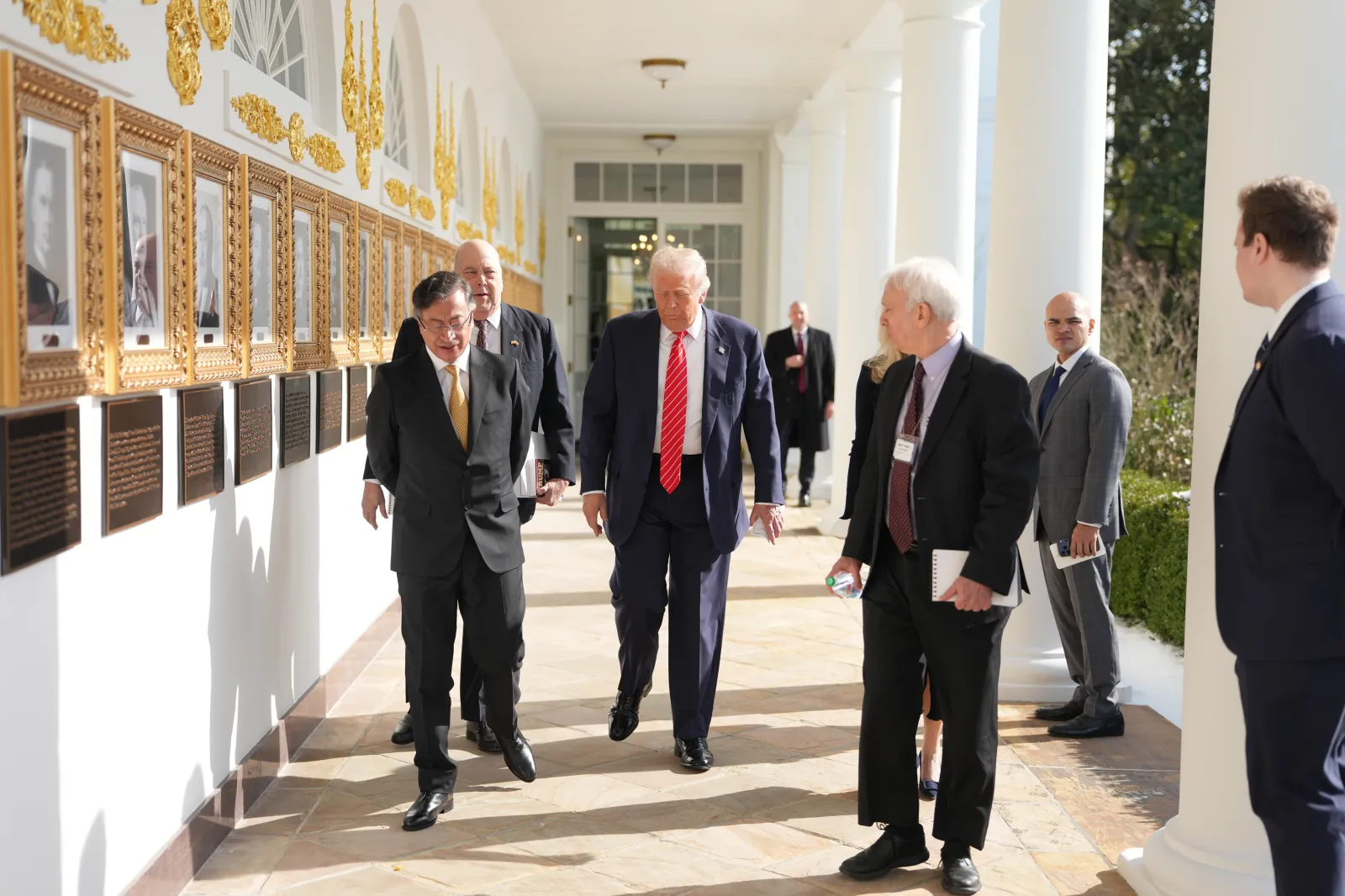
Petro, after the meeting with Trump, on X: “We toured the corridor of the American presidents; in the Casa de Nariño there is one as well. You walk through history, but there is always a wall at the end: what next?”
Kevin Whitaker, former U.S. ambassador to Colombia, to Newsweek ahead of the meeting: “The Trump administration remains deeply focused on Venezuela and drugs and will seek Colombian cooperation on both. But Petro only has six months left in office, which raises a real question about why President Trump accepted the meeting at all, knowing there will be a new Colombian president on August 7.”
Gimena Sánchez-Garzoli, director for the Andes at the Washington Office on Latin America, to Newsweek: "Colombia has legislative elections on March 8 and presidential elections in late May. What happens at this meeting will have a huge influence on the Colombian elections. The Colombian opposition, particularly on the right, has encouraged poor relations between the Trump administration and Petro because this is Colombia’s most important international relationship. If relations are bad, they can blame Petro and present themselves as the ones who would save the relationship.”
What Happens Next
Despite the rhetoric, both governments face practical incentives to stabilize relations. Colombia remains central to U.S. efforts to curb cocaine production and manage migration flows linked to Venezuela’s crisis, while Petro, nearing the final stretch of his term, has sought to ease diplomatic tensions with Washington amid domestic political pressure at home.
View 0 Comments
Submit Correction
View Editorial & AI Guidelines