10
Loading video...

By Billal Rahman
Immigration Reporter
0
Share
Newsweek is a Trust Project member
See more of our trusted coverage when you search.Prefer Newsweek on Googleto see more of our trusted coverage when you search.
A federal appeals court has allowed a coalition of religious organizations to pursue its challenge to the Trump administration’s decision to lift restrictions on immigration enforcement at houses of worship.
The U.S. Court of Appeals for the District of Columbia Circuit ruled 2-1 Tuesday that the religious organizations had sufficiently demonstrated standing at this stage of the case, reversing a lower court decision that found the threat of enforcement was not sufficiently imminent.
U.S. Circuit Judge Florence Pan, a Biden appointee, joined by U.S. Circuit Judge Robert Wilkins, an Obama appointee, wrote the majority opinion. The case was sent back to U.S. District Judge Dabney Friedrich, a Trump appointee, to reconsider the request for a preliminary injunction. U.S. Circuit Judge Neomi Rao, a Trump appointee, dissented.
Read More on News
The ruling does not decide whether the administration’s policy is lawful, nor does it prohibit ICE from carrying out enforcement actions at churches.
...
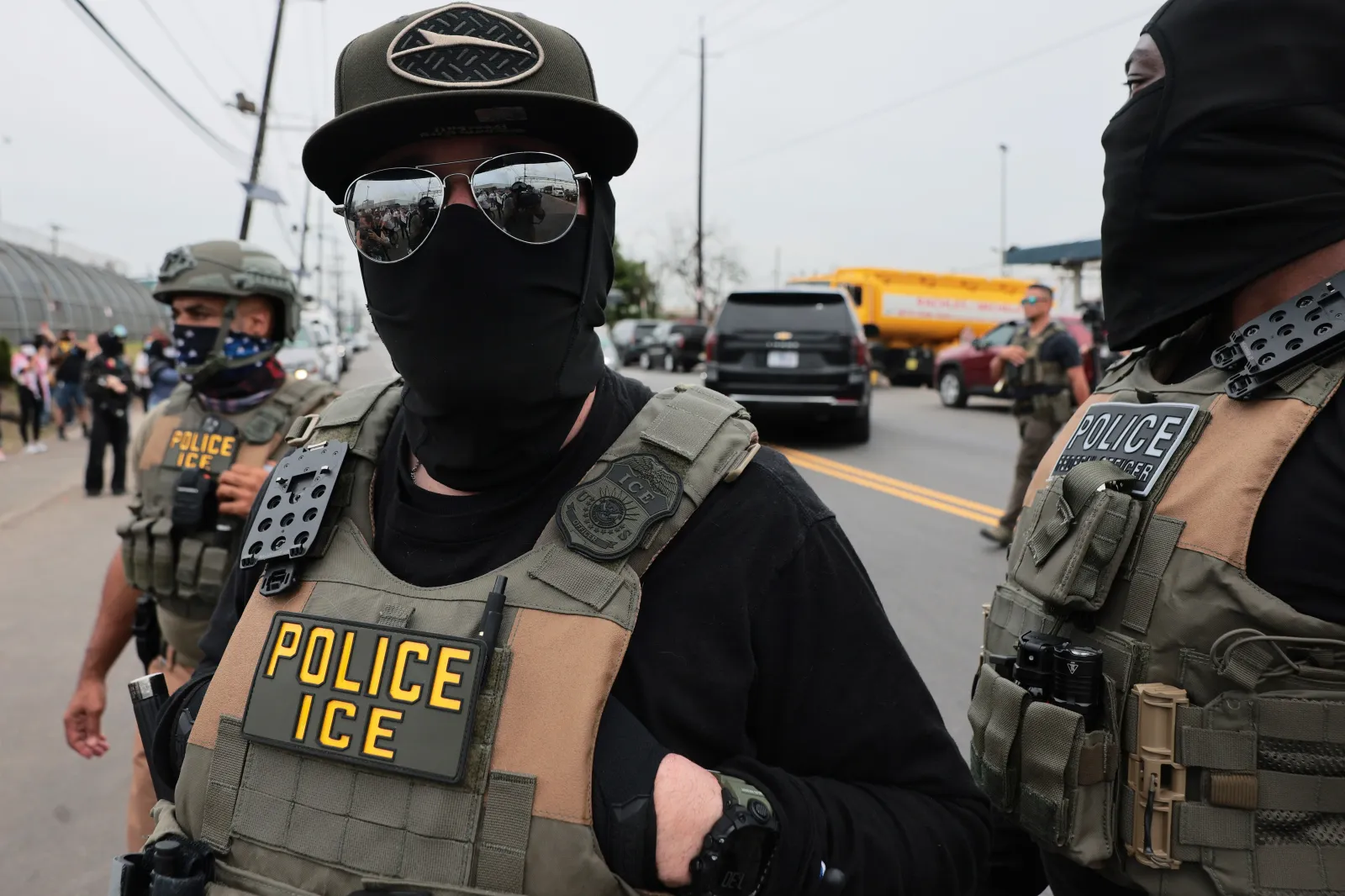
What to Know About ICE Arrests at Churches and Schools
The legal disputes follow the administration’s elimination of protections that had generally discouraged immigration arrests and other enforcement activity at sensitive locations.
Religious organizations challenging the change say immigration enforcement in and around churches can deter some people from attending worship services and participating in ministries. The administration has argued that immigration officers should retain discretion to enforce federal law rather than be governed by categorical restrictions on particular locations.
On January 20, 2025, the first day of Donald Trump’s second term, acting Homeland Security Secretary Benjamine Huffman rescinded federal guidance restricting immigration enforcement in or near sensitive locations, including houses of worship.
For more than three decades, federal policy placed restrictions on immigration enforcement at locations considered sensitive. Beginning in 1993, immigration officials were directed to avoid apprehensions and investigations near schools, houses of worship, funerals and other religious ceremonies. Then-Homeland Security Secretary Alejandro Mayorkas revised the guidance in 2021, requiring agents to obtain prior headquarters approval before carrying out enforcement actions at those locations.
What's Happening Now
Twenty-seven Christian and Jewish organizations, led by Mennonite Church USA, sued DHS and other federal immigration agencies, arguing that ending the restrictions interfered with their religious exercise and freedom of association. Their claims include alleged violations of the Religious Freedom Restoration Act, the First Amendment, and the Administrative Procedure Act.
Kelsi Brown Corkran, lead counsel for the religious associations, and attorney at Georgetown Law’s Institute for Constitutional Advocacy and Protection, told Newsweek, "The D.C. Circuit's decision recognizes the real harm that DHS inflicted on religious communities when it rescinded the sensitive locations policy that had protected places of worship from immigration enforcement activity for over three decades.
"It is an important victory for the millions of people of faith represented by the 27 Jewish and Christian denominations and organizations that came together to file this suit in defense of their right to worship and serve their communities without fear of intrusion by ICE officers."
Rev. Carlos L Malave, President, Latino Christian National Network, told Newsweek, "Our faith calls us to persevere in doing good. The Latino Christian National Network celebrates the D.C. Court’s decision regarding our case to protect 'sensitive locations.' Houses of worship and sacred spaces must be respected, and the constitutional right of all church members to worship freely and without fear must be safeguarded."
In April 2025, U.S. District Judge Dabney Friedrich, a Trump appointee, denied the groups’ request for a preliminary injunction. She found that they had not produced adequate evidence of an imminent threat of immigration enforcement against their congregations, noting that the administration's policy did not direct officers to target churches or synagogues and that the record did not show those locations were being singled out.
A DHS spokesperson told Newsweek: “ICE does NOT target churches or places of worship.
“This is just another false narrative to try and demonize our brave ICE law enforcement who are facing a more than 1,600% increase in assaults against them and an 8000% increase in death threats.”
The religious organizations appealed, arguing that the lower court was wrong to conclude they had not shown a sufficiently imminent threat of enforcement at their houses of worship.
Writing for the majority Tuesday, Judge Pan said the groups presented enough evidence to show a credible threat of enforcement likely to cause imminent harm.
“Plaintiffs have direct evidence that the government intends to increase immigration enforcement at sensitive locations—that is the whole point of the Rescission Memo,” Pan wrote in the majority opinion.
“The government has done the opposite of ‘disavowing any intention of’ taking enforcement action at or near plaintiffs’ members’ houses of worship. Instead, it announced a plan to ramp up enforcement, and that initiative has already begun: Plaintiffs point to several specific examples of the government engaging in enforcement activity at or near their members’ houses of worship.”
Judge Rao, in her dissent, wrote, “In particular, the guidance they seek to restore has no effect on the executive branch’s legal authority or enforcement discretion. Plaintiffs ultimately offer only speculation that restoring policy guidance from a previous administration will change the enforcement practices of this one. Because redressability requires more than conjecture, the District Court correctly denied a preliminary injunction.”
Arrests of Faith Leaders & Related Cases
A Newsweek investigation found at least 65 religious figures had been detained by U.S. immigration authorities since January 2025. Not all arrests were made at sensitive locations such as churches.
Related Story

Exclusive: ICE Detains Dozens of Faith Leaders Under Trump’s Crackdown
In a separate case, the U.S. Court of Appeals for the Fourth Circuit on August 18, 2026, upheld a preliminary injunction restricting certain immigration-enforcement actions at eight houses of worship affiliated with Quaker, Sikh and Cooperative Baptist Fellowship organizations.
The court found that the organizations were likely to succeed on their claim under the Religious Freedom Restoration Act, but did not resolve their separate First Amendment claim or the entire lawsuit. The injunction applies only to the specified plaintiffs and locations and permits certain enforcement actions under its terms.
According to MPR News, an undercover Homeland Security Investigations agent attended and recorded a martial arts training session inside the church on May 28, 2026. Documents also indicated that federal agents surveilled the property on at least three occasions between April and June, recording people entering and leaving and photographing vehicles.
The church is covered by an existing federal injunction restricting immigration-enforcement actions at specified houses of worship. Religious groups argued that the surveillance violated the injunction; whether the operation legally breached the order is a separate question from the reported surveillance itself.
What Happens Next
Tuesday's ruling means the case can proceed, with the district court now tasked with reconsidering the religious groups’ request for preliminary relief.
Update, 10/22/26, 3:57 a.m. ET: This article was updated with comment from Corkran and Malave.
Newsweek’s reporters and editors used Martyn, our AI assistant, to produce this story. Learn more about Martyn here.
Contact Newsweek editors on this story: Matthew Robinson, Gray R. Thomas
View 0 Comments
Submit Correction
View Editorial & AI Guidelines