Newsweek Illustration

By Katherine Fung
Senior Writer
0
Share
Newsweek is a Trust Project member
See more of our trusted coverage when you search.Prefer Newsweek on Googleto see more of our trusted coverage when you search.
More than three-quarters of Americans now live with at least one chronic condition, and over half live with multiple conditions—but chronic pain patients are finding "guardian angels" thanks to new technologies, according to the health care experts who joined Newsweek's February 3 webinar, "Preventing Chronic Disease Patients from Falling Through the Cracks."
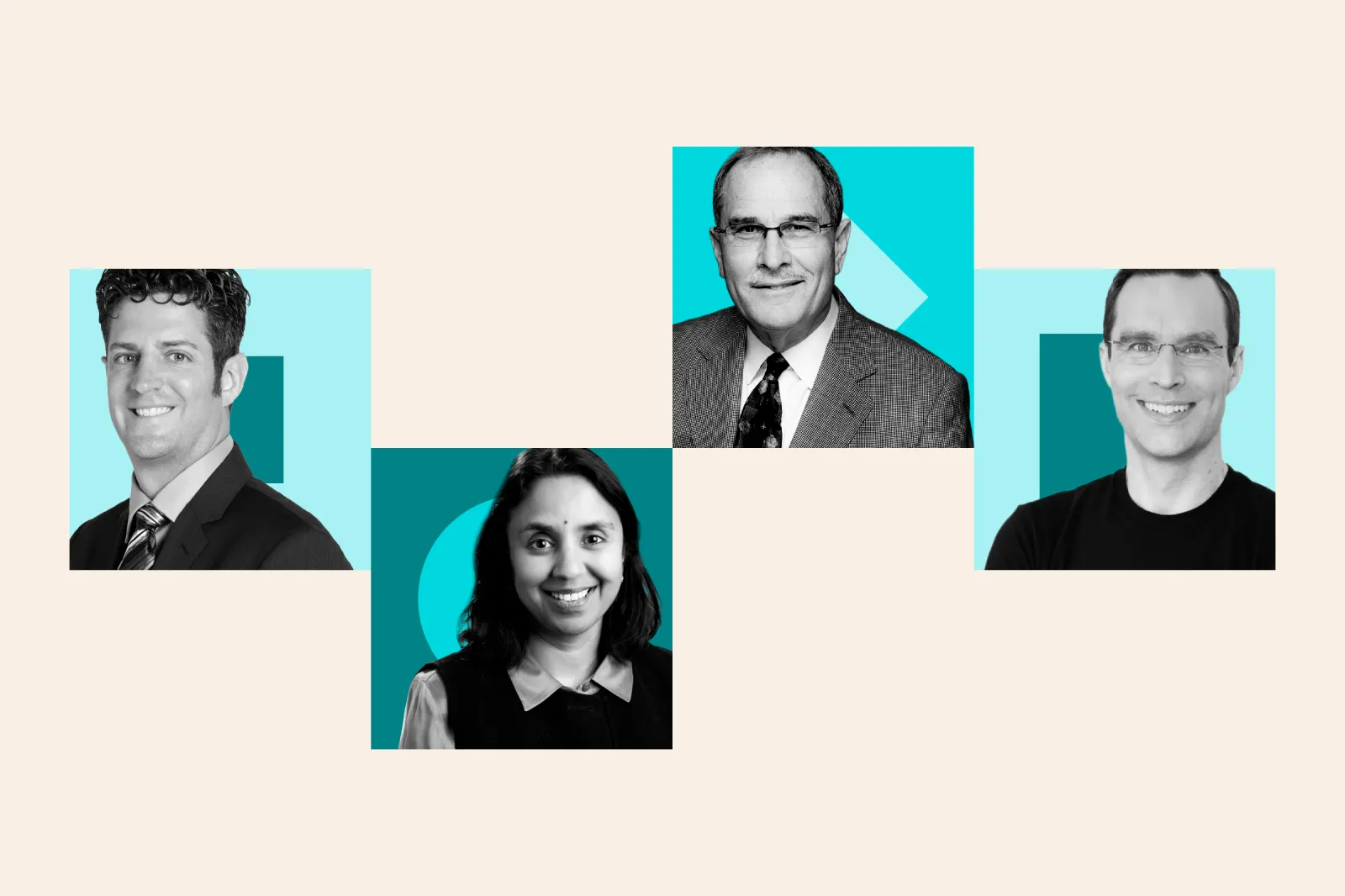
Tuesday's panelists included Dr. Kevin Pantalone, Cleveland Clinic's Director of Diabetes Initiatives, Dr. Lakshmi Halasyamani, Endeavor Health's Chief Clinical Officer, Dr. Richard Milani, Sutter Health's Chief Clinical Innovation Officer, and Dr. Ricky Bloomfield, OURA's Chief Medical Officer. Newsweek's Health Care Editor Alexis Kayser moderated the discussion.
While addressing an audience question about artificial intelligence use among lonely, chronic pain patients, Milani said that many of his patients have reported "great comfort" in knowing that existing technologies are monitoring their conditions outside the exam room.
Read More on Health Care
"This is the term that they use, and I hate to use it, but I'm just going to quote them—'I have this guardian angel that's sort of looking over me, that's seeing this information, and I feel more comfortable knowing that they'll reach out if they see something that's amiss,'" Milani said. "The irony is it extends to things we're not even monitoring."
While these technologies don't combat loneliness, Milani said they certainly solve a communication problem by transmitting a higher frequency of information to health systems.
"Patients with chronic disease, when they come in, they have a lot of stuff going on at the visit. They have multiple medical problems, and as we said, primary care doctors don't really have a lot of time," Pantalone said. "We need to look at trying to implement interventions outside of the exam room, where the doctor has 20 minutes and very limited time. It's all the intervention that can take place outside of that visit, where there is a tremendous opportunity to gather data and to have AI sort through blood pressure logs and [continuous glucose monitoring] data and to identify patients with concerning lab results."
Newsweek Illustration
These new tools not only help doctors monitor their patients' conditions, but also improve how patients understand their own health data.
"I think of the technology as sort of a way to have the good angel whisper in my ear," Halasyamani said. "Most of us are spending more time with our digital friends than we are maybe with our real friends. We have to ask ourselves, 'How do these technologies enable positive brain circuits that give me self-efficacy to be able to make good choices?'"
Halasyamani said that while doctors can sometimes overwhelm their patients with to-do lists, these technologies offer "bite-sized bytes of information" that patients can act on and learn from.
"It's something that we would all want, which is somebody to encourage us, give us positive feedback and then also say, 'Well, maybe not so much' [or] 'don't do this next time.'"
There are other ways that chronic pain patients can also find "guardian angels" in an increasingly complex health care landscape.
Answering an audience question about streamlined care, Bloomfield said that new tech tools are allowing primary care physicians to extend beyond their comfort zone of care, which not only reduces the number of doctors that a patient has to see but also alleviates burnout on specialists.
"A lot of primary care today has contracted in scope, compared to 50 years ago," Bloomfield said.
He said that when his dad was practicing family medicine, he provided a whole spectrum of primary care, including minor surgeries and delivering babies.
"Now, it's more contracted," he said. "So, I think some of these tools will actually enable primary care physicians to expand the scope of some of the care they provide, which could be really powerful because that individual is the one who knows the patient the best. And you want someone who knows all of your conditions to be able to help provide care and decisions."
Bloomfield added that this re-expansion could "help us get back to that world where your primary care doctor is your quarterback, maybe your guardian angel, whatever you want to call it, in order to help provide the best, most holistic care for you."
At the end of the webinar, panelists were asked what would be the one thing they would recommend organizations to do in the next five years to improve outcomes in chronic disease management. All four of them emphasized the need to adopt new technologies.
"Embrace change. Embrace technology," Pantalone said. "We need to start looking at AI as trying to do what we can already do, [and] rather use AI to do the things we currently can't do. And I think that is really synthesizing all of the data that our patients provide us to really try to manage their overall health."
"You can't be on the sidelines right now, given how fast things are moving," Bloomfield agreed. "Health systems are generally not fast-moving organizations, but this is a case where they have to think differently, figure out how to incorporate AI, how to incorporate wearables into their care because these are tools that are going to be used to help improve, and ultimately, screen for and detect chronic disease sooner."
Subscribe to *Newsweek’*s health care newsletter, Access Health, here.
View 0 Comments
Submit Correction
View Editorial & AI Guidelines