...

By Jordan King
Reporter
0
Share
Newsweek is a Trust Project member
See more of our trusted coverage when you search.Prefer Newsweek on Googleto see more of our trusted coverage when you search.
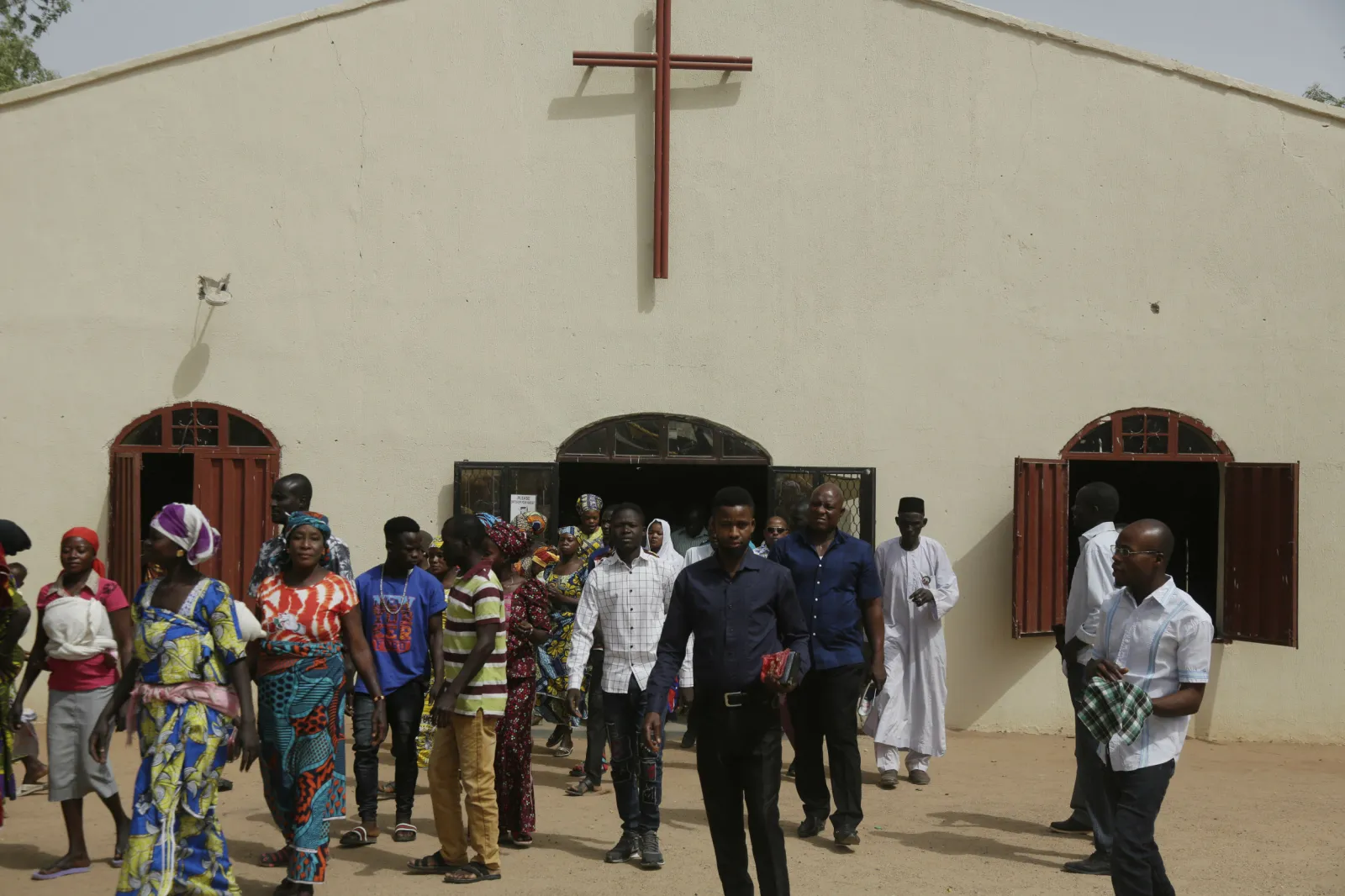
More than 7,000 Christians had been killed in Nigeria during the first 220 days of 2025, a civil-society watchdog said.
This is an average of 35 killings a day, according to the recent report published by the Nigeria-based human-rights NGO International Society for Civil Liberties and the Rule of Law (Intersociety).
Newsweek has contacted the Nigerian Ministry of Humanitarian Affairs and National Human Rights Commission via email for comment.
Read More on News
Why It Matters
Nigeria has long been an epicenter of Christian persecution, with more Christians killed for their faith in Nigeria than in the rest of the world combined, according to human rights organization Open Doors, which monitors the persecution of Christians around the globe.
The violence has displaced at least 12 million Christians since 2009, according to Intersociety. That year marked the start of Boko Haram's insurgency to establish a caliphate in Nigeria and the broader Sahel.
In the 16 years since, Intersociety estimates that 189,000 civilians have been killed—125,000 of whom were Christians and 60,000 liberal Muslims.
...
What To Know
The Intersociety report said that 7,087 Christians were killed in Nigeria between January 1 and August 10, and that 7,800 others were abducted in the same period.
The report identified Benue State in Nigeria's Middle Belt as among the hardest hit, with at least 1,100 deaths, including the Yelewata massacre in June, when 280 Christians were killed.
"Nigeria is headquartering and providing safe haven for no fewer than 22 embryonic and full grown Islamic Terror Groups in Africa with links or potential links to ISIS, ISIL and World Jihad Fund," the report said.
The Middle Belt and northern states are especially volatile, with Islamic militant groups like Boko Haram, Fulani extremists and ISWAP (Islamic State West Africa Province) targeting Christian communities through mass killings, kidnappings and church burnings.
While Nigeria legally offers more religious freedom than other countries on Open Doors watchlist, "the biggest threat is from Islamic militants who seek to destroy Christianity and Christians in the region," the organization says.
The U.S. Department of State's report on terrorism in Nigeria in 2023 highlighted that ISIS-West Africa (ISIS-WA), Boko Haram and Ansaru are active there, carrying out attacks against Nigerian government and security forces and civilians across the country's northern and central regions.
The Nigerian government has previously dismissed some claims about specific groups operating in the country, including in June, when a defense department spokesperson, Major General Markus Kangye, pushed back against the Turkish ambassador's claims that the terrorist group FETO is active.
Kangye said that the Nigerian military does not recognize the group and has not received any credible intelligence to support the claim, according to local newspaper The Nigeria Lawyer.
Newsweek has contacted Nigeria's National Counter Terrorism Centre, via email, for comment.
What People Are Saying
Father Dominic Asor, the rector of St. James Minor Seminary, last month: "We must not flee from our vocation because of trials, insecurity or the lure of worldly comfort. God who called us will sustain us, but we must remain faithful and focused. The seminary has not become an endangered species. Apart from the seminaries, where else can you have complete safety? There is no place."
Jeff King, president of International Christian Concern, previously told Newsweek: "The persecution of Christians isn't merely a religious issue, it's a human rights crisis affecting millions."
What Happens Next
The Intersociety report urged international actors to intervene and to consider placing Nigeria on watch lists that could trigger diplomatic or sanctions responses.
Open Doors and other monitoring groups continued to document attacks and displacement, which suggested ongoing humanitarian and protection needs for millions of displaced people and for communities reporting repeated violence.
View 0 Comments
Submit Correction
View Editorial & AI Guidelines