10
Loading video...



+1
By Hollie Silverman, Alex Backus, Alice Gibbs, and Joshua Rhett Miller
Share
Newsweek is a Trust Project member
See more of our trusted coverage when you search.Prefer Newsweek on Googleto see more of our trusted coverage when you search.
Tennessee officials were unable to carry out the execution of Christa Pike for a 1995 murder after a day of last-minute legal battles over whether the execution could proceed.
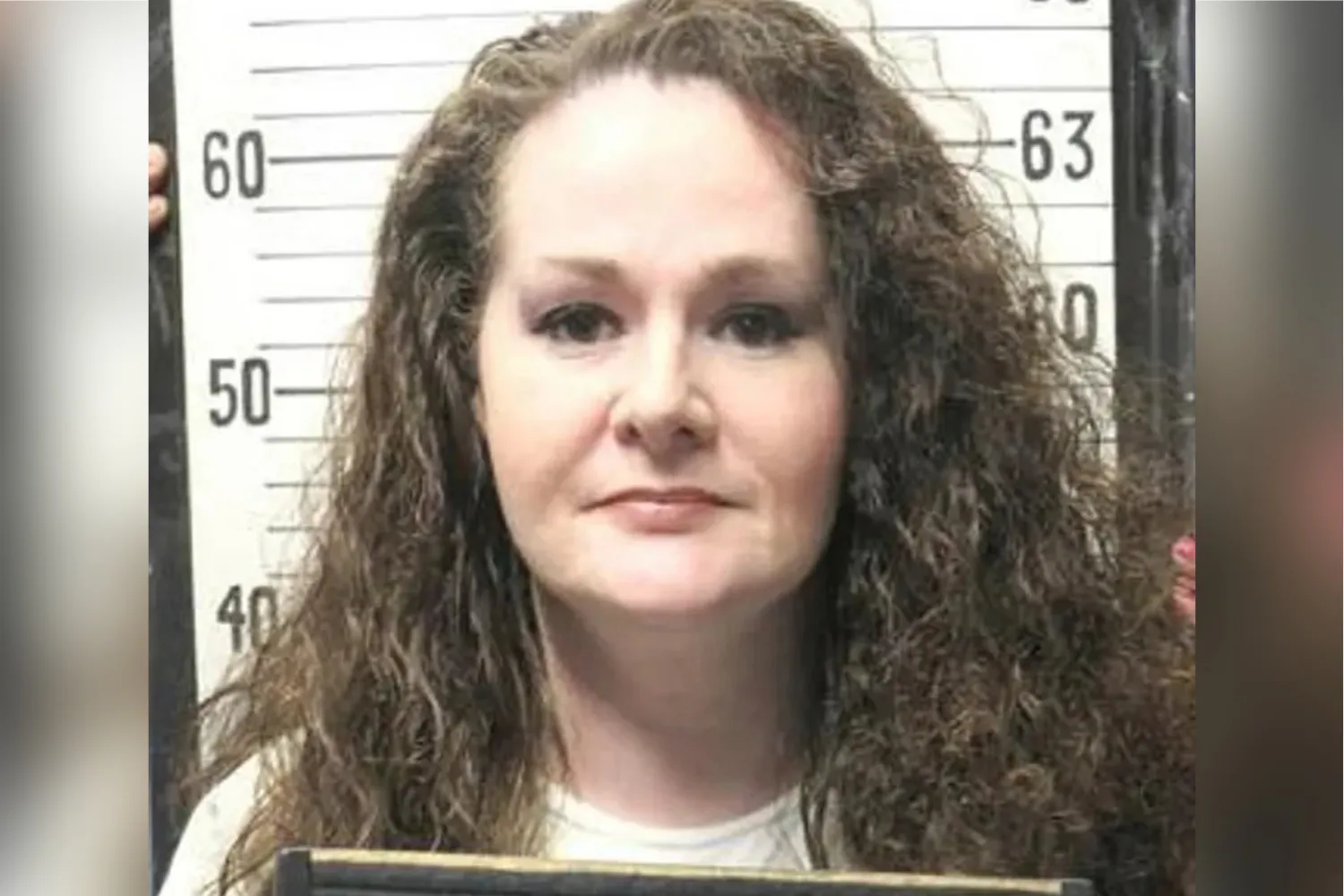
Pike, now 50, was set to be the first woman executed in the state of Tennessee in more than 200 years. She had spent three decades on death row for the 1995 murder of Colleen Slemmer, which she committed at age 18.
However, after being administered two doses of pentobarbital, she was still alive and could be heard loudly snoring. Her attorneys said she was taken by ambulance from the prison to a hospital for treatment. Attorney Randy Spivey told reporters on Thursday that Pike remained alive and was receiving life-saving medical care, though her legal team had not been given details about her condition.
Read More on News
Following the execution failure, Tennessee Governor Bill Lee said in a statement that he has ordered "a comprehensive, third-party review to determine exactly what occurred,” adding that all remaining scheduled executions for the rest of the year will not take place.
Speaking to reporters Thursday morning, Lee called the failed execution attempt "a tragedy" and said it was "deeply disturbing" that it had occurred. Lee said Tennessee had not yet selected an investigator to lead the review and declined to provide a timeline for its completion, saying the process should take as long as necessary to determine exactly what happened.
Execution Attempt ‘One of the Worst in American History’
Media witnesses described the process as "not typical" afterward. Catherine Sweeney of WLPN said: “They went through two rounds and she was still breathing at the end, it was very ragged. She lifted her head up and was looking around at one point. She said that there was a spot that was burning and hurting and whether that was normal. None of it was normal.”
After Pike was taken from the execution chamber, the Tennessee Department of Correction said in a late-night statement: “The Tennessee Department of Correction followed every step of the State’s lawful, established execution protocol approved by the Attorney General’s Office. The lethal injection chemical in the protocol has consistently been effective, and the protocol does not allow for additional procedures beyond what was carried out this evening. Christa Pike has been transported to an off-site medical facility.”
Laura Porter, executive director of the U.S. Campaign to End the Death Penalty, said Wednesday's failed execution came after repeated calls to pause executions in Tennessee and review the state's execution process. "Since the botched execution in May of this year, people from diverse political backgrounds across Tennessee have called for a pause in executions to examine the problems with the execution process," Porter said in a statement shared with Newsweek. "These pleas were ignored. The state of Tennessee has shown the world it cannot be trusted to implement capital punishment in a way that preserves human dignity and the rule of law. This has to stop now."
...
“I’ve witnessed, I believe, 5 executions in Tennessee. Nothing about today was normal, typical at all," said witness Tori Gessner of WKRN.
At 7:34 p.m., Pike had said, “My arm feels like it’s about to burst open,” Gessner recalled. Emergency vehicles were seen coming and going from the institution during the briefing.
At 7:46 p.m., prison officials closed the curtain to the media viewing room. They raised it three minutes later, and Pike’s spiritual adviser was brought back into the room. Pike could be heard loudly snoring and squeaking before the curtain was closed again at 8:06 p.m.
Media was escorted out at 8:53 p.m. with unanswered questions before Pike was transported to a hospital for medical care, though it is not clear what this care involves.
May Martinez, the mother of Slemmer, described the failed execution as "a mess" in comments to NBC News. Martinez said victims' relatives were initially given little information about what had happened before learning Pike was being transported to a hospital.
Blaire Andres, head of U.S. death penalty case work for a nonprofit Reprieve, told Newsweek: “While this is probably one of the worst executions in American history, what we saw last night is not unusual. Botched executions by lethal injection are unfortunately not unusual. They happen quite a lot.”
According to a 2024 report by Reprieve, 73 of 1,407 lethal injection executions or attempted executions between 1977 and December 2023 were classified as botched, which works out to about 5.2 percent, or roughly 1 in 19.
"Due to the extensive secrecy around executions it is likely that the true number of botched executions in the reporting period is much higher than the number identified in the dataset,” the report noted.
Why 3 Justices Called Supreme Court's Christa Pike Ruling 'Stunning'
After the U.S. Supreme Court allowed the execution to proceed Wednesday evening, the Tennessee Department of Correction told Newsweek that the execution would go ahead that night.
Pike's attorneys filed an emergency application with the U.S. Supreme Court during the execution, arguing she was in "unnecessary agony" and that carrying out the execution would violate the Constitution's ban on cruel and unusual punishment.
In a supplemental response, the Tennessee Attorney General's Office told the court that Pike was being transported to a hospital and receiving medical care. The filing came after the U.S. Supreme Court had already overturned a lower-court stay and allowed the execution to proceed.
Pike was originally scheduled to receive a lethal injection at 10 a.m. local time Wednesday. The state’s execution warrant was set to expire at midnight.
The dispute before the courts centered not on Pike's guilt, but on whether she should be allowed to reopen earlier proceedings after prosecutors recently acknowledged that claims she made about severe childhood sexual abuse were truthful.
The Sixth Circuit had previously temporarily halted the execution while judges considered a complex legal dispute over whether Pike can reopen previous court proceedings based on allegations regarding her history of childhood sexual abuse.
According to Rob Dunham, director of the Death Penalty Policy Project, the stay centers on prosecutors' recent acknowledgment that Pike's claims of severe childhood sexual abuse were genuine. Dunham said that during earlier appeals, prosecutors argued Pike had fabricated allegations of abuse and was "a pathological liar," claims that helped defeat challenges to her conviction and death sentence.
In a statement to Newsweek before the Supreme Court ruling, the Tennessee office of the Attorney General said: "We will continue to advocate for the lawfully-imposed sentence as the courts work through this technical issue. It is common in capital cases for the defense to raise last minute objections following decades of litigation in numerous courts. We are asking the Supreme Court of the United States to lift the stay."
The Supreme Court later granted Tennessee's request, vacating the Sixth Circuit's temporary stay and allowing the execution to proceed. Justice Sonia Sotomayor dissented, joined by Justices Elena Kagan and Ketanji Brown Jackson.
In her dissent, Sotomayor said it was "stunning" that the Supreme Court had lifted the stay, arguing that the decision cleared the way for Tennessee to execute Pike before her still-pending legal challenges could be fully considered. "I see no reason to short-circuit the ordinary process of appellate review, particularly in light of the grave consequences of an erroneous decision," Sotomayor wrote.
What is Pentobarbital?
Pentobarbital is a powerful barbiturate sedative that depresses the central nervous system. In high doses, it can cause unconsciousness, respiratory failure and death.
It is currently used by several U.S. states, including Tennessee, as a single-drug lethal injection protocol.
The intended effect is rapid sedation followed by loss of consciousness, and at execution doses the drug suppresses the brain’s control of breathing to the point that it stops. Without oxygen, the heart eventually stops causing death.
Why Was Christa Pike Scheduled to Be Executed?
Tennessee had planned to execute Pike for the January 1995 murder of Colleen Slemmer, a 19-year-old student at a Job Corps training center in Knoxville. Prosecutors said Pike believed Slemmer was pursuing her boyfriend and lured the teen to a secluded area near the University of Tennessee campus, where she was tortured and killed.
A Knox County jury convicted Pike of first-degree murder and sentenced her to death in 1996. She was the only defendant in the case to receive a death sentence.
Pike's attorneys have argued that jurors never heard extensive evidence regarding her childhood trauma, including repeated sexual abuse, mental illness and neglect. Those issues became central to the latest legal challenge after prosecutors reportedly acknowledged the abuse occurred.
Pike was diagnosed with both bipolar disorder and post-traumatic stress disorder following her conviction.
“I was a mentally ill 18-year-old kid. It took me numerous years to even realize the gravity of what I’d done. Even more to accept how many lives I affected. I took the life of someone’s child, sister, friend. It sickens me now to think I had the ability to commit such a crime,” Pike said in a statement reported by the Associated Press.
Pike said in her clemency petition she had planned on fighting Slemmer but couldn’t “put the brakes on,” resulting in Slemmer's death.
Related Story

Map Shows Executions This Year As Three States Kill Inmates In A Day
When Was the Last Execution in Tennessee?
Had the execution proceeded, Pike would have become the first woman executed by Tennessee in more than 200 years.
She is the only woman currently on Tennessee's death row and the first female inmate scheduled for execution in the state in the modern era of capital punishment.
The temporary stay leaves the timing of any future execution uncertain while courts determine how to handle Pike's latest appeal.
Who Was Colleen Slemmer?
Colleen Slemmer was a 19-year-old Job Corps student who traveled to Knoxville for job training. Family members described her as a caring young woman who enjoyed helping others and had hoped to build a future through the program, Nashville news outlet WKRN reported.
During the anti-death penalty livestream that followed news of the stay, participants paused to remember Slemmer. A speaker identified her as "Colleen Ann Slemmer," noted that she was killed at age 19 on January 12, 1995, and said those opposing Pike's execution continued to honor the victim while opposing capital punishment.
Slemmer's mother, May Martinez, has publicly supported carrying out Pike's death sentence, saying she believes justice has been delayed for decades.
Who Were Pike's Accomplices, Tadaryl Shipp and Shadolla Peterson?
Tadaryl Shipp, Pike's boyfriend at the time of the killing, was 17 when the crime occurred. Because he was a juvenile, he was not eligible for the death penalty. He was convicted of first-degree murder and received a life sentence with the possibility of parole. His most recent parole request was denied in 2025.
Shadolla Peterson, who was 18 at the time, cooperated with prosecutors and testified against Pike and Shipp. Peterson pleaded guilty to being an accessory after the fact and received probation rather than a prison sentence.
The vastly different sentences imposed on Pike, Shipp and Peterson have remained a point of debate throughout the three decades of legal proceedings surrounding the case.
Victim's Mother Wants the Execution
For Slemmer's mother, May Martinez, the legal battle over Pike's death sentence has never changed the loss she has lived with since 1995. Speaking by phone from Florida before the scheduled execution, Martinez told the AP that she continues to think about her daughter every day.
"Not a day goes by, or a minute goes by that I do not think about Colleen," Martinez said. "Holidays are the worst. Colleen's birthday was last week. She would have been 51."
"She was easygoing. She was a computer geek to begin with. She and my husband would build and tear apart the computers constantly," Martinez told the AP of her daughter. "She trusted everybody, and that was her downfall."
Recalling the night of the murder, Martinez said Slemmer had called home from Job Corps, but poor reception repeatedly interrupted the conversation. By the time she called back, her daughter had already left.
Martinez said her support for carrying out Pike's sentence is rooted in the brutality of the crime and the life her daughter never had the chance to live. "Every time I think about it, I think about Colleen feeling that pain and trying to get up and run," she said.
The failed execution has also sparked debate over Tennessee's execution methods. U.S. Senator Marsha Blackburn, who is running for governor, said in an X post that Pike "should have been executed long ago" and argued Tennessee should "bring back the electric chair and deliver justice for these victims swiftly" while a review of the failed execution moves forward.
Update 10/01/26 02:54 a.m. ET: This story was updated with new information.
Update 10/01/26 06:55 a.m. ET: This story was updated with more information.
Update 10/01/26 07:55 a.m. ET: This story was updated with more information.
Contact Newsweek editors on this story: Jason Lemon, Sam Wilson, Toby Meyjes and Cristina Diciu.
Submit Correction
View Editorial & AI Guidelines