...


By Dan Gooding and Gabe Whisnant
0
Share
Newsweek is a Trust Project member
See more of our trusted coverage when you search.Prefer Newsweek on Googleto see more of our trusted coverage when you search.
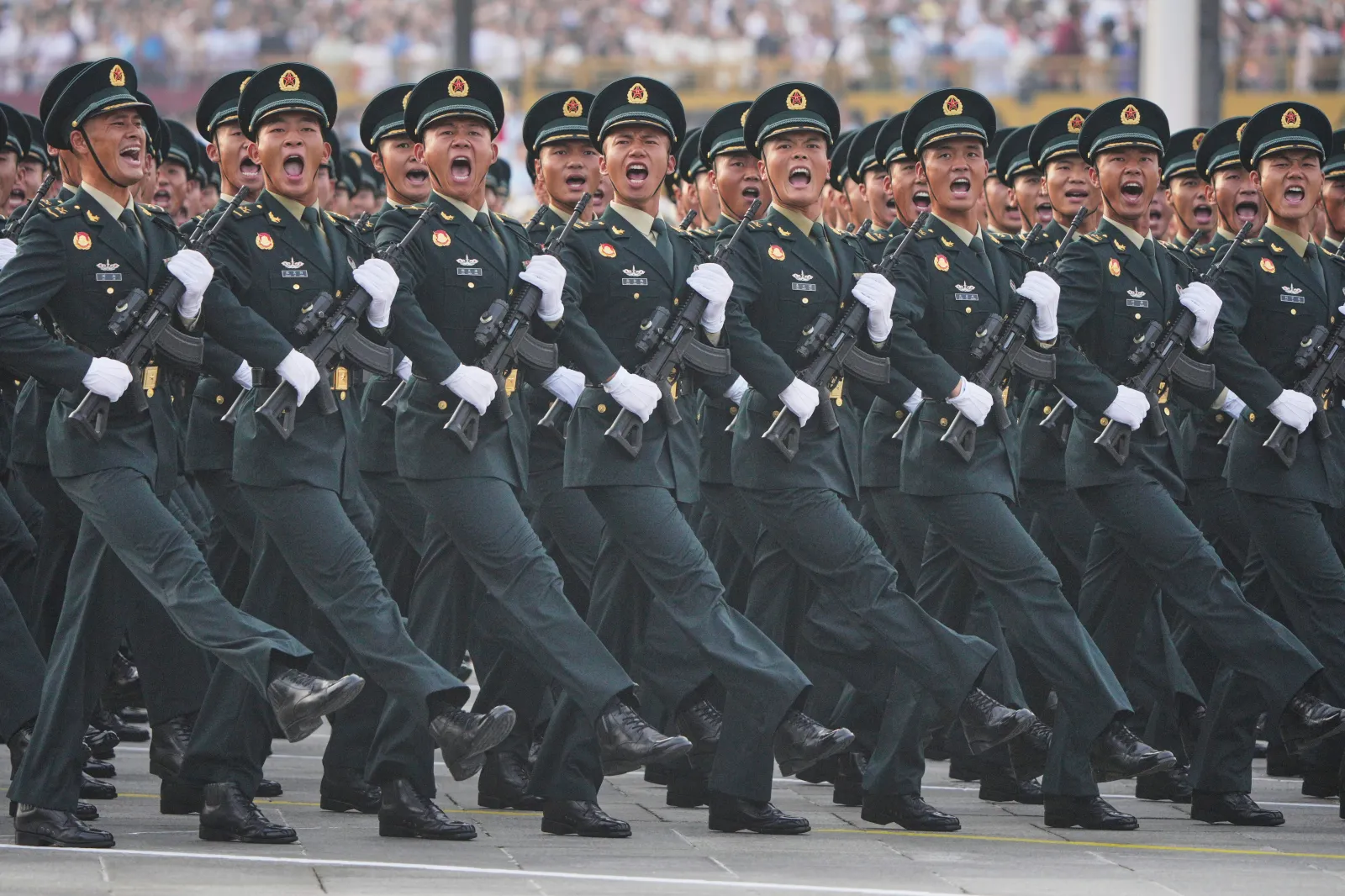
China's foreign ministry spokesman has warned that anyone crossing a red line in Taiwan would be met with a forceful response, as Beijing forces conducted military exercises close to the island.
China Daily, an English-language daily newspaper owned by the Central Propaganda Department of the Chinese Communist Party, has also made it clear that the war games were intended as a deterrent to anyone tempted to cross the line.
The drills, known as “Justice Mission 2025,” began Monday and involve the People’s Liberation Army Eastern Theater Command operating in the Taiwan Strait and in areas surrounding the island.
Read More on News
They were framed as a response to recent U.S. arms sales to Taiwan and as a signal to the administration of Taiwanese President Lai Ching-te. China Daily said the exercises underscore Beijing’s readiness to counter external interference and separatist moves related to Taiwan.
President Donald Trump said Monday, that he was not briefed in advance on the Chinese military exercises but said he was not concerned, noting that China has conducted naval drills in the area for years. Trump, who cited what he described as a “great relationship” with Chinese President Xi Jinping, said he did not believe Xi intended to attack Taiwan.
Newsweek reached out to the U.S. State Department for comment via contact form email on Monday afternoon. Chinese officials referred Newsweek to the comments made by the foreign ministry spokesman, while Taiwan's Ministry of Foreign Affairs branded China's actions as bullying.
Why It Matters
China claims Taiwan as its own, despite it being democratically governed as its own nation for decades. The U.S. does not formally recognize Taiwan but has strongly backed Taipei, being its biggest international backer and arms supplier. At the same time, President Donald Trump has sought to ease tensions between the U.S. and China, touting a strong relationship with Chinese President Xi Jinping, whose government has continued to seek to intimidate Taiwan despite U.S. involvement.
...
What To Know
In a clear warning to the U.S, China's Foreign Ministry Spokesperson Lin Jian said in a briefing Monday that when it comes to Taiwan, "anyone who crosses the line or makes provocations on the question will be met with China’s firm response."
He also warned the island's administration that it was "turning Taiwan into a powder keg." He added: "Their massive and desperate arms purchase further reveal their true nature as provocateurs, saboteurs of peace and war-mongers. Anyone who tries to arm Taiwan to contain China will only embolden the separatists and push the Taiwan Strait closer to the peril of armed conflict."
The China Daily report highlighted the U.S.' recent $11.1 billion arms sale to Taiwan, calling it a deep contradiction between the words and actions out of Washington, D.C. The article claimed that the U.S. does not back Taiwanese independence, but then has shown support for the island.
Under former President Joe Biden, the official line was that the U.S. backed a "One China" principle, with the State Department previously writing on its website that it did not support Taiwan independence. That was tweaked in February 2025, under President Trump, but the government did not appear to back any real change in status for either nation.
The Chinese outlet said that by carrying out the drills China was conducting its legitimate right to defend national sovereignty, because arms sent to Taiwan had increased the risk of conflict in the region.
This week's drills are the fourth such major exercise surrounding Taiwan since 2022, when then-House Speaker Nancy Pelosi visited Taipei in a high-profile show of support, despite opposition from the White House at the time over concerns that it would give Beijing cause to ramp up military pressure against the island's leaders.
Propaganda posters published by Chinese state media outlets throughout Monday appeared to link the latest maneuvers to the recent U.S. arms sales, with one image featuring a container ship carrying American-made HIMARS rocket launchers to the island.
Earlier this year, following drills in April, G7 countries issued a joint statement, saying they had "deep concern about China's provocative actions," which they said put global security at risk.
What People Are Saying
Taiwan's Ministry of Foreign Affairs, in a statement Monday: "Maintaining Taiwan Strait peace and stability is an international consensus and a key interest of many parties, yet China insists on using military exercises and other means to threaten Taiwan and neighboring countries—particularly those along the first island chain. This defies the principle of refraining from the threat or use of force set out in the UN Charter and violates international norms.
"In addition to severely harming peace, stability, and security throughout the Indo-Pacific, China’s continuing attempts to unilaterally undermine the status quo across the Taiwan Strait and the region will have a grave impact on global shipping and trade. MOFA calls on China to uphold its responsibilities as a great power and put an immediate halt to its bullying."
The China Daily report: "The US side is urged to earnestly fulfill its commitment not to support "Taiwan independence" and immediately stop arms sales to Taiwan and cease testing Beijing's resolve to defend its first red line and the core of China's core interest."
Foreign Ministry Spokesperson Lin Jian in a briefing Monday: "The Taiwan question is at the very core of China’s core interests. Nothing will deter China from defending national sovereignty, security and territorial integrity. Anyone who crosses the line or makes provocations on the question will be met with China’s firm response. All attempts to hold back China’s reunification will invariably fail."
Paul B. Stares and David Sacks, researchers at the Council on Foreign Relations, wrote in a recent report: "Taiwan is the most dangerous flashpoint in the world today. No other plausible source of great power war comes close to manifesting the same combination of risk factors as Taiwan…. While the United States should take steps to lessen the likelihood of another cross-strait crisis, it will also need to prepare for a new set of challenges in the event that one materializes."
G7 nations in a joint statement in April 2025: "G7 members and the larger international community have an interest in the preservation of peace and stability across the Taiwan Strait. We oppose any unilateral actions to threaten such peace and stability, including by force or coercion. G7 members continue to encourage the peaceful resolution of issues through constructive cross-Strait dialogue."
What Happens Next
The China Daily article said the U.S. should not disrupt peace in the Asia-Pacific region and drop any commitment to Taiwanese independence. The U.S. is yet to comment on the matter.
Update 12/29/25 3:49 p.m. ET: This article has been updated with additional information.
Update 12/29/25 5:19 p.m. ET: This article has been updated with additional information and remarks.
View 0 Comments
Submit Correction
View Editorial & AI Guidelines