
...

By Micah McCartney
Reporter
0
Share
Newsweek is a Trust Project member
See more of our trusted coverage when you search.Prefer Newsweek on Googleto see more of our trusted coverage when you search.
The U.S. and Israel's war with Iran, now in its second week, has snarled shipping in the Strait of Hormuz and sent crude oil prices to their highest levels in years.
Facing a fight for its survival, the Iranian regime has vowed to attack ships transiting the strait, saying not "one liter" of oil will make it out.
China has called for the critical chokepoint to remain open. But while it is the top buyer of Iran’s oil and a key diplomatic supporter, its leverage over Tehran appears to be falling short.
Read More on World
Still, there may be a silver lining for Beijing amid the oil chaos, experts say. The U.S. is facing the biggest blowbacks from the critical strait being effectively shut.
"President Xi is a fan of Sun Tzu's The Art of War. One of the most memorable quotes from that book is 'never interrupt your enemy when they are making mistakes'," Chris Weafer, CEO of strategic consultancy Macro-Advisory CEO, told Newsweek.
"That is how Beijing views the U.S. action—a major mistake which is damaging the Western economy while China can get all the oil and gas it needs from its neighbor Russia."
Why China Is Pushing Iran
Roughly one quarter of the world’s seaborne oil and one-fifth of its liquefied natural gas passes through the Strait of Hormuz south of Iran. That includes about 40 percent of China-bound crude oil and 30 percent of the country's light natural gas.
Officially, China has not imported Iran’s sanctioned crude since 2022, but analysis of commodity data suggests it purchases nearly all of Iran's oil.
This oil, typically delivered through the so-called "shadow fleet" and moved through Malaysia, is believed to account for an estimated 13 percent of China’s imports.
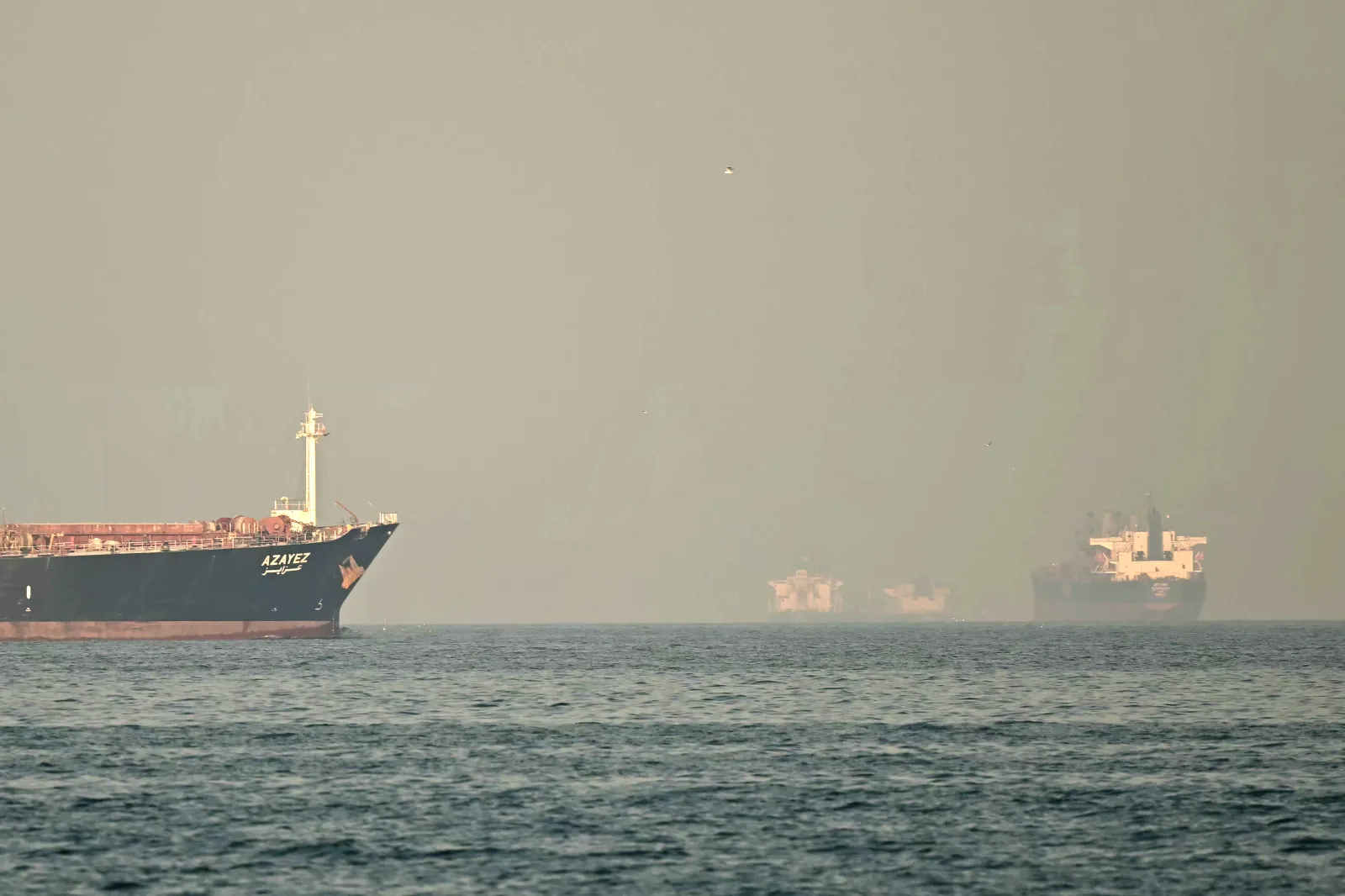
Shipping has slowed to a trickle in the strait—just two or three a day—amid the threat of Iranian attack.
Iran’s Islamic Revolutionary Guard Corps has pledge not to allow “one liter” of oil to pass through the strait and has hit at least 13 ships since the start of the war, with Wednesday seeing three cargo ships struck by projectiles. Amid the risk, insurers are not willing to offer protection.
There are also escalating concerns over reports that Iran could lay mines in the strait —a hugely damaging action that would be hard to reverse. To counter that, the U.S. military on Tuesday said it had destroyed 16 Iranian mine laying vessels near the trade route.
Can Beijing Get A Free Pass?
Chinese officials were already in talks with Tehran last week about allowing tankers to pass, according to a Reuters report. But dozens of Chinese tankers and container ships remain stranded in the Persian Gulf or the Gulf of Oman, unable to move through the critical strait.
Only about two dozen oil and gas tankers were tracked transiting there between March 1-8, roughly half of which were believed to be non‑compliant “shadow fleet” vessels, according to a Lloyd’s List analysis.
During the same period, China‑linked ships were observed modifying their automatic identification system (AIS) transponders to broadcast Chinese ownership.
A handful made it through —but all of those vessels were bulk carriers, transporting dry goods, not tankers carrying oil and gas. And there was no strong evidence of any special arrangement between Iran and Chinese companies, the analysis noted.
...
This week, Beijing continued to call for the restoration of stable energy and trade flows through the strait, in what has been its most public comment on the matter so far.
"China urges all parties to immediately stop military operations to avoid further escalation of tensions and prevent regional instability from having a greater impact on global economic development,” Chinese Foreign Ministry spokesperson Guo Jiakun told reporters Tuesday.
Tehran has previously barred vessels from the United States, Israel and several European countries from transiting the waterway during recent conflicts.
But at the height of the Red Sea crisis when Houthi militants were attacking ships, China made arrangements with the Iran-backed group in Yemen to ensure Chinese vessels would not be targeted in their blockade, according to a 2025 report by the U.S. Treasury’s Office of Foreign Assets Control.
It reportedly worked to a degree, but at least one Chinese-owned oil tanker was struck by a Houthi-launched ballistic missile in March 2024—a possible mistake amid the chaos of conflict.
"Given the ferocity of the bombardment on both sides, it is difficult to see how China could meaningfully shape the strategic choices of Iran’s Revolutionary Guards in the coming days—particularly if Tehran is set toward setting the Strait of Hormuz on fire," Alessandro Arduino, an affiliate lecturer at King's College London's Lau China Institute and an associate fellow with the Royal United Services Institute, told Newsweek.
For all China's influence, it is a strategic partner rather than a true ally, Arduino said, a distinction that "cuts both ways."
"It does not grant Beijing decisive control over Tehran’s military decisions, especially in moments when the logic of escalation begins to dominate the battlefield," he said.
Keeping Out of It
China also has no great incentive to get involved indirectly or overtly in this Middle East war, said Weafer, the Macro-Advisory CEO.
Beijing is wary of intervening in a way that could be viewed negatively by U.S. President Donald Trump, who is due to arrive in China at the end of the month for a long-awaited state visit.
Trump and Xi hope to expand on the trade truce reached during their October face-to-face talks in South Korea. But Beijing views Trump as unpredictable, and wants to avoid the president's wrath and any opportunistic tariffs, Weafer said.
As the high-level meeting approaches, Beijing has continued to tout progress on U.S. ties despite its criticism of the Iran war. Trump and Xi have "brought the relationship back on an even keel," Chinese Foreign Minister Wang Yi said in a press briefing Sunday.
China is also focused on the bigger picture. "President Xi wants to gain control of Taiwan but is playing the long game and will not risk any sort of dispute with the U.S. until it is ready, even if that means engaging with Tehran to reopen the Strait of Hormuz," Weafer said.
A Test for China’s Energy Buffers
It can afford to do that because it's also better positioned than competitors to weather a prolonged disruption to its energy supplies.
The country has stockpiled enough strategic petroleum reserves to cover 120 days of imports at the current rate of consumption, according to Rystad Energy. It has also diversified its sources and rapidly grown renewable energy to serve as buffers to external shocks.
Still, a prolonged crisis could weigh on the world’s second-largest economy as authorities pursue energy security and growth targets set out in the recent five-year development plan.
China has reportedly paused efforts to refill its strategic petroleum reserves as a precaution, with authorities also instructing refiners to suspend exports of refined fuels in order to conserve domestic supplies.
A sustained disruption could also ripple into China’s investments abroad, analysts say.
“African economies, for instance, have been the beneficiary of substantial and steady flows of Gulf capital," RUSI's Philip Shetler-Jones told the BBC.
"If the investment tide goes out, this risks wider instability that undermines the sustainability of China's broader and longer-term interests.”
View 0 Comments
Submit Correction
View Editorial & AI Guidelines